Saskatchewan Refuses to Release Its $52 Billion Bell AI Data Centre Agreement After CBC Request
Saskatchewan has refused to release the memorandum of understanding behind one of the largest technology projects in the province's history. The document covers Bell Canada's planned AI data centre outside Regina, a project the province has described as worth $52 billion. CBC News asked for the document under freedom of information law, and the province's Crown Investments Corporation turned that request down.
The refusal matters because the project is already moving from announcement to physical build, while many of its core terms remain out of public view. Residents near the site and local governments are being asked to accept a project of enormous scale on the strength of summary announcements rather than the agreement itself. That gap between the size of the plan and the detail available is now the central tension around the Regina area build.
What was refused
The document at issue is a memorandum of understanding between the Saskatchewan government and Bell Canada. It relates to Bell's AI data centre in the Rural Municipality of Sherwood, just outside Regina. According to CBC News reporting, the memorandum is non-binding. It sets out obligations, shared goals, and a general framework for a possible deal, but it does not by itself lock either side into the full build.
CBC requested the memorandum under Saskatchewan's Freedom of Information and Protection of Privacy Act. Crown Investments Corporation, the provincial body that oversees Crown corporations, denied the request in a letter. The minister responsible for Crown Investments Corporation, Jeremy Harrison, has confirmed in interviews that the government has no plans to release the document.
Why the province says it cannot release the document
The denial letter cited sensitive economic, financial, commercial, technical, and strategic information. It also said the memorandum includes information supplied by a third party, and that disclosure could potentially harm that party's competitive position.
What the project actually is
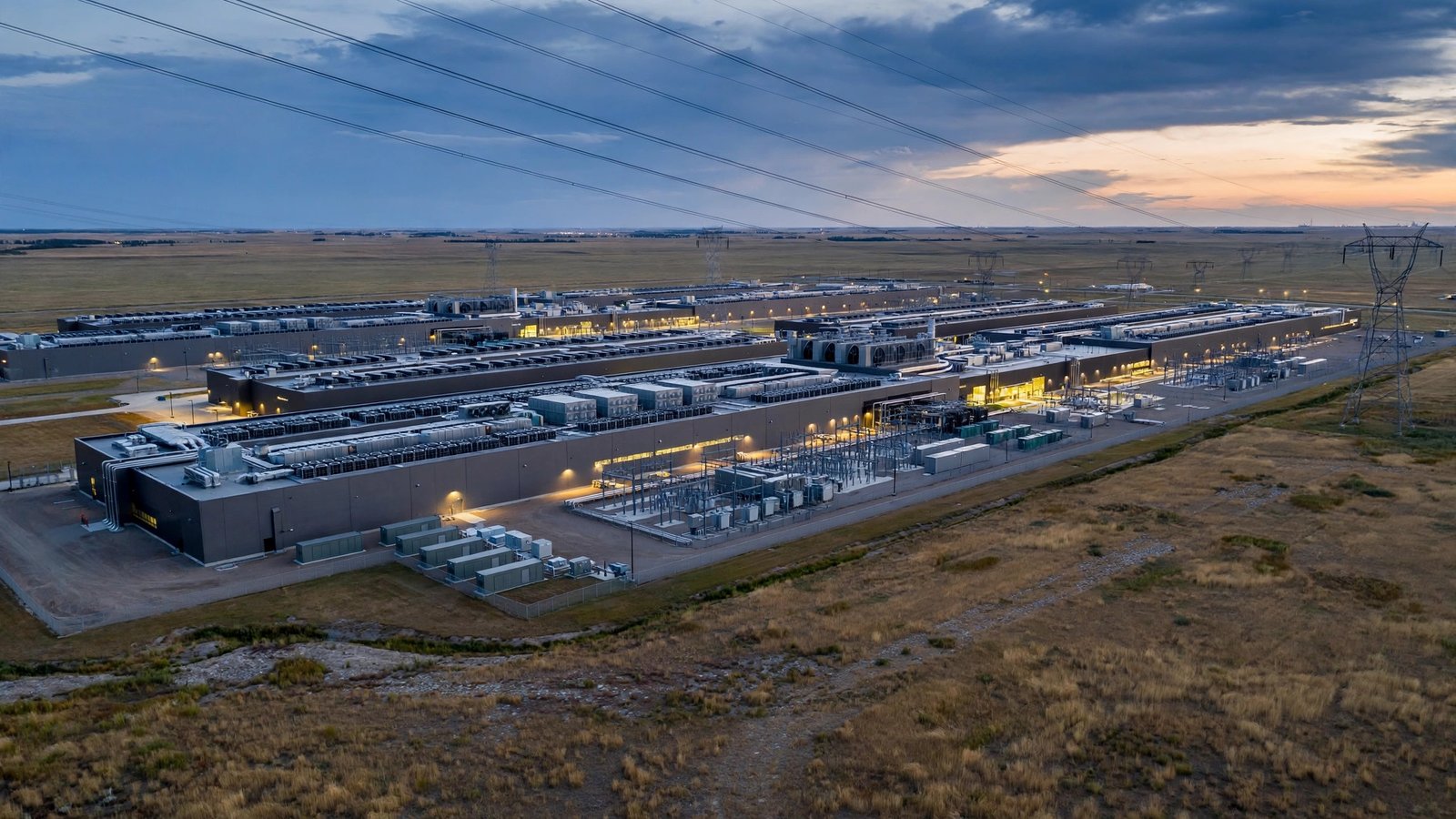
The project behind the paper is known as the Bell AI Fabric data centre project. Government project documents place the initial facility on a 65-hectare agricultural site in Sherwood, powered through the provincial grid. The first stage was planned as a 300-megawatt AI data centre.
Bell later outlined a much larger path. In September 2026, Bell and the Saskatchewan government announced a non-binding memorandum to expand the project by up to 900 megawatts of additional capacity, taking the total to a planned 1.2 gigawatts. The province described the expanded project as worth more than $50 billion in total capital investment, and in later statements put the figure at $52 billion. Bell has said the combined investment would include data centre buildings, computing equipment installed by tenants, and associated power generation infrastructure.
Two tenants have been named in Bell's partner materials. Cerebras would supply wafer-scale AI technology for training and inference, while CoreWeave would provide hosted AI computing based on NVIDIA graphics processors. Bell has said the campus will connect to its national fibre network through a partnership with SaskTel.
The expansion is not a final investment decision. According to Bell and the province, it will proceed in phases as customer commitments are secured, commercial agreements are signed, permits are granted, and any required environmental assessments are completed. The $52 billion figure therefore describes a plan at full buildout, not money already spent.
What remains unknown
Because the memorandum stays sealed, several basic questions cannot be answered from public documents. Nobody outside government and Bell can say exactly what obligations each side accepted, what financial commitments were discussed, or how the framework would convert into a binding contract. It is also unclear from reporting so far whether the memorandum addresses power pricing, reliability commitments, or who pays for grid upgrades.
Those details matter in practical ways. A 1.2-gigawatt hub would place very large demands on electricity supply, even if much of the added capacity is meant to come from new natural gas generation developed for the project. Land use is another live issue, with Bell seeking to buy roughly 895 acres of farmland around the existing site, which would take the total footprint to about 1,055 acres.
Standing Buffalo Dakota Nation has also asked Bell for technical reports and regulatory correspondence, saying the Sherwood site lies within its traditional territory. Bell has said it carried out the consultation the province asked of it.
Why this story reaches beyond Saskatchewan
Large AI data centres are now a national issue in Canada. The Globe and Mail reported in October 2026 that planned AI computing capacity across Canada is now nearly ten times larger than what is already built. Provinces are competing to attract these projects with power, land, and streamlined approvals.
Saskatchewan's pitch has centred on Canadian ownership and sovereignty, with its August 2026 data centre framework stressing that Canadian data should stay in Canada under Canadian rules. That message is harder to sustain when the framework document itself is secret.
What happens next
For now, the project continues on its announced path while the document stays closed. The first data halls of the initial 300-megawatt campus are expected to come online in the first half of 2027, according to earlier Bell announcements, with full buildout of that stage by the end of the year. The larger expansion still needs customer commitments, commercial agreements, permits, and environmental assessments, so its timeline remains phased rather than fixed.
Local rezoning hearings for the land expansion may force more detail into the open. Until then, the public record rests on announcements and municipal filings, not on the memorandum itself.
Frequently Asked Questions
What is the Saskatchewan Bell AI data centre?
It is a planned AI data centre campus in the Rural Municipality of Sherwood, just outside Regina, developed by Bell Canada under the Bell AI Fabric name. The initial stage is a 300-megawatt facility, with a proposed expansion of up to 900 megawatts more that would take the total to 1.2 gigawatts at full buildout.
Why will Saskatchewan not release the memorandum of understanding?
Crown Investments Corporation denied a CBC News freedom of information request, citing sensitive economic, financial, commercial, technical, and strategic information, plus third-party information whose release could harm a competitive position. The minister responsible has confirmed the government has no plans to release the document.
Does the $52 billion figure mean the money is already committed?
No. The figure is the province's estimate for total capital investment at full buildout, including buildings, tenant computing equipment, and power infrastructure. The expansion memorandum is non-binding, and the larger build depends on customer commitments, commercial agreements, permits, and environmental assessments.




Post Comment