
Cohere Raises $500 Million at a $6.8 Billion Valuation as Canada’s Enterprise AI Bet Deepens
Toronto’s Cohere has closed one of the largest private financings in Canadian tech history. The enterprise AI lab raised $500 million at a $6.8 billion valuation, with the round led by Radical Ventures and Inovia Capital. The money cements Cohere’s place as the company Canada is counting on to turn its AI research legacy into a lasting commercial champion.
Who is writing the checks
The headline investors are two heavyweights of Canadian venture capital: Radical Ventures and Inovia Capital, which led the round together. They are joined by a lineup of existing backers that reads like a who’s who of the chip and enterprise world: AMD Ventures, Nvidia, PSP Investments, and Salesforce Ventures.
The participation of both AMD and Nvidia is telling. Chip giants rarely back the same private startup in the same round, and their joint presence underlines how strategically important enterprise AI models have become to the hardware makers that power them. PSP Investments, one of Canada’s largest pension managers, adds a distinctly domestic stamp, part of a broader pattern of Canadian pension capital staying home to fund the country’s AI buildout.
What the money is for
Cohere builds large language models for businesses and governments rather than for consumers, and its whole pitch rests on security and control: private deployments that keep sensitive corporate data out of public clouds. Co-founder Nick Frosst told Reuters the raise will let the company “expand more globally, branch off into different modalities, as you saw us launch a command vision model recently, and keep building secure AI for the enterprise.”
That line hints at the product roadmap. Vision capability, through its new Command vision model, takes Cohere beyond text and into images, a step that matters for enterprises working with documents, diagrams, and real-world visual data. Global expansion, meanwhile, reflects a customer base that is increasingly spread across North America and Europe.
The financing also coincided with two senior hires. Joelle Pineau, formerly vice president of AI Research at Meta, joins as chief AI officer, and Francois Chadwick, previously an executive at Uber and Shield AI, becomes chief financial officer. Bringing in a research leader of Pineau’s stature and a finance chief with defense-tech experience signals that Cohere is preparing for a much larger scale of operation.
The Canadian data center play
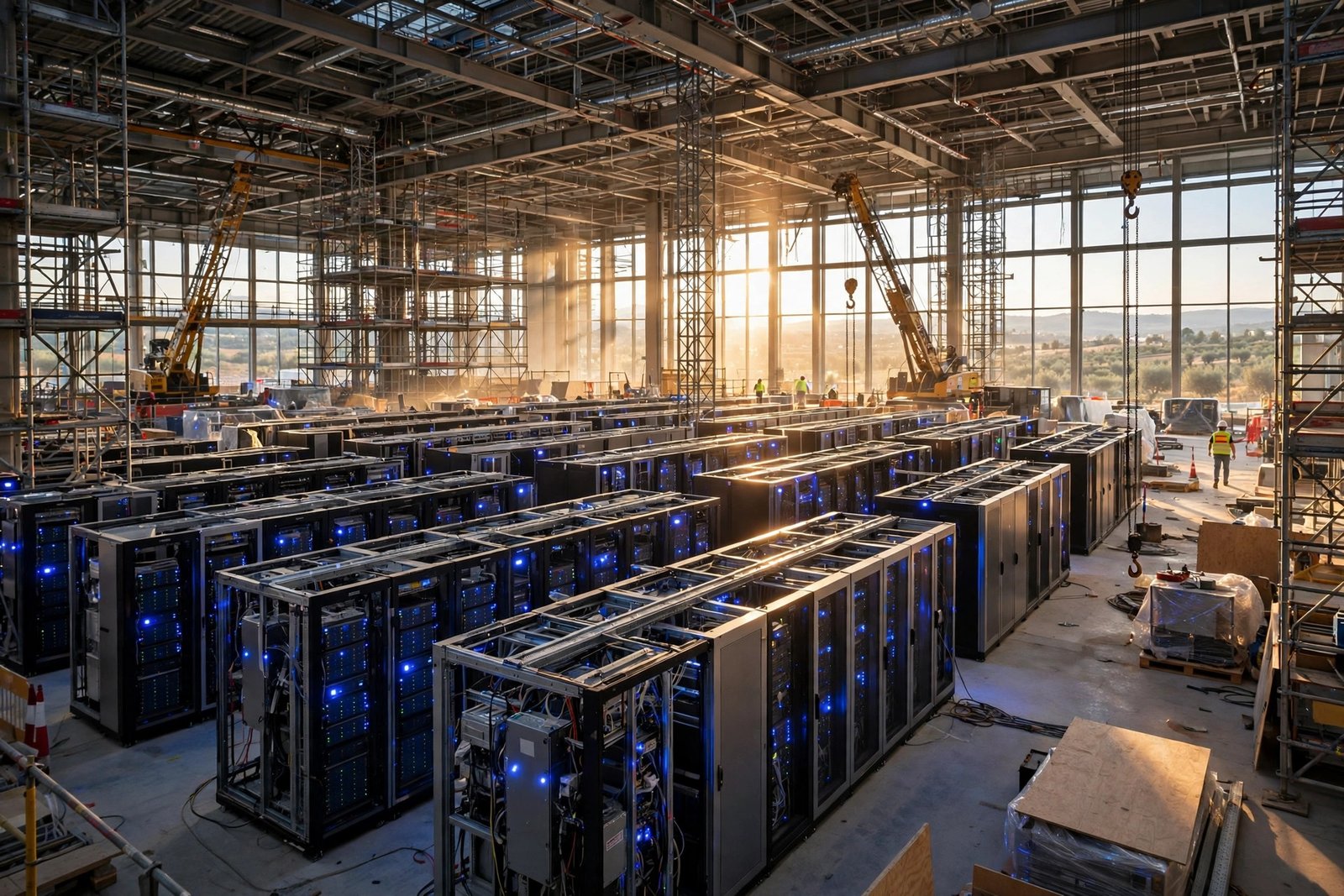
The round is only part of a bigger infrastructure story. Cohere plans to deploy a multibillion-dollar data center in Canada, built and operated by CoreWeave, the cloud provider that has become the go-to operator for AI compute. The facility is expected to open later this year and is backed by CA$240 million (about US$175 million) in federal financing.
That government money is part of Canada’s sovereign AI strategy, the national effort to keep compute, talent, and intellectual property on Canadian soil. For years, Ottawa watched Canadian AI talent flow south to Silicon Valley labs. Cohere is the counter-example the government has decided to invest in, and the data center puts physical substance behind the rhetoric.
A company under the microscope
Cohere’s rise has been fast. Founded in Toronto in 2019 by Aidan Gomez, Nick Frosst, and Ivan Zhang, the company reached a $6.8 billion valuation after what reports describe as roughly $240 million in annual recurring revenue early in 2026. That is the kind of multiple only frontier-model companies command, and it explains the pressure to keep growing.
The financing comes with plenty of speculation swirling around it. In April, the company announced plans to combine with Germany’s Aleph Alpha, a deal reports valued at around US$20 billion, and September brought reports of a far larger Series E in the works, reportedly targeting $2 to $3 billion at a $20 billion valuation. Neither has been confirmed as closed, but together they sketch the scale of ambition surrounding the company.
Competition is fierce. OpenAI, Anthropic, and Google DeepMind dominate the consumer conversation, and Cohere’s answer has always been focus: it sells to regulated industries and governments that cannot or will not send data to US-based public clouds. Sovereignty, data residency, and compliance are its selling points, and with European governments and Canadian institutions both spending on exactly those priorities, the timing of the raise looks deliberate.
Why this round matters for Canada
A $500 million round at a $6.8 billion valuation does something symbolic as well as financial: it keeps Canada’s most valuable AI startup Canadian. Inovia Capital’s own $200 million sixth fund, aimed squarely at AI startups, and Radical Ventures’ billion-dollar-plus AI funds are part of the same ecosystem story, one where domestic capital is finally deep enough to compete with Silicon Valley money.
Whether that is enough to hold the country’s AI talent over the long run remains an open question. But for now, Toronto’s flagship AI company has fresh capital, new leadership, and a government-backed data center on the way. For a country that helped invent modern AI and has spent years watching the profits accrue elsewhere, that counts as a win.
Frequently Asked Questions
How much did Cohere raise, and at what valuation?
Cohere raised $500 million at a $6.8 billion valuation. The round was led by Radical Ventures and Inovia Capital, with participation from AMD Ventures, Nvidia, PSP Investments, and Salesforce Ventures.
What does Cohere do?
Cohere builds large language models for enterprises and governments rather than consumers. Its products are designed for private, secure deployment, letting companies and public agencies use AI without sending sensitive data to public clouds.
Why is the Canadian government involved?
Ottawa is backing Cohere’s multibillion-dollar Canadian data center with CA$240 million in federal financing as part of its sovereign AI strategy. The goal is to keep AI compute, talent, and intellectual property in Canada rather than watching them migrate to the United States.


Post Comment