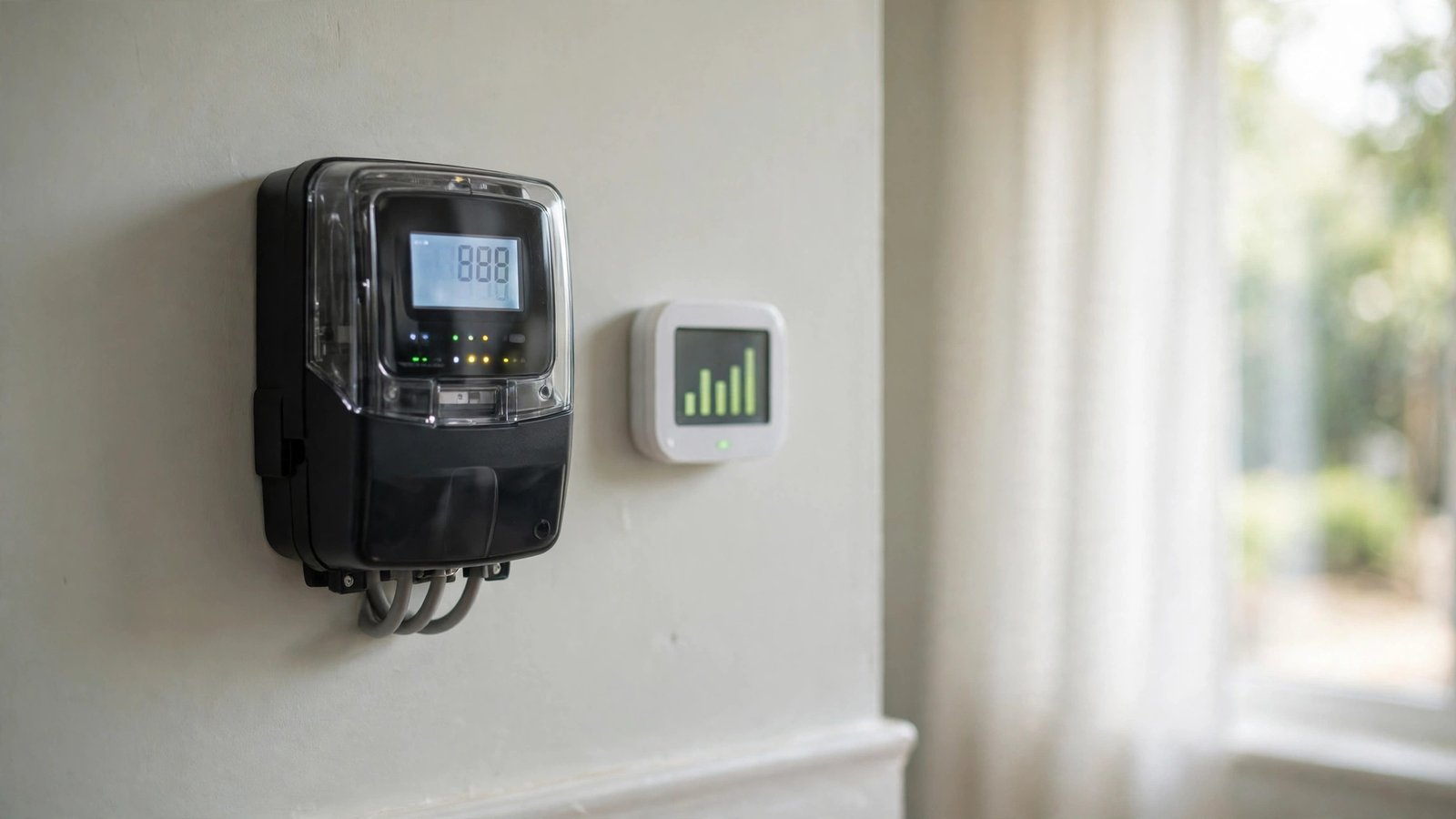
Millions of UK Smart Meters Face a £4 Billion Replacement Bill as 2G and 3G Switch Off
Your smart meter talks to your energy supplier over the same mobile networks your old phone once used. When those networks close, millions of meters could fall silent. A new industry report puts the cost of keeping them connected at around £4 billion.
What the report found
The report comes from Wirepas, a wireless connectivity company, and it is called "The European Connectivity Trilemma". Between 12 and 13 million UK smart meters could stop working properly when 2G and 3G networks are switched off by 2033, it says, and replacing them all is likely to cost around £4 billion, or about $5.3 billion.
That figure is an industry estimate, not an official forecast. Wirepas sells internet of things connectivity and promotes its own alternative, so its numbers carry a commercial interest. Even so, the problem is real, and the report, covered by The Register on 10 November 2026, puts a price on what happens next.
Why so many meters depend on old networks
Early smart meters used 2G or 3G to send readings back to the supplier. That was sensible at the time. The networks were everywhere, the hardware was cheap, and a meter only sends small amounts of data. The trouble is that meters stay on the wall for a decade or more, while mobile networks move on much faster.
Meters with 2G and 3G connections kept being fitted until 4G versions began arriving at the end of 2024. 3G services have already been withdrawn. The operators all plan to switch off 2G ahead of the 2033 deadline too. BT and EE will begin closing 2G from May 2029, VMO2 will start the same summer, and Vodafone aims to switch off in spring 2030.
Two very different repair jobs
The first part covers newer second generation meters, known as SMETS2. In these, the part that talks to the mobile network sits in a separate communications hub. Swapping the hub is still a big job, put at £1.3 to £1.4 billion before the price of each new hub is counted. But the meter itself can stay on the wall. This applies mainly to central and southern Britain. Second generation meters in the north use a long range radio network instead, so they are not affected.
The second part is the expensive one. Around 7 million older first generation meters, known as SMETS1, have their cellular connection built into the meter itself. There is no separate part to swap, so the whole meter typically needs replacing. The report puts this at another £2.1 to £2.45 billion, at £300 to £350 per installation. Unlike the SMETS2 issue, the older meter problem applies nationwide. Together, the two parts reach the headline figure of around £4 billion.
Who pays for it
The report says the £4 billion will ultimately feed into household energy bills, which adds to the very costs the government is trying to reduce. Two points soften the blow a little.
First, some of these older meters would have been due for replacement as part of normal asset renewal anyway. The shutdown does not create every pound of that cost from nothing. It makes the replacement programme unavoidable, and it dictates when much of the spending must happen.
Second, households should not expect a separate bill for a new meter. Smart Energy GB confirms the move to newer equipment will be arranged by suppliers at no extra charge. The cost is expected to be spread across bills over time. Ofgem identifies 2026 to 2033 as the expected delivery period for upgrades.
What the government says
The Register asked the Department for Energy Security and Net Zero, which oversees smart meters, for comment. A spokesperson said: "Smart meters are already helping millions of consumers manage their energy and save money on bills. The transition to 4G is a planned upgrade that will continue to deliver the benefits that smart meters already provide to households and industry."
The move to 4G is planned, and automatic readings are genuinely useful. But the rollout was supposed to reach 80 percent of households by 2020, and that target was missed by a wide margin. The 2G and 3G switch off was predictable since the phase out was announced in 2021.
What this means for your home
For most households, nothing changes right now. Your meter will keep working while 2G is still live, and your supplier is expected to contact you when an upgrade is due. You do not need to book anything, and you should be wary of anyone who knocks on your door offering to replace your meter for a fee. Suppliers arrange the work, and Smart Energy GB says there is no extra charge to customers.
The useful thing to do now is to find out which type of meter you have. If it was installed before late 2018, it is probably a first generation SMETS1 meter, the type most likely to need a full replacement. If it was installed later, it is probably SMETS2, and only its communications hub may need swapping. Your supplier can confirm which type you have.
Frequently Asked Questions
Will my smart meter stop working when 2G closes?
Your meter will not stop measuring your energy use, but it may stop sending readings to your supplier. That means estimated bills and manual readings until the meter or its hub is replaced. 2G is due to close between 2029 and 2033, and your supplier is expected to contact you before then.
Will I have to pay for a replacement meter?
According to Smart Energy GB, the move to newer equipment will be arranged by your supplier at no extra charge. The wider £4 billion cost is expected to be recovered through energy bills over time, rather than charged to households as a separate fee.
How can I tell which type of smart meter I have?
The install date is the best clue. Meters fitted before late 2018 are usually SMETS1, while later ones are usually SMETS2. You can also look for a separate small communications hub near the meter, which points to SMETS2 in central and southern Britain, or ask your supplier to confirm it.





Post Comment