UK Workplace Pensions Put Retirement Savings Into Quantum Computing for the First Time
UK workplace pensions are about to own a slice of the quantum future. Scottish Widows and Aberdeen Investments have announced the first deployment of defined-contribution pension money into venture-stage technology companies, with quantum hardware makers Oxford Quantum Circuits and Quantum Motion as the first names on the list. The move puts retirement savings behind two of Britain's most closely watched deep-tech firms.
The announcement, reported on 7 November 2026, marks a small but telling shift in how British pension money reaches young technology companies. For years, UK savers' money has rarely reached the startups building the next generation of hardware. This deal is one of the first attempts to change that.
What was announced
Scottish Widows, the workplace pension provider owned by Lloyds Banking Group, and asset manager Aberdeen Investments have made their first capital deployments from defined-contribution retirement assets into venture-stage technology firms. The money flows through the CG Scottish Widows Growth LTAF, a Long-Term Asset Fund, with the venture portfolio managed by IP Group, the intellectual property commercialisation firm listed on the London Stock Exchange.
The fund is authorised by the Financial Conduct Authority, and the LTAF structure exists for a specific reason. Ordinary pension funds are built around assets that can be bought and sold quickly, such as listed shares and bonds. Shares in private, fast-growing technology companies do not fit that mould, because they can take years to mature and cannot be sold at a moment's notice. An LTAF is designed to hold these illiquid investments inside a pension scheme.
Scottish Widows looks after retirement savings of around 300 billion pounds in assets under administration, so even a modest allocation through this route can mean serious money for the companies on the receiving end.
The two quantum companies at the centre
The first quantum commitments go to Oxford Quantum Circuits, known as OQC, and Quantum Motion.
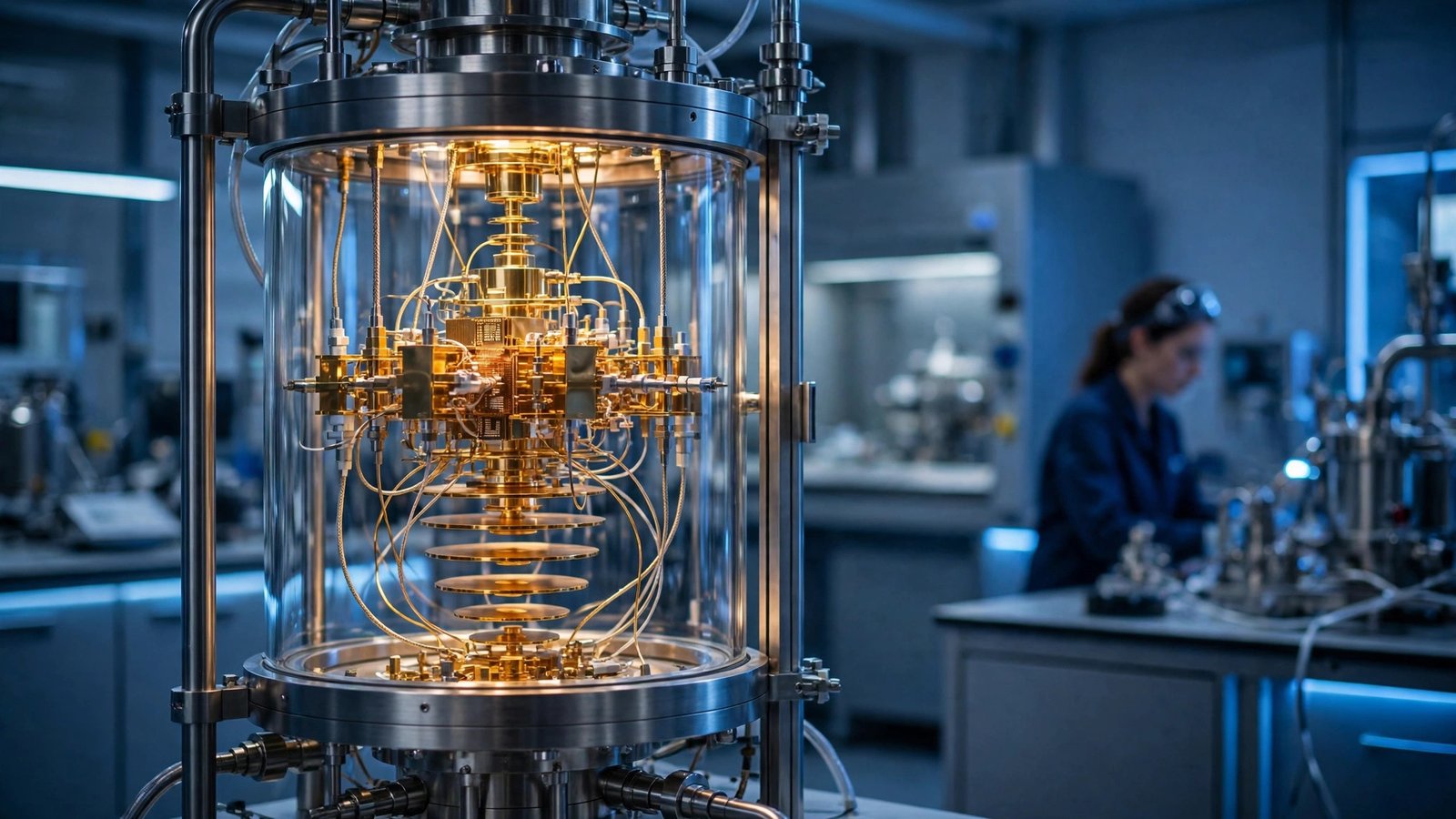
OQC builds superconducting quantum processors, the same broad approach used by several of the best-known quantum companies. Its distinctive feature is a proprietary wiring design called Coaxmon, which routes control lines vertically through the chip in three dimensions, keeping the sensitive qubit plane isolated from the electrical cross-talk that can corrupt calculations as chips grow.
Quantum Motion takes a different path. It builds silicon spin-qubit processors using the same 300-millimetre CMOS manufacturing processes that produce ordinary computer chips in commercial foundries. The bet is that building quantum processors the way the semiconductor industry already builds chips will make them easier to manufacture at scale.
Alongside the two quantum firms, the first tranche also reaches battery technology developer Nyobolt and genomic medicine firm Genomics Limited.
Why pension money, and why now
The deal is aimed at a gap that has dogged British deep tech for years. Companies building quantum hardware need large sums over a long period before they earn serious revenue. In the UK, firms at that stage, roughly the Series B round and beyond, have historically relied on overseas investors or on listing abroad.
The new fund is meant to give these companies a domestic source of patient capital. Pension money is patient by nature: a worker in their thirties will not touch their pot for decades, which matches the timescale of a hardware company that may need ten years to reach commercial products. The timing also fits a wider push to get more pension money into British growth companies.
What it means for UK savers
For most people saving through a Scottish Widows workplace pension, the practical effect will be small at first. Venture investments of this kind are expected to form only a small part of a diversified pension portfolio, with the bulk of the money staying in listed shares, bonds and other mainstream assets. That matters, because private technology firms carry real risk and can take years to deliver a return.
The structure has safeguards built in. The LTAF is FCA authorised, the venture portfolio is run by a specialist manager in IP Group, and the fund is designed so that the illiquid holdings sit alongside assets that can be sold quickly if savers need their money. Still, anyone who wants to know whether their own pension is affected should check their scheme documents or ask their provider, because the allocation will apply to specific default funds rather than to every Scottish Widows saver.
Whether backing quantum hardware through pensions beats safer assets will only be answered over time. Quantum computing is still an early technology, and no company has yet built a machine that beats classical computers on a commercially valuable problem. The investment is a bet that at least some of these firms will get there, and that owning a piece of them early is worth the wait.
A wider bet on British deep tech
Looked at as a whole, the announcement is less about two companies and more about a test of a model. If pension money can flow into quantum hardware through an LTAF, the same route can work for other capital-hungry British sectors, from fusion energy to advanced manufacturing. The government has talked about this for years. Scottish Widows and Aberdeen have now put the first money behind it.
For OQC and Quantum Motion, the value goes beyond the cash. Having a major UK pension provider on the cap table is a signal to other investors, to customers and to the engineers these firms are trying to hire. Whether the bet pays off will take years to judge, but British retirement savings are now part of the answer.
Frequently Asked Questions
Which companies are receiving the pension money?
The first quantum commitments go to Oxford Quantum Circuits and Quantum Motion, two UK quantum hardware developers. The same first tranche also funds battery technology firm Nyobolt and genomic medicine company Genomics Limited.
Is my pension now invested in quantum computing?
Only if you save through a Scottish Widows workplace pension fund that uses the CG Scottish Widows Growth LTAF, and even then the venture holdings are a small part of a diversified portfolio. Check your scheme documents or ask Scottish Widows to see whether your fund is affected.
Why do UK quantum firms struggle to raise money at home?
Quantum hardware needs large sums over many years before it earns serious revenue, and at the Series B stage and beyond, British firms have historically relied on overseas investors or foreign listings. The LTAF is designed to let patient UK pension capital fill that gap.





Post Comment