UK Landlines Switch Off on 31 January 2027 as Openreach Says the Deadline Will Not Move
Britain’s old analogue phone network has a fixed end date, and this week Openreach made it plain that the date will not shift again. The public switched telephone network, known as the PSTN, will close on 31 January 2027. Anyone still on a legacy connection after that point risks disruption to their phone service, and businesses that wait could face a sudden loss of service with no safety net.
The warning went out to communications providers in a letter from Openreach, the BT Group company that runs much of the UK’s physical phone network. It said providers should act now to move remaining customers, because leaving migration until the last minute could make it harder to secure the engineering support needed before the deadline. With around three months to go, the switchover has entered its final phase.
What is actually switching off
The PSTN is the copper based analogue network that has carried UK landline calls for decades. BT is retiring it, and Openreach is withdrawing the wholesale line rental products that providers use to deliver traditional analogue phone services. After 31 January 2027, home phone calls will instead travel over a broadband connection using a digital voice service, often called Voice over Internet Protocol.
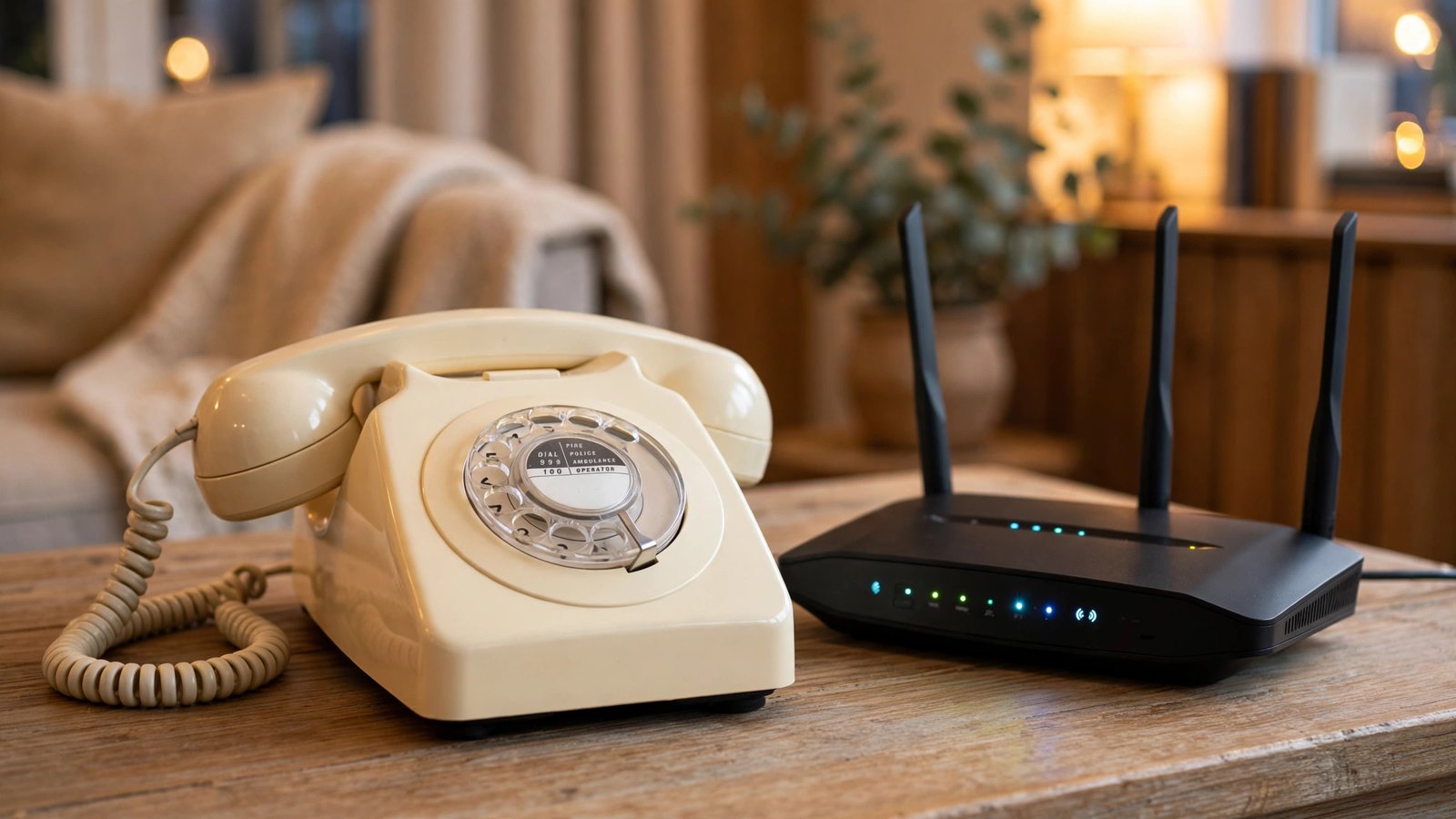
For most households the visible change is small. Instead of plugging a handset into a wall socket, you plug it into the back of your broadband router. The phone itself can often stay the same, and in many cases your number stays the same too. What changes is the technology underneath: calls become data travelling over your internet connection rather than a dedicated analogue line.
Why Openreach says there will be no extension
This is not the first deadline for the switchover. The original plan was to close the PSTN by the end of 2025, but the date was pushed back after concerns about vulnerable customers. People who rely on telecare alarms, which use the phone line to call for help, were not all ready to move, and some telecare equipment did not work reliably on digital lines.
That delay is exactly why Openreach is now so firm. Providers have already had extra time, and the company says the January 2027 date is final. Openreach has also warned that commercial customers who delay migration risk significant disruption and unnecessary costs. The message to providers is blunt: identify the remaining lines, contact the customers, and arrange replacement services now.
Openreach estimated that around 1.5 million lines were still on the old network at the end of July 2026, down from about 1.9 million a month earlier. Roughly 350,000 of those were business premises. Those business lines are the most exposed, because the safety nets described below are aimed mainly at households.
Who needs to pay closest attention
Three groups face the sharpest risk. The first is people who use telecare or personal alarms. These devices often rely on the analogue line to raise an alert, and not every older unit works on a digital connection without an upgrade or replacement. Openreach says it has helped move more than 70,000 telecare users to digital services through its Prove Telecare programme, but it also says many telecare users still need to migrate.
The second group is small businesses. Payment card terminals, fax machines, fire alarms, security alarms and lift emergency phones can all depend on PSTN connectivity. A shop that loses its card terminal connection on a busy Saturday has a real trading problem, not just an inconvenience.
The third group is households in areas without fibre yet. If you do not have a fibre connection, your provider may move you to a transitional product called SOTAP for Analogue, where equipment in the local telephone exchange lets you keep using your old phone line much as before. That is a workaround, not a reason to ignore the change, and it still needs to be arranged with your provider.
What happens if you do nothing
For household customers, Openreach has put limited safety nets in place. A temporary service called Emergency Voice Access, or EVAC, is meant to let basic calls, including calls to the emergency services, still be made and received for a time after the old network closes. Openreach has also said that where possible it will separate broadband from voice so broadband keeps working when the voice service is switched off.
These are temporary and limited measures, and Openreach itself stresses that they do not replace migration. They do not extend the deadline, and they do not guarantee that alarms, telecare devices or business systems will keep working. Business lines will not get the same protection as household lines, and a business that is still on PSTN at the deadline could simply lose service.
The practical advice from Openreach is simple: contact your provider as soon as possible. Your provider can tell you whether your line has already moved, whether your equipment is compatible, and what appointment or kit you need. Waiting until January risks joining a queue of last minute migrations when engineers are already stretched.
What the move means for everyday phone users
One difference worth knowing is power. A traditional analogue phone keeps working during a power cut because the line itself carries power. A digital voice phone depends on your broadband router, which needs mains electricity. That is why providers offer battery backup units for vulnerable customers, and why it is worth asking your provider about backup options if you rely on your landline in an emergency.
Frequently Asked Questions
Will my landline number change when I move to digital voice?
In most cases no. Providers can usually move your existing number to the digital voice service, so friends, family and businesses can still reach you on the same number. Ask your provider to confirm this when you arrange the move, and check that any services tied to the number, such as alarms, are tested after the switch.
What should I do if I use a telecare alarm?
Contact your telecare provider and your phone provider as soon as possible, and tell both that you use a telecare device. They can check whether your alarm works on a digital line or needs an upgrade. Do not wait until January, because testing and replacement take time and engineers will be busy.
I do not have fibre broadband. What happens to my phone?
Your provider may move you to a transitional product that lets you keep using your old phone line through equipment in the local exchange. This is arranged through your provider, so get in touch and ask what plan applies to your address. It is still worth doing this early rather than assuming it will happen automatically.




Post Comment