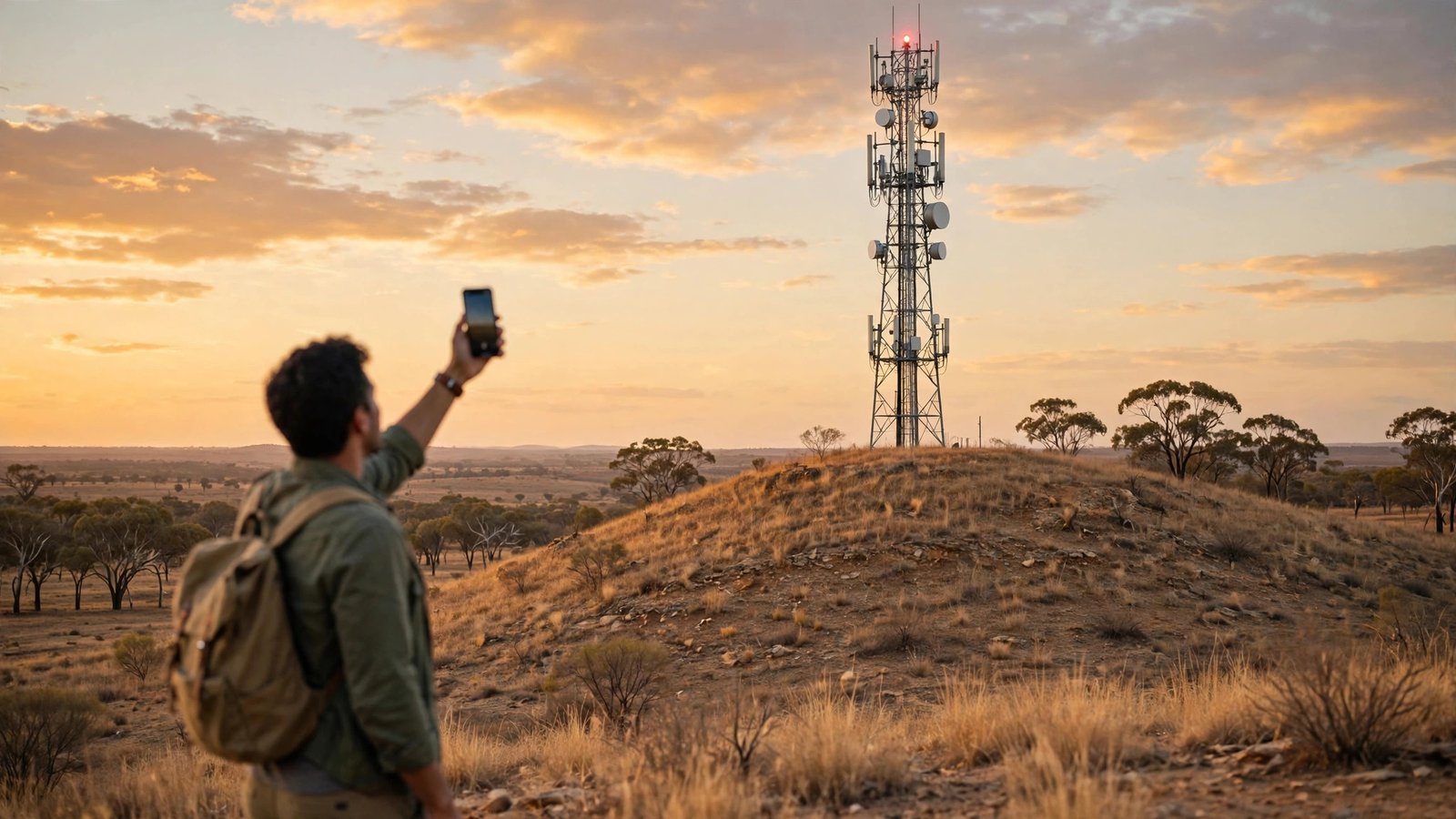
Optus and Nokia Claim a World First for 5G in Australia: Faster Speeds on the 900MHz Band
Optus and Nokia say they have pulled off a world first on a live Australian mobile network. The two companies tested a new way to run 5G on the 900MHz band, and the trial delivered download speeds up to 91 percent faster outdoors than the current setup in the same places. The test ran on commercial network sites in Canberra, using a phone that is already on sale. Here is what the trial showed, why the 900MHz band matters, and what it could mean for mobile coverage across the country.
What Optus and Nokia actually tested
The trial used an asymmetric 5G configuration on the 900MHz band. In plain terms, the network gave far more spectrum to downloads than to uploads: a 25MHz downlink channel paired with a 20MHz uplink channel. Most mobile use leans heavily toward downloads, from video streaming to app updates, so shifting the balance in that direction makes sense for everyday use.
The key point is that this ran on a live network, not in a lab. Optus and Nokia carried out the test at two production sites in Banks, in the Australian Capital Territory. The phone in the trial was the newly launched Oppo Find X10 Pro Max, and according to the companies it was the first commercial smartphone to use the full 25MHz downlink channel in the 900MHz band. That detail is what sits behind the world-first claim: the configuration had not been shown working on a live network with a retail phone before.
The numbers from the trial
Telecompaper reported the headline figures from the live-network testing. Download speeds reached up to 165 Mbps outdoors and 163 Mbps indoors. The same tests on the existing network configuration recorded 86 Mbps outdoors and 108 Mbps indoors. TelecomTV reported the same result as up to 91 percent faster outdoors and 51 percent faster indoors.
Those numbers come from a small, controlled trial, so they are a sign of what the configuration can do rather than a promise of what every user will see. Speeds on a live network vary with distance from the tower, the number of people connected, the phone in your hand, and even the building materials around you. The indoor figure is still worth noting, because indoor coverage is where many Australians feel the limits of their mobile connection most.
The trial also matters because it used a retail phone. A result that only works on prototype hardware would be years away from ordinary users. The Oppo Find X10 Pro Max is a new handset, and it is the only phone named in the reports of the trial so far. Whether other current phones can use the same configuration will depend on their radio hardware and software support, and neither company has published a list yet.
Why the 900MHz band matters
The 900MHz band is low-band spectrum, and low-band spectrum behaves differently from the higher bands that carry most 5G traffic today. Lower frequencies travel further from a tower and pass through walls and windows more easily. That makes the band useful in exactly the two places where Australian mobile coverage struggles most: deep inside buildings and across the vast distances of regional Australia.
Higher 5G bands can carry more data at once, but they fade quickly with distance and struggle with solid walls. A 900MHz signal does the opposite job. It carries less data at peak, but it reaches further and holds up better indoors. Using it for 5G lets a carrier stretch coverage from each tower without building new sites in every location.
What it could mean for regional and indoor coverage
The companies framed the trial around two groups of users. The first is people in regional areas, where a stronger low-band signal could mean a usable connection further from town. The second is people indoors, where the same signal could hold up better through walls than the higher bands used for most 5G today.
There is a wider policy backdrop too. Australia has already moved toward a universal outdoor mobile obligation, a law that aims to give Australians phone signal almost anywhere they can see the sky, with satellite-to-mobile services filling the gaps beyond tower coverage. That obligation is expected to start by default in December 2027. Techniques like the one Optus and Nokia tested sit on the other side of the same problem: making the tower network itself reach further, so fewer places need to rely on satellites at all.
What happens next
For now, the trial is a demonstration rather than a service you can switch on. Optus has not announced when the configuration will reach more sites, which phones will support it, or whether it will be enabled on existing handsets through a software update. Those are the details that decide whether this becomes a real improvement for customers or stays a technical milestone.
What is clear is the direction of travel. Carriers in Australia are looking for ways to squeeze more coverage and speed from the spectrum they already own, and low-band 5G is one of the cheapest ways to do it. If Optus moves from trial to rollout, the first signs will be better indoor speeds and a stronger signal at the edges of coverage, the places where a phone is most likely to struggle today.
Frequently Asked Questions
What did Optus and Nokia actually achieve in this trial?
They demonstrated a world-first asymmetric 5G configuration on the 900MHz band, using a 25MHz downlink and a 20MHz uplink channel on a live network in Canberra. A commercial Oppo Find X10 Pro Max used the full 25MHz downlink channel, with download speeds up to 165 Mbps outdoors and 163 Mbps indoors.
Why does the 900MHz band help mobile coverage?
The 900MHz band is low-band spectrum, so its signal travels further from a tower and passes through walls more easily than higher 5G bands. That makes it useful for indoor coverage and for regional areas, where the distance between towers is large and signal strength drops quickly.
When will Australian customers see faster speeds from this trial?
There is no announced date yet. The trial ran at two sites in Banks, in the Australian Capital Territory, and Optus has not said when the configuration will reach more sites or which phones will support it. The result shows the technology works on a live network, and a wider rollout is the next step.





Post Comment