Britain’s Biggest Substation Heads to Teesside: National Grid Buys 73 Acres to Power the AI Boom
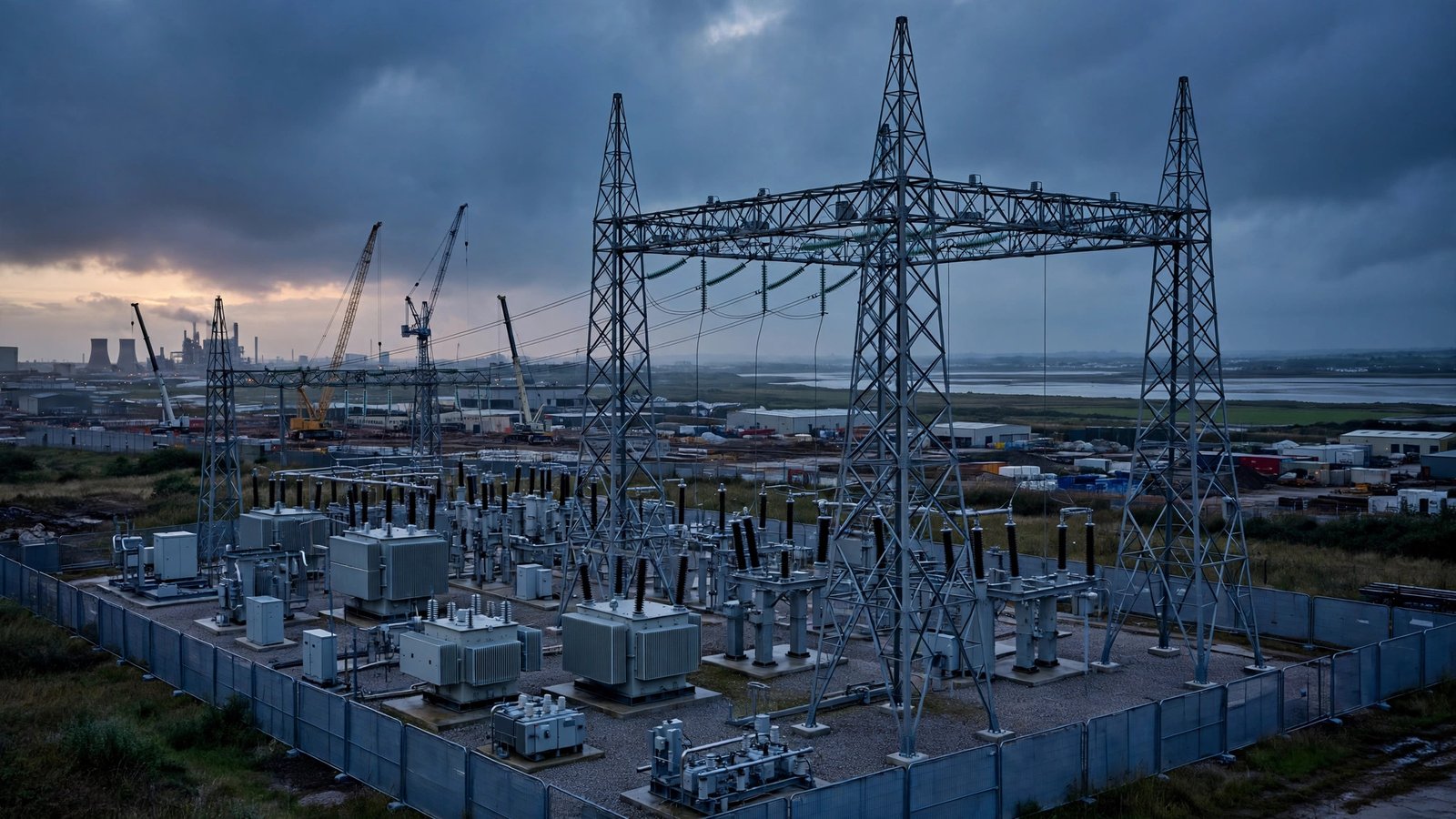
Britain's race to build the power infrastructure behind artificial intelligence has a new landmark on the map. National Grid has agreed to buy around 73 acres of land at Dorman Point, on the Teesworks estate in northeast England, for a proposed high voltage substation that could one day supply a vast neighbouring data centre campus. The deal was first reported by Sky News and confirmed in coverage published on 1 November 2026.
The announcement matters because it tackles a familiar bottleneck: getting enough electricity to a data centre site, and getting it fast. Grid connection queues have shaped where companies invest, and a substation of this scale at Teesside would be a direct answer, provided planning permission follows.
What National Grid has actually agreed
The agreement covers roughly 73 acres at Dorman Point, a site owned by Teesworks, the local public private partnership that is redeveloping the former steelworks area. National Grid Electricity Transmission would use the land for a proposed 400 kilovolt transmission facility near Middlesbrough, known in project listings as the Tees Dock project.
Land purchase and planning consent are separate steps. Redcar and Cleveland's planning register records a valid outline application submitted on 24 September, with consultation open until 11 November. The project is still at the planning stage, not under construction and not operational.
Matt Pearce, National Grid's head of land, said the deal reflects constructive work to enable vital infrastructure, supporting the growth of AI and digital technologies and the region's next phase of industrial development. He added that the company will work closely with its partners to progress the development as quickly as possible.
Why Teesside, and why now
Teesside did not appear on this map by accident. Reports last year said the UK government had picked Teesworks as the site for a new artificial intelligence data centre, and planning applications had been submitted for a project of nearly 500,000 square metres. The mayor of the Tees Valley combined authority, Ben Houchen, has argued for some time that power capacity is the deciding factor in winning such projects.
Speaking to Sky News, Houchen said everyone who has tried to build a data centre in this country knows the biggest problem is getting enough power to the site quickly. He pointed to the United States, the Gulf states and parts of Europe, which he said have moved faster and attracted the investment while Britain waited in a queue. With up to 3.2 gigawatts of capacity at Teesside, he argued, Britain can finally compete for those projects.
The government added weight to that argument last week when it published a draft national policy statement on data centres, describing them as fundamental to the economy as the railways and electricity networks on which the country has long depended. It also says the country must take control over data centre development and ensure host communities benefit. For Teesside, that language reads like a welcome sign. For critics of rapid data centre growth, it reads like a warning that local concerns could be overridden.
What a substation does, and what it does not do
It helps to be clear about what is being built. A substation routes and controls electricity, connecting industrial customers to the transmission system and making grid capacity available to nearby sites. It does not generate electricity on its own, and the former steelworks site requires remediation before construction can begin.
Coverage describes the proposed facility as potentially Britain's biggest substation, but that remains a projected comparison rather than an operating record. No final data centre operator or delivery timetable has been publicly confirmed. Reports have named Balfour Beatty, the London listed infrastructure services group, as in line to deliver the Teesworks substation for National Grid, with Steel River Power also heavily involved. Both were approached for comment in the reporting, which underlines that construction arrangements are not yet settled.
The opposition question
The project also lands in the middle of a growing argument about where data centres should go and who benefits from them. Campaign groups have protested against planned developments in places ranging from Auchtertool, a village north of Edinburgh, to Brick Lane in east London, raising concerns over electricity demand, water use, noise, and whether local communities see lasting jobs or simply host infrastructure for distant companies.
In October, the Guardian reported that AI companies had told ministers they had 12 months to head off public opposition to data centres in the UK, or risk protests similar to those seen in the United States. That makes Teesside a test case: if a project of this size moves smoothly from land deal to construction, it will be held up as proof the system can work. If it stalls, it will feed the argument that Britain's AI ambitions are running ahead of its ability to deliver the basics.
What happens next
The immediate milestone is the planning process. Consultation on the outline application runs until 11 November. Watch for whether it progresses without major conditions, whether a data centre operator is named for the neighbouring campus, and whether construction partners are formally confirmed.
Longer term, the Teesside deal is best read as one piece of a much larger pattern. The draft policy statement on data centres and a string of regional grid investments all point in the same direction: Britain is trying to treat power infrastructure as a competitive advantage rather than an afterthought. The land deal at Dorman Point does not settle that argument. It does give it a postcode, a size, and a voltage.
Frequently Asked Questions
What has National Grid agreed to buy at Teesside?
National Grid has agreed to purchase around 73 acres of land at Dorman Point on the Teesworks estate for a proposed 400 kilovolt substation near Middlesbrough. The deal was first reported by Sky News in the week before 1 November 2026.
Is the Teesside substation already built?
No. The project remains at the planning stage. An outline application was submitted on 24 September and consultation runs until 11 November, so buying the land and winning planning consent are separate steps.
Why does this substation matter for AI in Britain?
Data centre developers have said grid connection delays are the biggest obstacle to building in Britain. A substation offering up to 3.2 gigawatts of capacity at Teesside could let the region compete for a large AI data centre campus, with supporters arguing sensitive data should be stored on British soil.





Post Comment