“Google’s Project Suncatcher: AI Satellites Explained Simply”
Google just put a piece of its AI brain in orbit. Under a program called Google Project Suncatcher, the company has launched its first AI TPU satellite: a spacecraft carrying the same kind of custom chip that powers Google's data centers, now circling the Earth. It sounds like science fiction, but the logic behind it is surprisingly practical. Space has two things AI data centers desperately need, and Earth is running short on both.
Google Project Suncatcher Explained
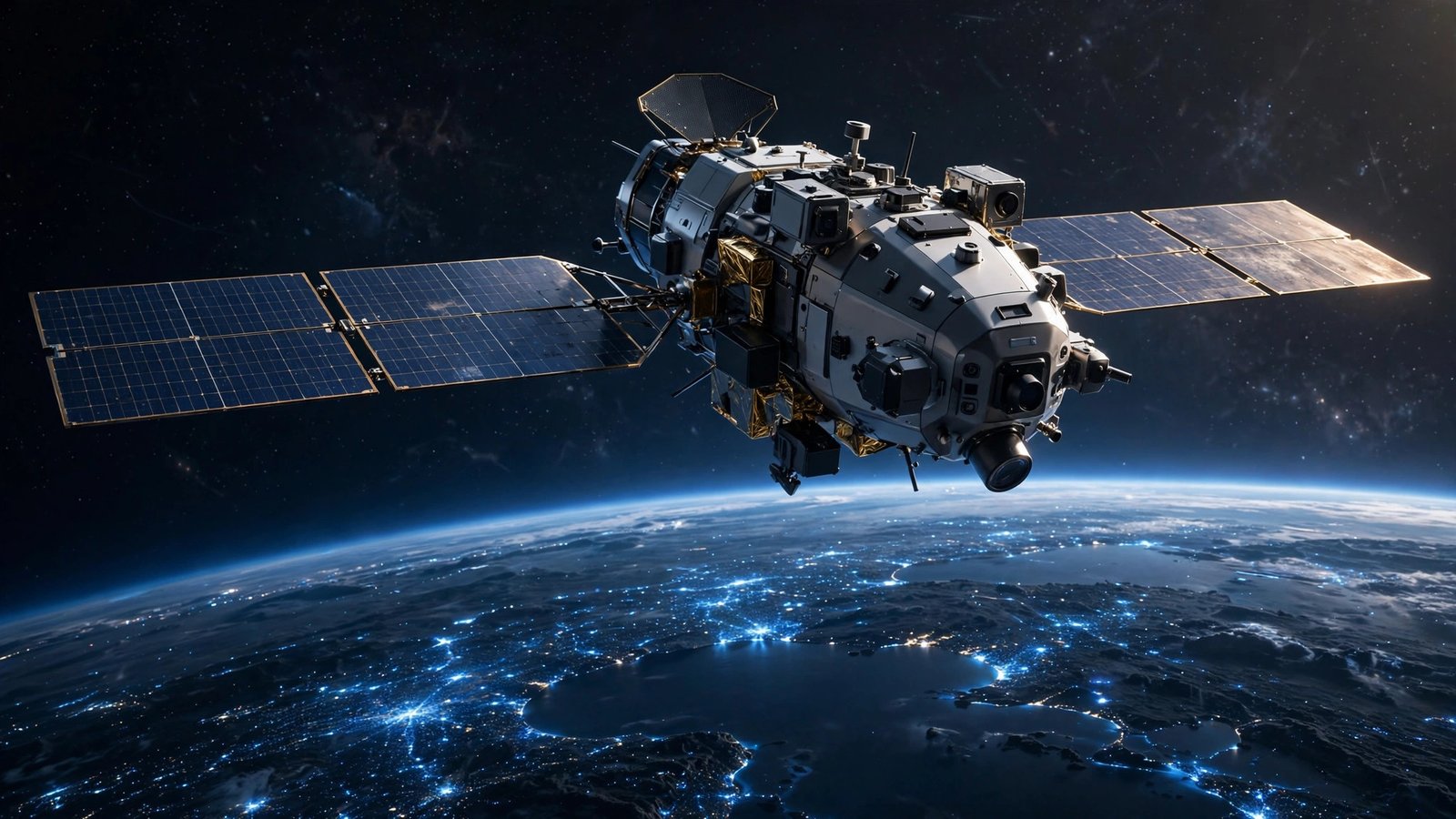
Project Suncatcher is Google's effort to move AI computing off the planet. The first satellite carries a TPU, Google's Tensor Processing Unit, the custom-designed chip that trains and runs models like Gemini. Instead of sitting in a warehouse in Iowa drawing power from the grid, this TPU is drawing power from the sun, 24 hours a day, with no night.
The Google Project Suncatcher concept isn't entirely new. Researchers have discussed orbital data centers for years, mostly as thought experiments. What's new is a company with Google's resources actually launching hardware to test whether the idea works in practice. This first satellite is a proof of concept, not a production system.
Think of it as an experiment with a very expensive lab. Google needs real data on how chips perform in orbit, how to manage them remotely, and whether the economics make any sense at all. You can't get those answers from a whiteboard.
Why Put AI in Space?
Two words: power and cooling. AI data centers are among the most power-hungry facilities ever built, and they generate enormous heat that must be removed with massive cooling systems. Both problems get easier in orbit.
Solar power in space is abundant and constant. A satellite never deals with cloudy days or nighttime, and there's no land to buy, no neighbors to complain, and no grid to overload. For an industry whose growth is increasingly limited by electricity supply, that matters.
Cooling is the sneakier advantage. Space is cold, and radiating heat into the void is, in principle, simpler than running industrial cooling plants. In practice, thermal management in orbit is its own engineering challenge, but the physics fundamentally favor space over a warehouse in a desert.
There's also a regulatory angle. Building data centers on Earth now means environmental reviews, community opposition, and in some places outright halts. Finland recently ordered Google to stop preparatory work at two planned data center sites over environmental concerns. Orbit has no zoning board.
The Hard Parts Nobody Mentions
Before anyone declares the orbital data center era open, the obstacles are formidable. Launching things into space is still expensive, and a data center needs serious mass: chips, power systems, radiators, shielding. Every kilogram costs thousands of dollars to lift.
Maintenance is the bigger problem. When a server fails in Iowa, a technician swaps it. When a chip fails in orbit, it's gone. Space hardware must be radically more reliable than data center hardware, or the economics collapse. Radiation degrades electronics over time, adding another failure mode that terrestrial chips never face.
Then there's latency and bandwidth. Getting data to and from orbit takes time and limited radio spectrum. For training AI models, where massive datasets must flow continuously, the connection between Earth and orbit could become the bottleneck that defeats the whole purpose.
Who Else Is Looking Up
Google isn't the only one eyeing orbit. For years, researchers, startups, and space agencies have floated versions of the same idea: data centers above the atmosphere, powered by unfiltered sunlight. Most of it stayed on paper because nobody had both the AI workload and the space capability to try it for real.
That combination is newly common. Launch costs have fallen dramatically over the past decade, and AI's energy appetite has grown just as fast. Two trends that were once separate have collided, and suddenly orbital computing looks less like a thought experiment and more like an engineering roadmap.
Expect the next few years to bring more experiments, not fewer. Some will come from cloud giants testing the waters. Others will come from space startups selling computing as a service. The winner, if there is one, will be whoever proves the economics first, and right now Google has a head start with hardware already overhead.
What Comes Next
The honest answer: probably a long series of test satellites. Google will gather data on performance, reliability, and cost, then decide whether orbital AI computing deserves real investment. This is how ambitious infrastructure starts, with a single experiment, not a grand announcement.
If it works, the implications stretch beyond Google. And if the Google Project Suncatcher experiment validates even part of the concept, expect the rest of the industry to follow quickly.
If it doesn't work, Project Suncatcher still pushes the industry forward. Every failed constraint teaches something, and the engineering lessons from building space-rated AI hardware will feed back into terrestrial designs. Either way, the satellite now overhead is doing useful work.
Our take: don't expect orbital data centers next year, but don't dismiss the idea either. The AI industry's hunger for power is real, growing, and increasingly hard to satisfy on the ground. Google is exploring the most ambitious solution available. That alone tells you how serious the energy problem has become.
What is Google's Project Suncatcher?
Project Suncatcher is Google's program to test AI computing in orbit. Its first satellite carries a Google TPU chip into space to evaluate whether AI workloads can run on solar power with space-based cooling instead of in terrestrial data centers.
Why is Google putting AI chips in space?
AI data centers need enormous amounts of electricity and cooling, both of which are getting harder to secure on Earth. Space offers constant solar power, natural cold, and freedom from land-use battles, making it a potential long-term solution to AI's energy problem.
Will we all use space-based AI soon?
Not soon. The first satellite is a proof of concept, and major hurdles remain around launch costs, hardware maintenance, radiation damage, and data bandwidth. Expect years of testing before orbital AI computing becomes practical, if it ever does.