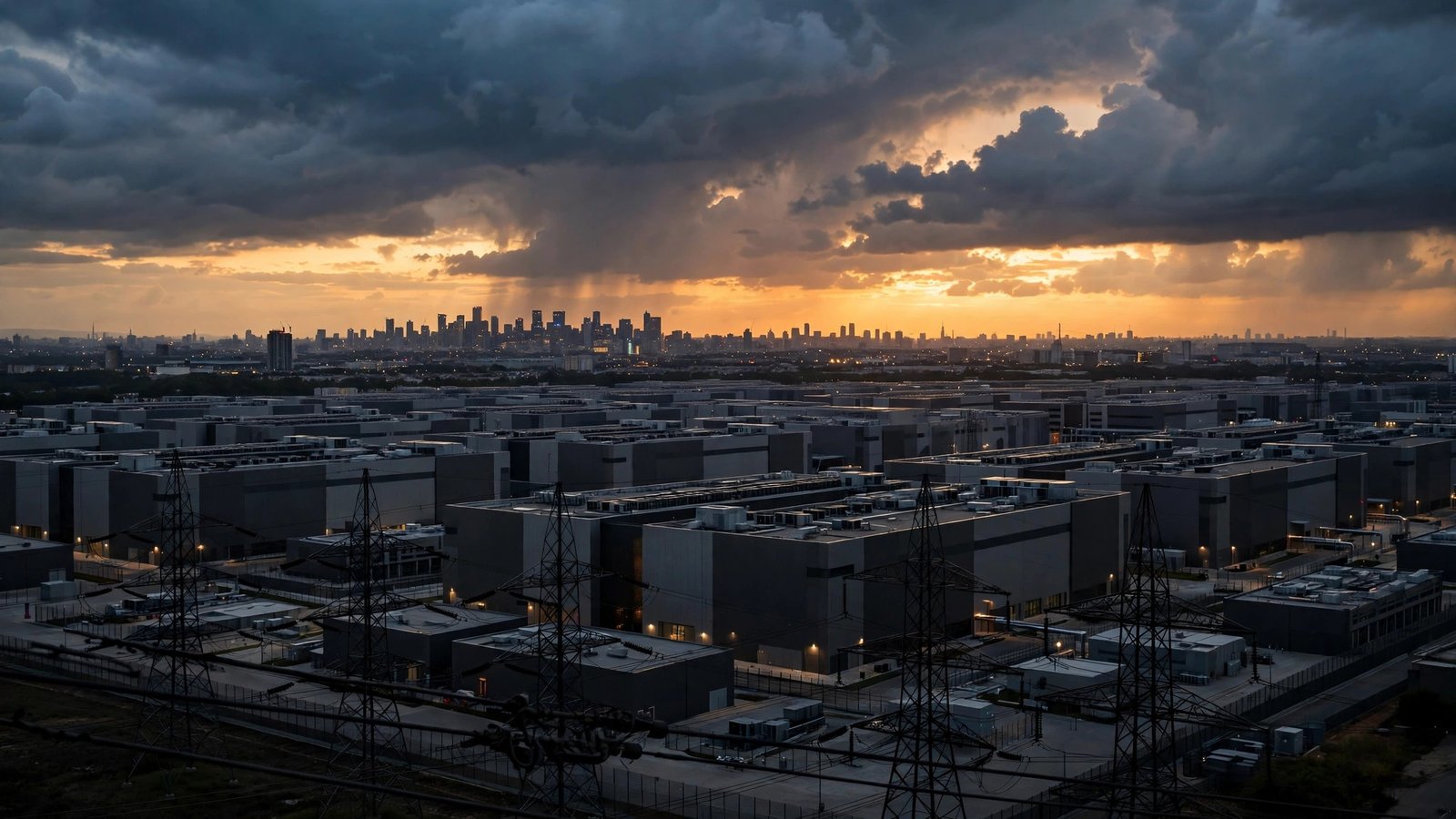
Only 23% of Australia’s Planned AI Data Centres Have Actually Secured Power, Bloomberg Finds
Australia wants to be the Asia-Pacific's AI hub, and the building cranes are certainly there to back up the ambition. Dozens of large data centres are planned or under construction around Sydney and Melbourne, riding a pipeline of investment measured in the tens of billions. But a review of company disclosures published on October 23 suggests the boom has a problem that is much harder to spin than any marketing brochure: most of these facilities may never switch on, because they do not have electricity to run on.
According to the Bloomberg review, just 23 percent of the more than 40 large data centres planned or under construction have publicly confirmed they have secured a power supply or a grid connection. In Sydney, seven of 28 active projects have confirmed power. In Melbourne, it is three of 15. A grid connection agreement is one of the clearest signs that a project is genuinely advancing, and its absence points to significant setbacks and potential delays across the pipeline.
The boom clustered where the power is not
Australia's pitch is built on genuine advantages: vast open spaces, enormous clean energy potential, and political stability. Yet almost the entire development pipeline has clustered around Sydney and Melbourne, where nearly two in five Australians live, drawn by existing fibre networks and access to what was supposed to be reliable power. That clustering is now straining already stretched infrastructure, and pitting developers directly against residents who were there first.
The mismatch is becoming the defining story of the country's AI ambitions. Developers rushed to announce megawatt-scale campuses close to the people who will use them, but the grid underneath was never scaled for facilities that can each swallow as much power as a small suburb. Grid connection queues, substation upgrades and transmission approvals all move on timelines measured in years, while project announcements move on timelines measured in news cycles.
Bloomberg contacted 25 developers to verify their public disclosures. GreenSquare declined to comment on its power arrangements but said it was "working closely with relevant authorities and infrastructure partners to support long-term operational performance." CDC Data Centres said it had "robust delivery plans in place for all sites under construction." Nine others declined to comment or did not directly answer questions about future projects. The rest did not respond at all.
Locals are pushing back too
Grid capacity is only half of the problem. Local opposition is rising alongside the cranes. Residents have raised concerns about noise, pollution, fire risk and water use, and objected to giant facilities sited near homes, schools and farmland. The objections are no longer isolated. Bronwyn Cumbo of the University of Technology Sydney has described a rising public resistance to AI, particularly generative AI, in the communities surrounding planned sites.
That resistance matters because data centres need planning approval, and planning approval needs some measure of local consent. A community that sees a windowless industrial box with industrial-grade cooling towers going up next to a primary school is not automatically going to believe the jobs argument. The industry's habit of announcing first and consulting later has left it fighting on two fronts at once: the grid operators who cannot connect projects fast enough, and the neighbours who do not want them there at all.
The global scramble behind the numbers
The power shortfall lands in the middle of a worldwide race for compute, and the demand side shows no sign of pausing. Chip orders keep racing ahead of the buildings meant to house them. BE Semiconductor Industries reported third-quarter orders of 342.6 million euros, up 17 percent on the previous quarter and 96 percent on a year earlier, a number that captures just how much silicon is being manufactured for a future that may arrive late.
Hardware is even trying to solve the problem by getting faster. NVIDIA's DSX POD reference design, built on the Vera Rubin platform, promises AI factories in modular containers that can be deployed at a prepared site in as little as 14 days, with global availability expected in early 2027. The logic is sound: if you can build the building in two weeks, you can catch up with demand. But a faster build does nothing for the things most Sydney and Melbourne projects still lack: a grid connection, cooling capacity and planning approval. Fourteen days to assemble a container means nothing when the substation takes three years.
What happens next
For Australia, the stakes are the country's pitch to become the region's AI hub, and that pitch was supposed to be one of the strongest in the Asia-Pacific. The country has the land, the sun and the wind. What it does not clearly have yet is the transmission infrastructure and the community buy-in to turn announcements into megawatts. That gap is now visible in the numbers, and investors tend to notice when the gap is this wide.
For the industry, the Bloomberg findings are a warning shot. The AI boom's scarcest resource right now is not chips, it is electricity. A data centre without secured power is not a data centre, it is a very expensive planning application. Expect to see more projects chasing regional sites closer to generation, more developers signing power deals before they sign press releases, and a harder conversation with communities that have learned to ask exactly where all that electricity is coming from.
The next twelve months will sort the serious projects from the speculative ones. The facilities with grid agreements and community support will keep rising. The rest may quietly join the long list of grand AI announcements that never made it past the fence line.
Frequently Asked Questions
How many AI data centres are planned in Australia?
According to the Bloomberg review published on October 23, more than 40 large data centres are planned or under construction around Sydney and Melbourne. Estimates put the total investment pipeline anywhere from A$70 billion to more than A$100 billion.
What percentage of Australia's planned data centres have secured power?
Just 23 percent have publicly confirmed a power supply or grid connection, according to the review of company disclosures. In Sydney, seven of 28 active projects have confirmed power, and in Melbourne, three of 15.
Why are Australian data centres struggling to get power?
Projects have clustered around Sydney and Melbourne for fibre access and proximity to users, straining already stretched grid infrastructure. Grid connection agreements, substation upgrades and planning approvals take years, while local residents are increasingly objecting to facilities near homes, schools and farmland over noise, pollution, fire risk and water use.



Post Comment