Bob McGrew’s $1.5 Billion Bet: Arda Wants AI to Turn Factory Designs Into Assembly Lines in Minutes
The most expensive bottleneck in American manufacturing might not be labor, tariffs, or parts. It might be the paperwork, or rather, the weeks and months of engineering work it takes to turn a finished product design into a factory that can actually build it. On October 20, a stealthy startup called Arda stepped into the open with $160 million and a $1.5 billion valuation, arguing that this bottleneck is exactly the kind of problem AI was made to solve.
Leading it is Bob McGrew, who spent his first decade as a product and engineering leader at Palantir, then served as OpenAI's chief research officer during the years it went from lab curiosity to global obsession. Leaving that post for assembly lines sounds like an odd turn until you hear his pitch: what coding assistants did for programmers, he wants to do for manufacturing engineers.
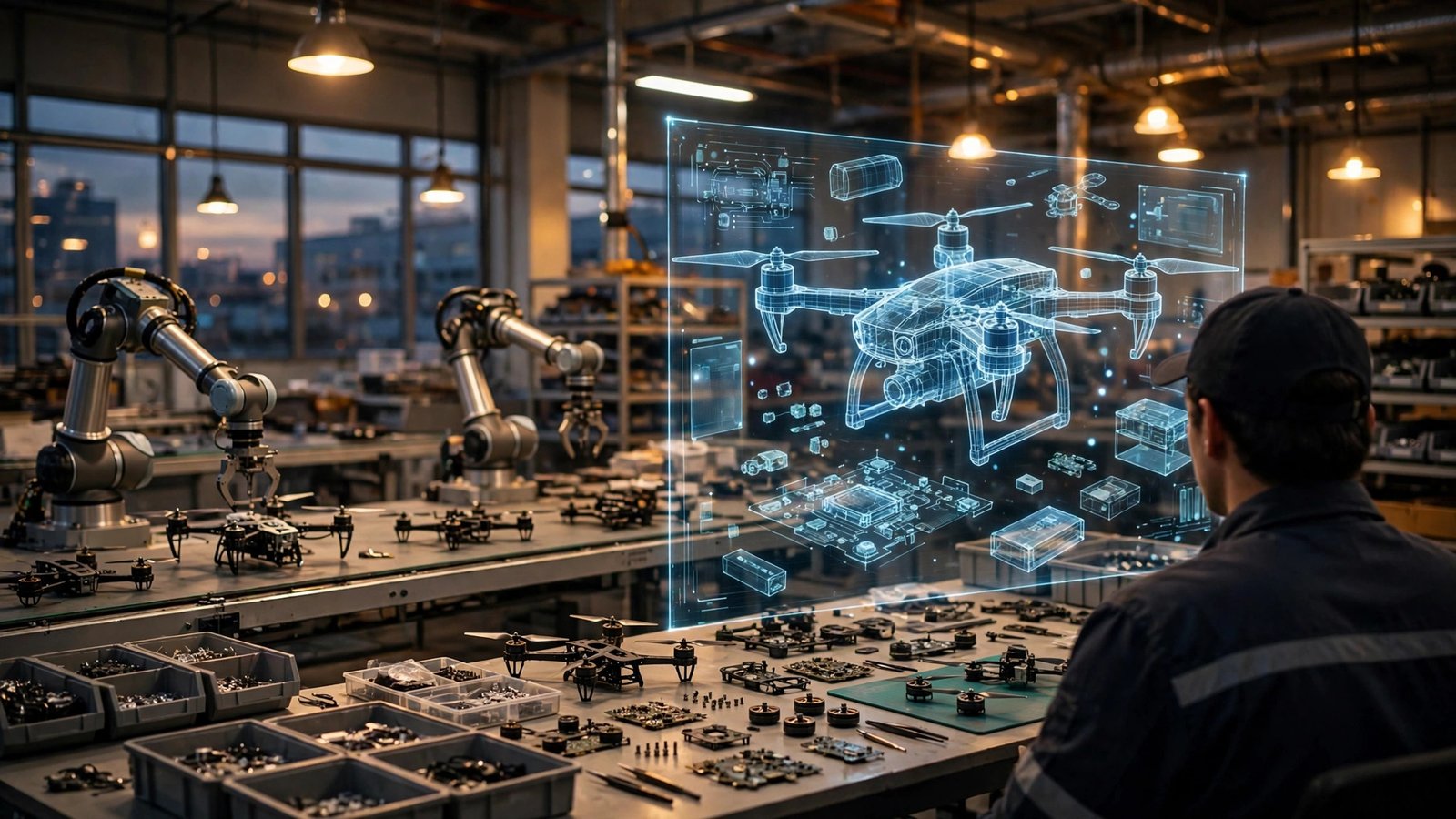
The idea is straightforward: feed the software a product's CAD files and design artifacts, and it works out the assembly sequence, writes the work instructions, and lays out the workstations. When the design changes, as it constantly does in fast-moving industries, the plan updates with it. Instead of a redesign rippling through a factory over months, the line stays current as a matter of routine.
Why retooling a factory is so painful
To see why investors handed Arda $232 million, consider what happens when a product design changes. Retraining a worker on revised instructions might take a day. Changing the automation to match, Arda says, can take three to six months and cost nearly $1 million for a single station. That math works for products that rarely change. It falls apart for drones, satellites, data center hardware, and defense systems, where designs evolve constantly.
That is the asymmetry McGrew keeps returning to: human learning is fast and cheap, while machine reprogramming is slow and ruinously expensive. Factories either freeze their designs, which kills innovation, or burn months retooling, which kills margins. For American manufacturers trying to reshore production, this is a wall they hit constantly, and it is why the capital flooding into Arda is framed around speed as a strategic asset, not just an efficiency gain.
What the software actually does
Arda Industries builds AI for manufacturing engineering, in the company's own words. Its software turns a product design into an assembly line and keeps that line current as the design changes. That sentence is doing a lot of work, so it is worth unpacking the moving parts.
The system reads design files, the CAD models and engineering documents that describe a product. From them it derives an assembly process: which parts go together, in what order, using which tools, across which stations. The output is written work instructions and a station layout, the full translation from design intent to factory routine. The team was built for this intersection: software engineers from Palantir, manufacturing engineers from Tesla, and AI researchers from MIT, working on customers' factory floors against real assemblies.
The promise is not a robot that builds things by itself, at least not yet. Arda is positioning itself as an intelligence layer between design and production, with robotics automation as the roadmap. The company says it is developing the robotics models needed to program automated assembly lines directly, not just plan lines run by people.
Anduril is already using it
Early-stage enterprise AI startups live or die by whether a serious customer vouches for them, and Arda came out of stealth with a strong one: Anduril. The defense contractor has been Arda's first design partner and customer over the past year, and the software is now integrated into its manufacturing system, ArsenalOS.
The numbers Anduril reports are striking. Basic assembly instructions that once took 10 hours now take 15 minutes, according to the company. Investors close to the deal claim some engineering workflows run more than 10 times faster. Those are the company's figures, so treat them as marketing until independent evidence arrives, but they point to the same mechanism: the costly, repetitive translation between design and factory floor is exactly the kind of work software eats.
Anduril's endorsement says something about Arda's first markets. Defense manufacturing changes fast and treats production speed as a strategic capability. Electronics and the data center supply chain, both named as targets, share the same profile.
The money behind the bet
The $160 million Series A, at a $1.5 billion valuation, was co-led by Altimeter, Accel, and Khosla Ventures, with participation from XYZ Venture Capital, 8VC, SVAngel, and Felicis. It follows a $72 million seed round led by Accel and Founders Fund, bringing total funding to $232 million. That kind of money buys two things: elite talent and time to do hard research.
The funding will grow its engineering and research teams, expand deployments in defense, electronics, and the data center supply chain, and develop robotics models to automate assembly. The co-founder bench beyond McGrew includes early Palantir leaders Augustus Odena and Alex Mark, plus Jakob Frick, who previously worked at Palantir and SpaceX.
The valuation is a bet that manufacturing engineering is a software problem that simply never had the software. If AI can compress a six-month retool into days, it changes the economics of building things in America. That narrative raised $160 million in a crowded AI market. Now Arda has to prove the factory floor agrees.
Frequently Asked Questions
What does Arda's software actually do?
Arda's AI reads a product's CAD files and design documents, derives an assembly sequence from them, writes work instructions, and lays out workstations. As the design changes, the plan updates automatically, keeping the assembly line current without months of manual re-engineering.
How much has Arda raised, and who backs it?
Arda has raised $232 million in total: a $160 million Series A at a $1.5 billion valuation announced on October 20, co-led by Altimeter, Accel, and Khosla Ventures, following a $72 million seed round led by Accel and Founders Fund. Other investors include XYZ Venture Capital, 8VC, SVAngel, and Felicis.
Is Arda's technology already used in real factories?
Yes, in at least one high-profile case. Defense contractor Anduril has been Arda's first design partner and customer, and the software is integrated into its ArsenalOS manufacturing system. Anduril reports that basic assembly instructions that took 10 hours now take 15 minutes. Arda also says it works with companies in the data center supply chain.



Post Comment