“Apple HomeView Smart Display: Price Features and Release Date”
Apple finally did what everyone expected: it built a smart display for the home. The Apple HomeView is a voice-driven screen built around a completely overhauled Siri, priced at $299 and shipping November 13. It's also one of the first major products of the John Ternus era, after he took over as CEO on September 1. After years of watching Amazon and Google own the smart display market, Apple is betting that privacy, design, and deep ecosystem integration are worth a premium price.
Apple HomeView Price, Features, and Release Date
Let's start with the essentials. Apple HomeView costs $299, a clear step above Amazon's and Google's smart displays, which mostly sell well under $200. It ships November 13, positioning it squarely for the holiday shopping season.
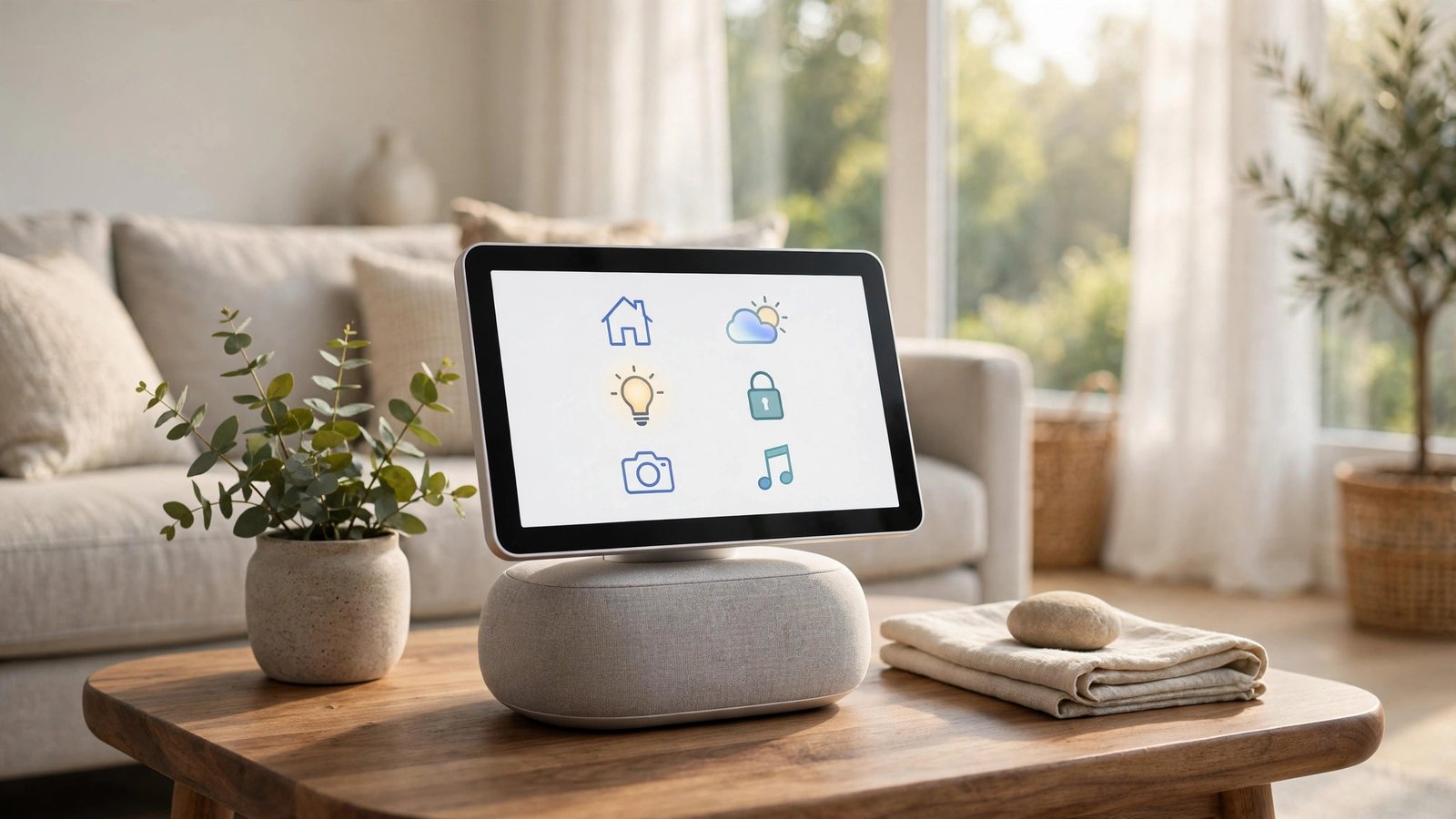
Two versions are coming: a tabletop model with a speaker base and a wall-mounted version. That choice matters because it signals Apple sees HomeView as infrastructure for your home, not just another gadget on the nightstand. The wall-mounted option competes directly with the light switches and thermostats it aims to control.
The headline feature is personalization. HomeView can recognize up to six household members and adjust its interface for whoever is standing in front of it. Your calendar, your music, your smart home scenes appear automatically, and someone else gets theirs. In practice, this is the feature most likely to make guests say "okay, that's nice."
Siri's Biggest Overhaul Yet
The real story isn't the hardware, it's the assistant inside it. Siri has been rebuilt from the ground up, and here's the twist nobody saw coming a few years ago: Apple's new Siri is built on technology from Google's Gemini. Yes, Apple is leaning on a rival's AI model to power its most personal product.
Pride aside, it's a pragmatic move. Gemini is one of the most capable AI models available, and building a competitive assistant from scratch would have taken Apple years it didn't have. The result, by all accounts, is a Siri that finally understands context, handles multi-step requests, and doesn't make you repeat yourself three times to set a timer.
For Apple, the bet is that users care about the experience, not the engine. Most people will never know or care whose model answers their questions. They'll just notice Siri finally works the way it always should have.
Smart Home Integration
HomeView works with a new Apple Home Collection of accessories developed with LG and Schneider Electric, plus any Matter-compatible products. Matter support is the quiet superpower here: it means HomeView can control devices from hundreds of brands, not just Apple's partners.
This is where Apple's premium pricing starts to make sense. A $99 smart display that only half-controls your home is cheap in the wrong way. If HomeView genuinely becomes the most reliable controller for lights, locks, thermostats, and cameras across brands, $299 stops looking outrageous for people already invested in a smart home.
The open question is breadth at launch. Apple's accessory collection is new, and Matter, while promising, is still maturing. Early buyers should expect the experience to improve meaningfully over the first year as more devices and updates arrive.
Should You Buy Apple HomeView?
It depends on what you already own. If your home runs on Apple devices and you've been frustrated by Siri for years, HomeView is the product you've been waiting for. The personalization, the new Siri, and the Matter support line up well for Apple households.
If you're deep in Amazon's or Google's ecosystem, the math is tougher. You'd be paying triple the price of an Echo Show to switch platforms, and the new Siri would need to be dramatically better to justify it. It might be, but that's a lot to ask on day one.
Privacy: Apple's Real Selling Point
Strip away the hardware and the rebuilt Siri, and Apple's strongest argument is the one it always makes: privacy. HomeView processes personalization on the device, and Apple has a long track record of keeping Siri requests, voice recordings, and home data out of its advertising business, because it doesn't have an advertising business built on personal data.
That contrast matters in the living room. A smart display with a camera and microphone is an intimate device, and plenty of people are uncomfortable putting one from an ad-driven company in their bedroom or kitchen. Apple is charging for the reassurance that your late-night questions and your kids' routines aren't training someone's ad targeting.
Skeptics will note that the new Siri leans on Google's Gemini technology, which raises fair questions about where processing happens and what data flows where. Apple will need to be transparent about the boundary between on-device work and anything that touches Google's systems. For privacy-conscious buyers, that answer matters more than any spec sheet.
Our honest take: HomeView is a strong first entry in a category Apple should have entered years ago. The hardware looks thoughtful, the Siri rebuild is overdue, and the privacy pitch is real. But $299 is a lot for a first-generation product, and patient buyers will likely see a better value proposition within a year.
How much does Apple HomeView cost?
Apple HomeView is priced at $299. That's notably higher than competing smart displays from Amazon and Google, which typically sell for under $200. Apple is positioning it as a premium product with better privacy and ecosystem integration.
When does Apple HomeView ship?
Apple HomeView ships November 13, just in time for the holiday season. Two versions will be available: a tabletop model with a speaker base and a wall-mounted version for permanent installation.
Is Apple HomeView worth it over an Echo Show or Nest Hub?
For Apple-centric households, probably yes, thanks to the rebuilt Siri, multi-user personalization, and Matter support. For everyone else, the $299 price is hard to justify against capable competitors under $200. Consider waiting for reviews before switching ecosystems.