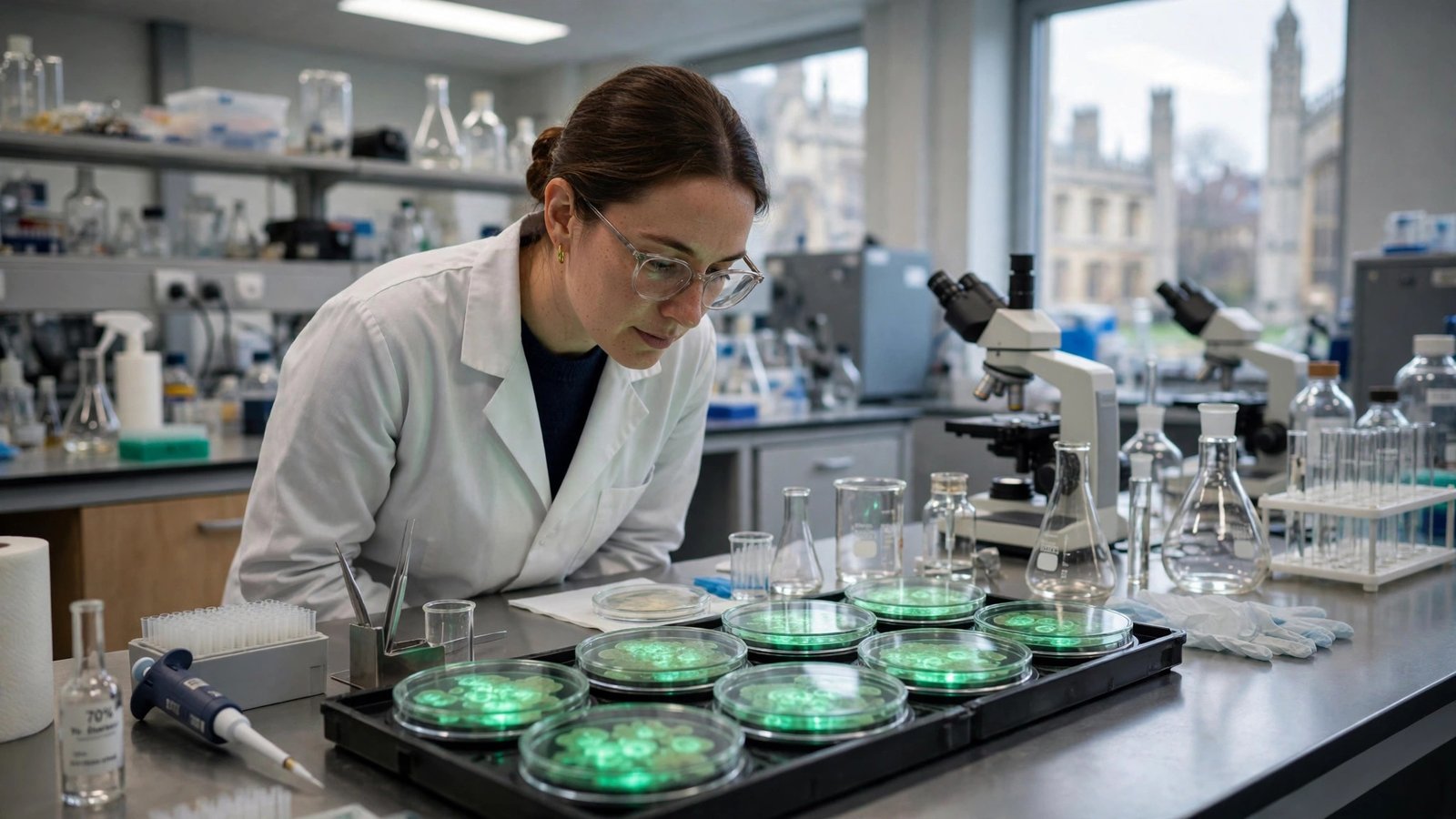
Cambridge Biotech bit.bio Raises $25 Million to Scale Human Cell Models for Drug Discovery
Cambridge biotech company bit.bio has raised $25 million in a Series D funding round, as demand for its lab-grown human cell models keeps climbing. The company, based in the UK city known for its university and science parks, said the new money will help it add more human cell types to its catalogue and make its products easier for researchers around the world to buy and use.
The round follows a Series C earlier in 2026, according to reports on the deal published on 4 November 2026. Existing backer M&G Investments took part, alongside Dr Jonathan Milner, the founder and former chief executive of life sciences tools company Abcam. The financing arrives at a moment when drug discovery is changing fast, with artificial intelligence helping researchers spot promising compounds far quicker than before, and with growing interest in lab models that reflect human biology more closely than animal testing can.
What bit.bio actually does
Drug researchers need cells to test their ideas on. Traditionally, they have relied on a mix of animal cells, donated human tissue and cell lines that can behave inconsistently from one experiment to the next. Donor variability is a real headache: if the starting material differs, results can differ too, and a promising result in one lab may prove hard to repeat in another.
bit.bio tries to solve that problem with a technology it calls opti-ox. In simple terms, the platform programmes stem cells so they develop into defined human cell types in a consistent, repeatable way. The result, the company says, is batches of cells that behave the same way time after time, and that can be produced at a scale large enough for serious research programmes.
Its catalogue already covers more than 50 human cell types, including models representing the heart, the liver and the central nervous system. Those models are used in disease research, functional genomics, drug discovery and toxicology testing, where researchers check whether a compound could harm healthy tissue before it ever reaches a human trial.
Why demand is surging
The numbers behind the funding round tell a clear story. bit.bio reported that paid vial volumes rose 76 percent so far in 2026, while orders grew 34 percent and the number of active customers increased 40 percent. Academic customers grew even faster, up 63 percent, which suggests universities are adopting the models for teaching and early-stage research as well as for commercial drug programmes.
Two trends help explain that growth. First, AI is speeding up the early stages of drug discovery. Machine learning tools can now sift through vast chemical libraries and suggest compounds worth testing, but each suggestion still needs to be checked in a biological system. That creates demand for reliable human cell models in large quantities: the faster the AI suggests candidates, the more testing capacity researchers need.
Second, there is a steady shift towards alternatives to animal testing. Regulators and research funders in several countries have encouraged methods that reduce reliance on animals, and human cell models fit that direction because they are built from human biology from the start. A model made of human heart cells, for example, can reveal effects that an animal model might miss, and vice versa.
Neither trend removes the need for careful science. Cell models are simplifications of real organs, not replacements for them, and a result in a dish still needs confirmation through further testing. But as a first filter, a consistent human cell model can save researchers months of work and help them drop weak candidates earlier.
What the $25 million will fund
The company said it plans to use the new capital to introduce new human cell types, widen access to its products and strengthen its position as a supplier of standardised biological models. In practice, that means growing the catalogue beyond its current 50-plus types, so researchers working on rarer conditions or less common cell types can find a ready-made model instead of building one themselves.
For M&G, the deal fits a strategy of backing ambitious businesses as they move into a new phase of growth. Milner brings a different kind of value: experience building Abcam from a focused product offering into a global life sciences tools business, which is the path bit.bio hopes to follow.
What it means for UK life sciences
Cambridge has long been one of the strongest life sciences clusters in Europe, with a dense mix of university labs, spinouts and global pharmaceutical companies. A $25 million round for a Cambridge company is a useful signal that investors still see room for growth in UK biotech, even in a funding market that has been selective in recent years.
It also shows how UK science is connecting to the AI boom in a less obvious way. Much of the attention goes to the companies building AI models, but a whole supply chain sits behind them, from chip makers to data centres to, in this case, the biological testing systems that check what AI-designed compounds actually do. bit.bio sits in that testing layer, and its growth suggests the AI drug discovery wave is creating real orders, not just headlines.
Still, the direction of travel is clear. Drug discovery is getting faster at the idea stage, and the bottleneck is moving towards testing those ideas in systems that behave like human biology. Companies that can supply those systems consistently, at scale, are finding customers. bit.bio, with its 76 percent jump in vial volumes, is now betting $25 million that it can be one of them.
Frequently Asked Questions
What does bit.bio do?
bit.bio programmes stem cells into defined human cell types that researchers use to test drugs and study disease. Its opti-ox platform is designed to produce consistent, scalable batches, avoiding the donor variability that can make traditional cell models hard to reproduce.
How much did bit.bio raise, and who invested?
The company raised $25 million in a Series D round reported on 4 November 2026. Investors included existing backer M&G Investments and Dr Jonathan Milner, founder and former chief executive of Abcam. The round followed a Series C earlier in 2026.
Why are human cell models in demand right now?
AI is helping researchers identify drug candidates faster, which increases the need for reliable testing systems, and interest in alternatives to animal testing is also growing. Human cell models address both trends by offering reproducible systems built from human biology.



Post Comment