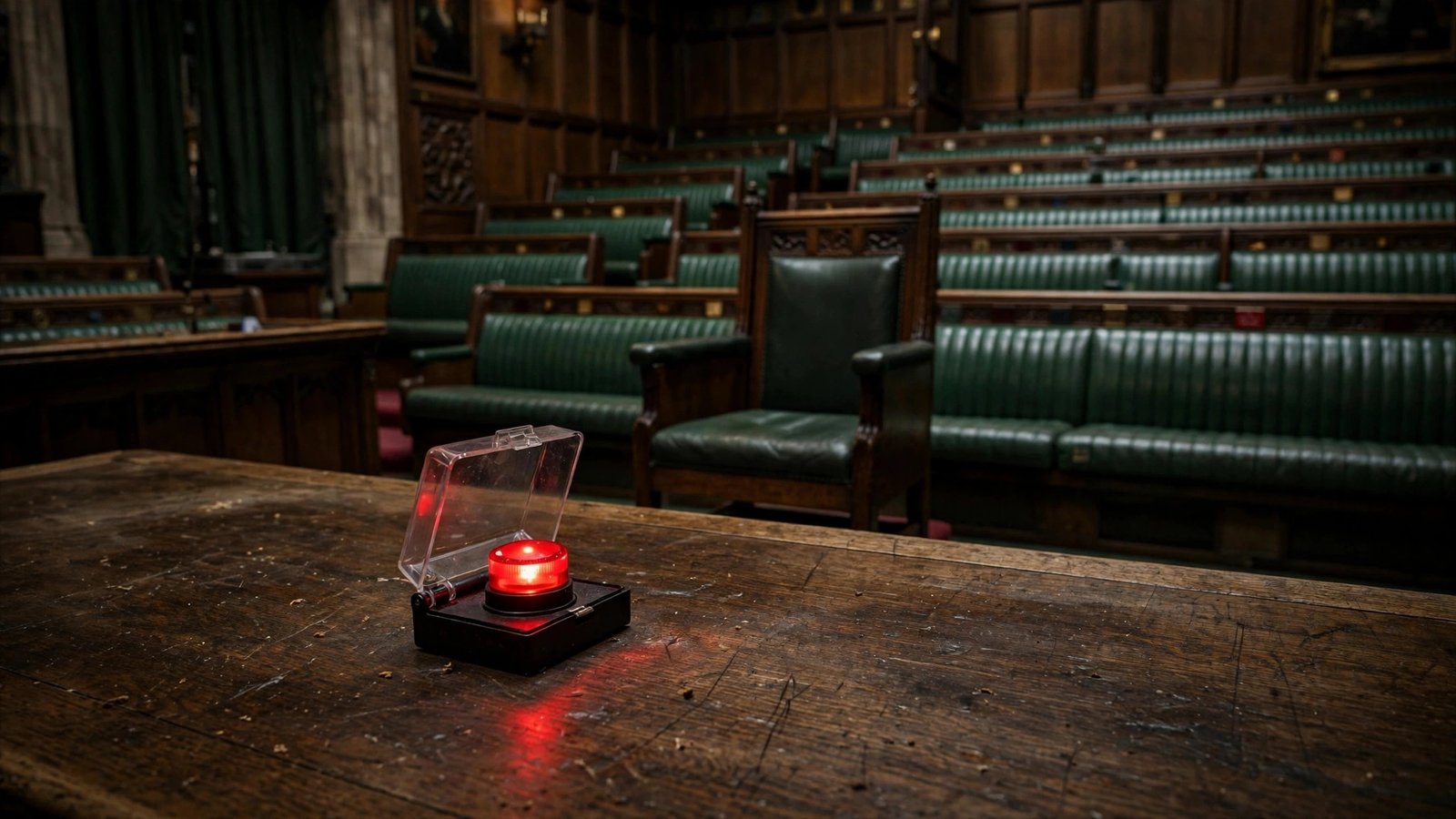
OpenAI and Anthropic Promise a Kill Switch for Their AI if British Intelligence Shows It Is Unsafe
On 13 October 2026, representatives of OpenAI and Anthropic appeared before the UK Parliament’s Business, Innovation, Science and Trade Committee and made a promise few expected: if the country’s secret services bring evidence that their models are unsafe, they will pull them down.
The pledge sounds dramatic, and in some ways it is. But the details matter more than the headline, because both companies attached conditions that reveal a lot about how the AI industry now thinks about safety, control and responsibility.
## What was actually said in the hearing
The session gave MPs a rare chance to question frontier AI labs on national security. According to Sky News reporting, both firms committed to responding immediately if presented with evidence of harm by MI5, MI6, GCHQ or the UK’s AI Security Institute (AISI).
Tom Duff Gordon, OpenAI’s head of EMEA policy, put it directly: “If either AISI or MI5, MI6, GCHQ or any of these authorities came to us and said, ‘We think your model is unsafe, we think it’s being used by a bad actor’, we would obviously look at that immediately with the utmost urgency.”
He spelled out what would follow: “If we are in control of the model, we would then stop the deployment of that model, or we would pause the training model, or we wouldn’t deploy it.”
Lord Booth Smith, representing Anthropic, made the same commitment. “If any agency came forward with demonstrable evidence that the model was not safe or dangerous, we would of course take it off the market,” he told the committee.
Taking a model “off the market” could mean disabling access for millions of users overnight, and pausing a training run could waste enormous compute already spent. Neither pledge would be made lightly.
## What a kill switch would look like in practice
The phrase “kill switch” suggests a single red button, but the reality would be messier. Shutting down a deployed model means revoking API access, removing hosted weights and telling enterprise customers the service they pay for is going dark. For models already downloaded and run elsewhere, it means almost nothing.
That is precisely the caveat both executives raised. Duff Gordon warned the companies could only act “if we are in control of the model,” adding: “There are some nuances with regard to how models in general are deployed because we don’t always have control if they’re hosted by somebody else.” OpenAI’s and Anthropic’s models run on their own infrastructure when accessed through their apps and APIs, but copies of open-weight models can be hosted and fine-tuned by anyone with enough hardware. A kill switch works for the cloud-hosted flagship model. It does very little for a weights file already sitting on a server in another country.
## Why the pressure is building now
The hearing did not happen in a vacuum. Just before it, MI5 chief Sir Ken McCallum warned publicly that AI is “supercharging” security threats to the UK. According to Sky News, he said: “It can produce propaganda and radicalising material tailored to the individual. We’ve caught terrorists seeking to exploit AI to improve their reconnaissance and attack methodologies, with AI-enabled drones adding a new twist.”
He also named the unrealised risk that worries him most: “Not yet realised, but the misuse case to which I’d attach greatest weight, is AI’s potential to change the stakes on existing or even new bioweapons.”
Against that backdrop, the MPs’ questions make sense. If the head of the security service says terrorists are already using AI to sharpen their methods, the natural follow-up is whether the companies building those systems would switch them off in an emergency. The answer, at least in principle, is yes.
## The promise that is easy to keep, and the one that is not
There is a generous reading and a sceptical one. The generous reading: two leading AI companies accepted, on the record, that their products could pose national security risks and agreed to cooperate with the agencies that manage them. That is genuinely new, and sets a precedent other governments will cite.
The sceptical reading: the promise only covers models the companies directly control, it is voluntary rather than legally binding, and there is no public mechanism to check whether it would be honoured in a real crisis. Nobody defined what “demonstrable evidence” means or what happens if a company disagrees with an agency’s assessment.
Both readings can be true at once. Voluntary commitments are often where regulation starts, and whether Parliament turns this testimony into law will decide whether the kill switch is a genuine safeguard or a reassuring line in a committee transcript.
## What this changes for everyday users
For the average user, the immediate effect is close to zero. Nobody is suggesting routine use of AI chatbots is about to be interrupted. The scenario discussed is an extreme one: a model shown to be actively dangerous, with evidence presented by a national security agency. The idea that such a model could be switched off overnight at the request of a state is now part of the public record in one of the world’s most important AI jurisdictions, and that precedent is likely to be cited the next time a government anywhere wants similar leverage over an AI company. The question is no longer whether states want a say in how frontier AI is deployed. It is how far that say will go.
## Frequently Asked Questions
### Did OpenAI and Anthropic really agree to shut down their AI models?
According to Sky News reporting of the 13 October 2026 hearing, yes, with conditions. Both companies told UK MPs they would take down or pause their models if MI5, MI6, GCHQ or the AI Security Institute presented evidence of harm. The key condition is that the companies must control the model’s deployment for a shutdown to work.
### Would a kill switch work on open or downloaded AI models?
Mostly no, and both companies admitted as much. A shutdown pledge only covers models running on infrastructure the companies control, such as their own apps and APIs. Once model weights are downloaded and hosted by third parties, the original developer has no reliable way to disable them.
### Why are UK intelligence agencies concerned about AI right now?
MI5 chief Sir Ken McCallum warned that AI is “supercharging” threats to the UK, pointing to tailored propaganda, terrorists using AI for reconnaissance and attack planning, and the long-term risk of AI changing the stakes around bioweapons. The government is separately preparing new defences against AI-driven cyber attacks.




Post Comment