XRlabs Just Raised $8.4M to Build an AI Co-Pilot for the Operating Room
Most funding announcements start to blur together after a while. Same structure, same buzzwords, same confident predictions about the future. Then one arrives with a founder story that makes you stop scrolling, and this is one of those. A practicing neurosurgeon in London has just raised $8.4 million to put an AI co-pilot inside operating rooms. Not a robot holding a scalpel. A second pair of eyes that watches every procedure and never blinks.
The startup is called XRlabs, and the announcement landed on October 19, 2026. The seed round was led by Playground Global, with Eka Ventures participating. XRlabs is headquartered in London and also keeps offices in Palo Alto, which tells you something about where the company thinks its future customers are. The founder is Dr. Ali Haddad, who still practices as a neurosurgeon, and that detail shapes everything about the product.
A product born inside the operating room
Most health tech founders come from software and learn medicine later. Haddad did it the other way around. He has spent years inside operating theatres, making the thousands of small, high-stakes decisions that a single procedure demands. According to the company’s own telling, XRlabs grew out of a practical frustration with that environment. Every modern operation is recorded on video, yet that footage mostly sits in archives, reviewed only when something goes wrong. It is an enormous stream of information that nobody was using in real time.
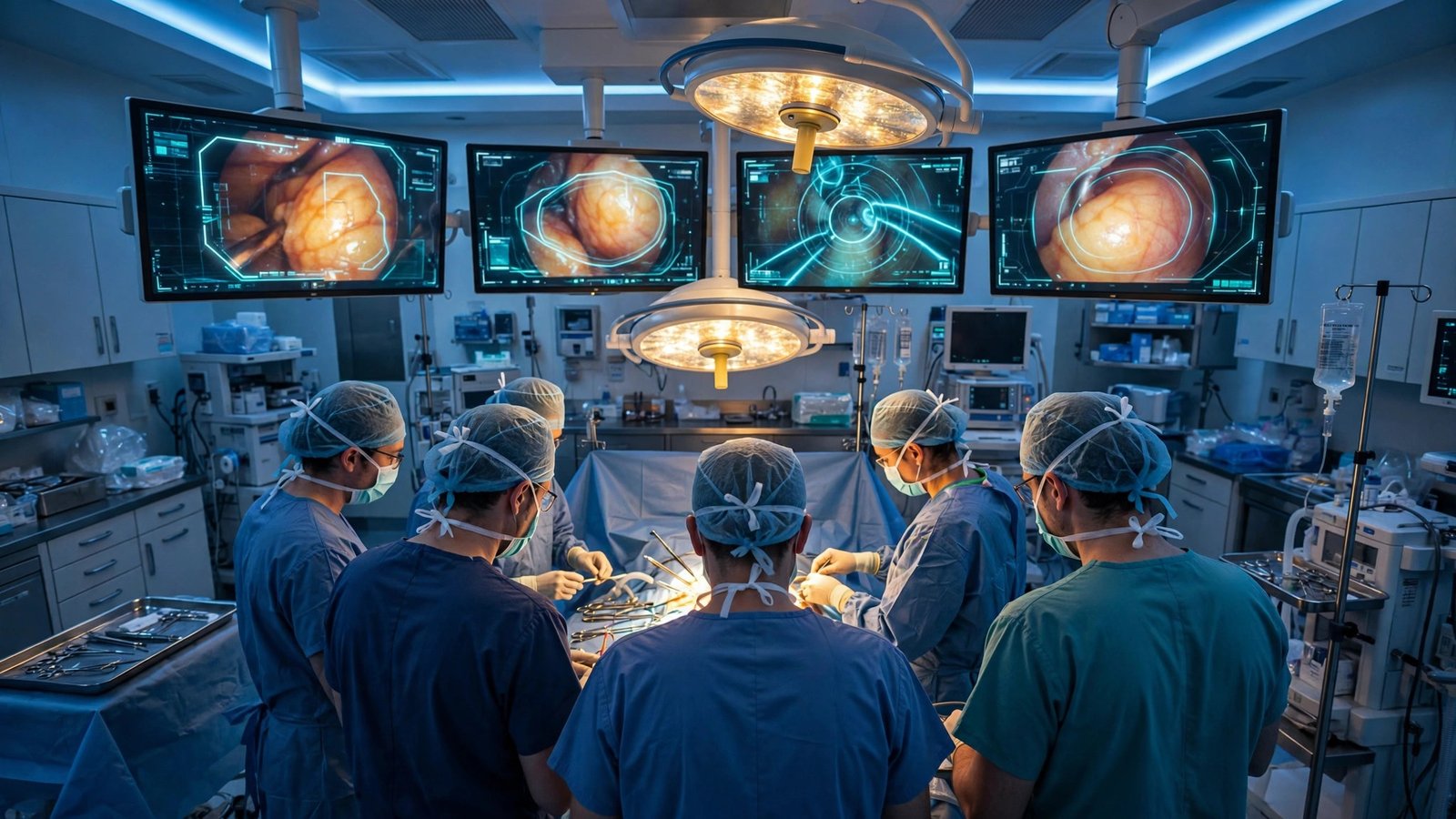
XRlabs wants to change that. The platform is described as modular software that functions as an external AI layer in surgical environments. It watches the live video feed from a procedure, interprets what it sees using computer vision and deep learning, and turns that stream into real-time intelligence for the surgical team. The detail that matters most is the word device-agnostic. Selling software that works with what is already in the room is a much faster conversation, and it is also a cheaper one for the customer.
What $8.4 million buys a surgical AI startup
Seed rounds in surgical AI tend to be modest, because the real costs arrive later: clinical trials, regulatory submissions, and the long work of proving to hospitals that the software is safe. XRlabs has said it will use the capital in three places. First, to grow its engineering and clinical teams. Second, to advance the platform through regulatory pathways in the UK, Europe, and the United States. Third, to expand its clinical evidence base across partner institutions on three continents.
That second item deserves a pause, because regulation is where medical AI stories usually get interesting. Getting approval for software that operates inside an operating room is a slow process in every major market, and doing it in three of them at once is ambitious for a company this young. The plan suggests XRlabs is thinking internationally from the start rather than conquering one market and expanding later.
The third item, clinical evidence, may be the most important of all. Hospitals do not buy AI on the strength of a demo. They buy it when peer-reviewed data shows it works in real operating rooms with real patients, and building that evidence base is exactly what this round is meant to fund.
Why this fits the UK moment
There is a reason this story is coming out of London. The UK has been riding an extraordinary funding wave this year. According to analysis by HSBC Innovation Banking and Dealroom, UK startups raised $17 billion in the first half of 2026, up 102 percent on the same period of 2025, and AI companies took a record $12.6 billion of that total. Roughly three quarters of all venture money going into British startups is now landing in AI.
State money is following private money. On October 15, the British Business Bank committed GBP 180 million across six specialist AI and deep-tech funds, explicitly aimed at the scale-up gap that has historically pushed British deep-tech companies toward US capital. XRlabs is exactly the kind of company that funding is meant to keep in the UK: a hard technical problem, a serious founder, and a product that could plausibly scale into a major business rather than being acquired early.
The London plus Palo Alto setup also reflects how the market actually works now. British AI talent, American capital and customers. Playground Global leading a seed round for a London company is the pattern playing out in real time.
What to watch from here
The honest version of this story is that XRlabs is at the very beginning of a long road. The next milestones to watch are concrete: which hospitals sign on as clinical partners, how the regulatory submissions progress in each of the three target markets, and whether the clinical evidence starts to appear in published form.
There is also a trust question that will follow every company in this space. An AI that watches surgeons while they work is also an AI that records them. Hospitals, insurers, and surgical teams will all want to know who sees that data and how it is used. XRlabs will need a convincing answer to that early.
A neurosurgeon who operates for a living has convinced serious investors that an AI co-pilot belongs in the operating room. In a market this crowded, that conviction counts.
Frequently Asked Questions
Is XRlabs building a surgical robot?
No. XRlabs is building software, not a robot. Its platform works as an external AI layer that observes live surgical video and turns it into real-time intelligence for the surgical team. Nothing in the announcement describes a machine that performs surgery itself.
When will hospitals actually be able to use it?
Not immediately. The company still has to work through regulatory pathways in the UK, Europe, and the United States, and build a base of clinical evidence from partner institutions. Both of those processes typically take years in medical technology, so this is a long-term play rather than a product launching next quarter.
Will hospitals need to buy new equipment?
That is the point of the device-agnostic design. The software is built to integrate with the medical hardware hospitals already have, so it should not require replacing existing equipment. For hospital buyers, that makes adoption significantly simpler than products that demand new infrastructure.




Post Comment