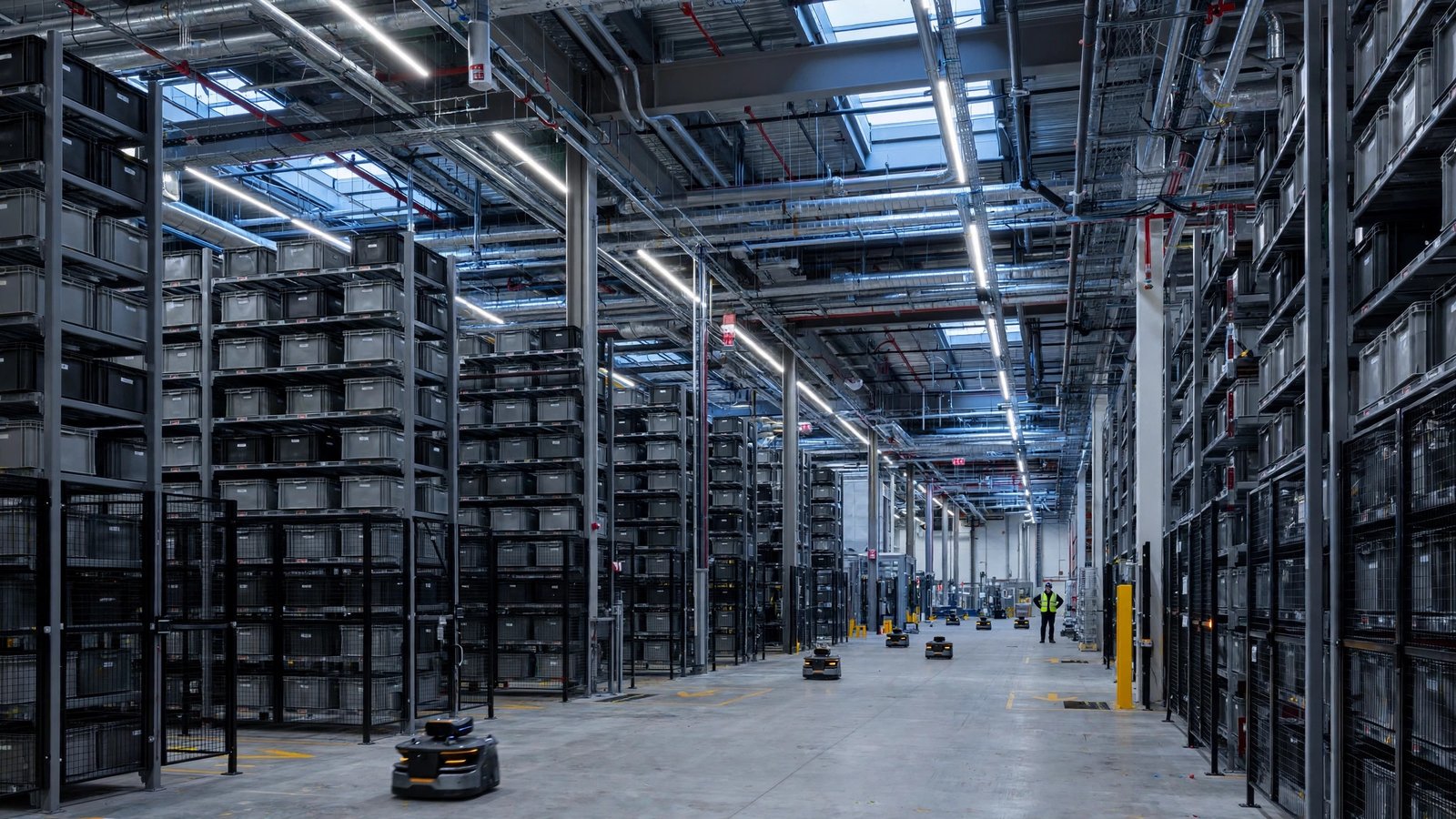
Walmart Commits Another $6 Billion to Symbotic Robots Across 25 US Warehouses
Walmart has doubled down on warehouse robots in a big way. On October 29, 2026, the retail giant signed a new Enterprise Master Automation Agreement with Symbotic, the Massachusetts company behind AI-powered robotic warehouse systems, committing roughly $6 billion in additional spending over several years. The deal covers 25 US regional distribution centers plus selected markets across the Americas, and it tightens a partnership that already shapes how a huge share of American groceries and general merchandise moves from supplier to store shelf.
What the new agreement actually covers
The headline number is an initial commitment of approximately $6 billion, spread over several years and multiple locations. That money buys Symbotic automated material handling systems for 25 US regional distribution centers, along with opportunities in selected markets across the Americas. Symbotic said the commitment could add up to $6.92 billion to its future backlog, the signed work it has not yet booked as revenue. Against a backlog of about $22.5 billion reported at June 27, 2026, that would be an increase of roughly 31 percent.
A smaller but telling slice of the deal is $125 million earmarked under a development program for next generation racking technology and related capabilities. In other words, Walmart is not just buying more of the same machines. It is funding research into the next version of the storage structures those machines run inside.
The agreement also changes the governance relationship between the two companies. Walmart gains the right to recommend one independent director while it owns more than 5 percent of Symbotic, plus non-voting board observers in years when it supplies more than half of Symbotic’s revenue.
Why Walmart is Symbotic’s most important customer by far
Symbotic’s filings make the concentration plain. Walmart supplied about 85 percent of Symbotic’s $2.25 billion in revenue in fiscal 2025, according to its annual report, and about 90.5 percent in the quarter ended June 27, 2026, when Symbotic reported revenue of $720.8 million and its first ever operating profit of $32.9 million. Very few public technology companies depend this heavily on a single customer.
The relationship is also old. A 2021 amendment covered 25 of Walmart’s 42 regional distribution centers, and a restated agreement in May 2022 extended automation to all 42, adding about $6.1 billion of backlog at the time, with every system due to begin implementation by the end of 2029. In January 2025, Symbotic bought Walmart’s Advanced Systems and Robotics unit for $200 million. The October 2026 deal builds on top of all of that rather than replacing it.
One clause stands out for investors. The new $6 billion commitment cannot be reduced without the written consent of both companies, and the filing sets out amounts Walmart would owe if it buys fewer systems than committed. That rigidity gives Symbotic unusual revenue visibility, but it also locks Walmart into a multi-year automation path even if the economy or its store strategy shifts.
How Symbotic’s warehouse robots actually work
Symbotic’s pitch is an end to end system, not a single robot. Its platform combines tall storage structures, autonomous mobile robots that travel inside them, and AI software that decides where every case of goods should sit and in what order it should come out. The point is density and speed: a building can store more product in the same footprint, and outbound trucks can be loaded in store aisle order so staff can unload faster at the other end. Two named pieces feature in the new deal: BreakPack, an each picking solution for individual items, and SymMicro, a micro fulfillment solution for smaller, faster orders.
The appeal for Walmart is straightforward. Regional distribution centers are the choke point of its supply chain. A center that moves cases faster, with fewer errors and less damage, means fuller shelves, fewer stockouts, and lower cost per case. At Walmart’s scale, even a small gain per case adds up across thousands of stores.
What this means for workers and rival retailers
Automation announcements always raise the same question: what happens to the people who work in these buildings? Neither company framed the deal as a job cutting exercise. The systems are described as a way to handle growing volume and shift human work toward supervision, maintenance, and exception handling rather than repetitive heavy lifting. Still, a distribution center that once needed large crews moving pallets by hand will need fewer hands on the floor and more technicians keeping robots running.
Rival retailers will be watching closely. Amazon has spent years building its own warehouse robotics, much of it in house, and other large chains buy automation from vendors of their own. Walmart’s move raises the bar on distribution speed and cost, and more announcements in this space are likely as rivals respond.
What to watch next
Three things will tell us whether this deal pays off. First, the pace of installation across 25 centers without disrupting daily operations, against earlier deadlines running to the end of 2029. Second, Symbotic’s fiscal fourth quarter results due November 23, 2026, which will show whether backlog converts into revenue on schedule. Third, Walmart’s own commentary on supply chain costs in its upcoming earnings.
The $6 billion figure is a commitment, not cash already spent, and Symbotic’s $6.92 billion backlog estimate is its own upper estimate, not a guaranteed order total. Those caveats matter. But the signal is unmistakable: the largest retailer in the United States has just placed one of the biggest warehouse automation bets in its history, and the robots are coming to 25 more of its distribution centers.
Frequently Asked Questions
How much did Walmart commit to Symbotic in October 2026?
Walmart committed approximately $6 billion in additional spending over several years under an Enterprise Master Automation Agreement signed October 29, 2026. Symbotic said the commitment could add up to $6.92 billion to its future backlog.
Which warehouses will get the new Symbotic systems?
The expanded agreement covers 25 US regional distribution centers, plus selected markets across the Americas. It builds on earlier agreements that already extended Symbotic automation to all 42 of Walmart’s regional distribution centers.
Does the deal mean Walmart warehouses will lose human workers?
Neither company has described it as a job cutting program. The stated goal is handling higher volume with fewer errors and lower cost per case, with human roles shifting toward supervising, maintaining, and fixing the automated systems rather than manual case handling.




Post Comment