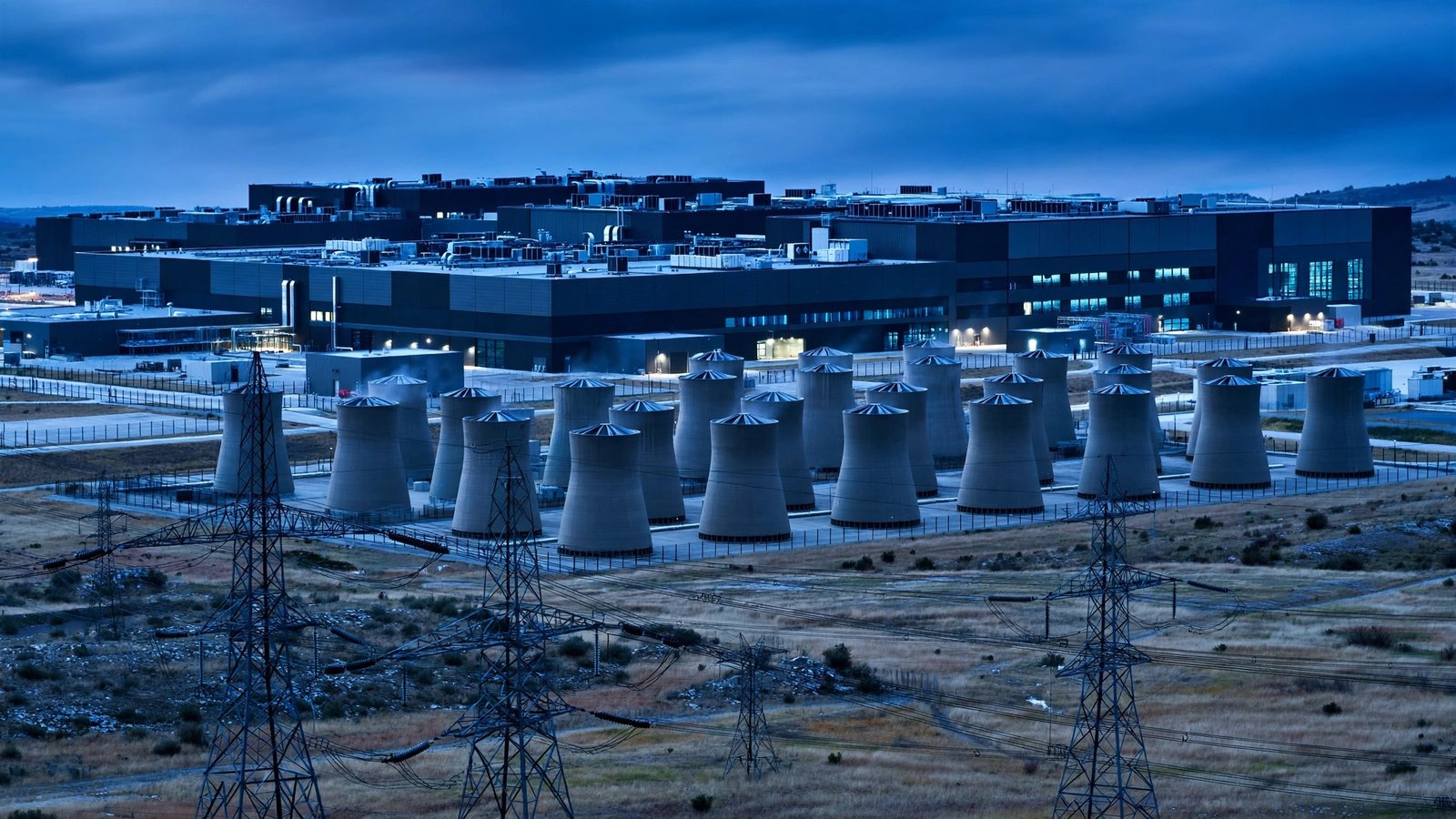
Power Is Now the AI Bottleneck: US Data Center Startups Raised $33.5 Billion in 2026, Morgan Stanley Says
For years, the race in artificial intelligence was measured in chips and model sizes. Whoever had the most powerful hardware and the largest models was assumed to be winning. A new Morgan Stanley report suggests that race has moved somewhere unexpected: the power socket. Startups building the technology to feed, cool, and site AI data centers raised $33.5 billion in the United States by early October 2026, nearly double the total raised in all of 2025.
A funding surge built around one constraint
The headline number comes from a Morgan Stanley report covered by ANI on October 13, 2026. It tracks US startups developing technologies that address power and computing constraints in AI data centers. Venture funding for this group reached $33.5 billion by early October 2026, nearly double the 2025 total. Since the beginning of 2024, companies in this universe have raised more than $50 billion.
That pace matters because it shows where investors now think the real risk sits. It is about whether the buildings that house those chips can get enough electricity, shed enough heat, and connect to the grid fast enough to run at all. When power becomes the scarce resource, the companies that solve power problems start to look like the most valuable companies in the chain.
The report puts it bluntly: "Power is the key constraint." Data centers are, at heart, industrial buildings that convert electricity into computation. As AI models grow larger and run around the clock, their appetite for electricity grows with them. A data center that cannot secure power cannot sell computing, no matter how advanced its hardware is.
Where the money is going
The funding is not spread evenly. More than 80 percent of the money raised in 2026 went to companies working on two things: expanding power availability, and improving computing performance relative to electricity consumption. In plain terms, investors are backing firms that either bring more watts to the table or squeeze more work out of every watt they have.
The report groups the startups into four areas: expanding power supply, improving computing performance per unit of electricity, integrating power and computing systems so energy and computing load are planned together, and developing new data center designs and locations, including sites chosen because power is available there.
That last area produced a striking detail: companies developing orbital and modular data centers, including Starcloud, Cowboy Space, and Armada, together raised nearly $1 billion in 2026, showing how far investors will look once grid connections become hard to secure.
The investor crossover
Another shift in the report is who is writing the checks. Investment is expanding from computing technologies into energy infrastructure, and the same investors are starting to appear on both sides of that line. In 2026, 73 percent of funding rounds in the power and computing segments included investors who had already backed companies in the other segment. That compares with 49 percent in 2024 and 16 percent before 2021.
This crossover makes sense once you see power and computing as one system. A fund backing a chip company cares whether its customers can power those chips, and a fund backing an energy company cares whether data centers will buy its output. As the two worlds merge, the old boundary between a "tech investor" and an "energy investor" gets harder to defend.
From capital raised to capacity deployed
The most important warning in the report is that raising capital is no longer enough. "The next phase of validation should increasingly shift from capital raised to capacity deployed," the report said, adding that commercial agreements, regulatory approvals, initial deployments, and evidence of competitive operating costs would become more important.
That is a polite way of saying the easy phase may be ending. In the early phase of a boom, a large funding round is treated as proof that an idea works. In the next phase, customers and regulators ask harder questions: has the company built anything, does it have permission to connect to the grid, and can it deliver at a competitive price? A startup that cannot answer those questions may find its next round much harder to raise, even in a hot market.
The risks the report lists make that point concrete: licensing delays, late construction, slow grid connections, and long procurement cycles, with local power availability and regulation shaping each project's economics.
What this means beyond the funding charts
For readers outside the investment world, the story has a practical side. The AI services people use every day, from chatbots to image tools to coding assistants, all run in data centers like these. If power limits how fast those centers can grow, it can also limit how fast, how cheap, and how widely those services can expand. Power constraints sit directly behind the speed and price of tools millions of people now rely on.
None of this means the AI boom is running out of steam. If anything, $33.5 billion in less than a year points in the opposite direction. It does mean the boom is entering a more physical, more complicated phase. The next breakthrough may not be a model announcement. It may be a signed grid agreement, a faster permitting decision, or a cooling design that lets a building do twice the work on the same power feed. According to Morgan Stanley, they are where the money is going.
Frequently Asked Questions
How much did US AI data center startups raise in 2026?
According to a Morgan Stanley report covered in October 2026, US startups developing technologies to address power and computing constraints in AI data centers raised $33.5 billion by early October 2026, nearly double the 2025 total. Since the beginning of 2024, companies in this group have raised more than $50 billion.
Why is power now the key constraint for AI data centers?
AI data centers convert electricity into computation, and larger models running around the clock need far more electricity than older facilities were built to handle. If a data center cannot secure enough power, connect to the grid, or cool its hardware, it cannot run its equipment at full capacity. That is why the report calls power, rather than chips alone, the key constraint on growth.
Will this funding solve the power problem for AI?
Funding alone will not solve it, and the report says so directly. The next test is whether funded companies can turn capital into deployed capacity: signed commercial agreements, regulatory approvals, working deployments, and competitive operating costs. Licensing delays, construction setbacks, and grid connection waits remain real risks.


Post Comment