Stop Dirty Data Centres: Protests Sweep Europe as 315 UK Projects Queue for Grid Power
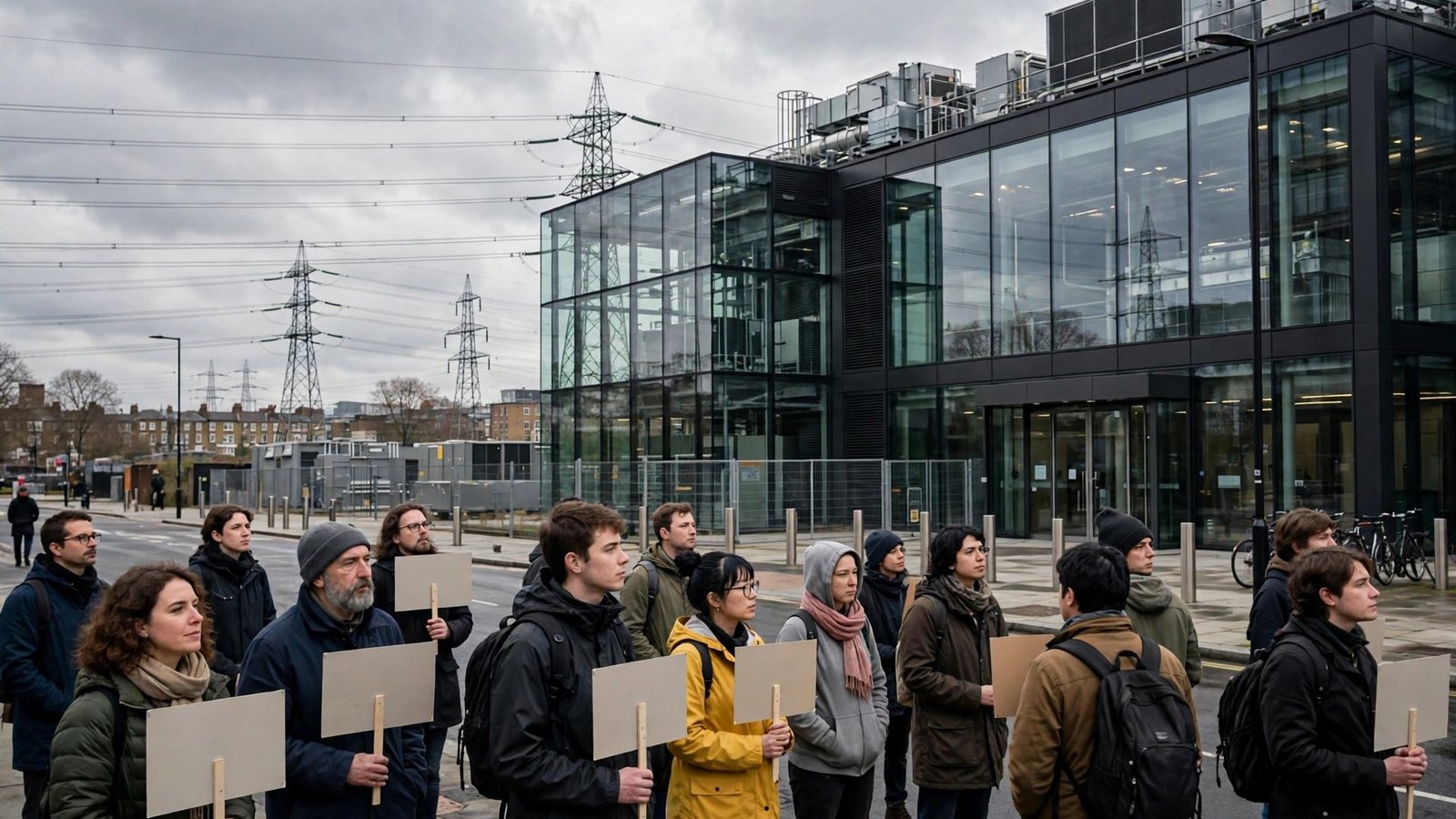
Campaigners across Europe took to the streets on 6 and 7 November 2026 to protest the rapid spread of large AI data centres, and Britain sits at the centre of the argument. More than 100 civic and environmental groups in 15 European countries joined two days of coordinated action under the banner Stop Dirty Data Centres, calling for a halt to new large-scale projects until their energy use, water use and local impact are properly weighed.
What the protests are about
The Stop Dirty Data Centres coalition says the build-out of AI infrastructure has raced ahead of democratic control. Its demand is simple: an immediate moratorium on large data centre projects across Europe while governments set clear rules on energy, water and community benefit. Protests took place in cities across the continent, including London, as reported by the Guardian on 5 November.
The groups behind the campaign range from local residents fighting a specific planning application to national environmental networks worried about the climate cost of AI. What unites them is a sense that decisions about some of the largest industrial buildings in the country are being made project by project, with no overall plan for how much power they should be allowed to draw. Supporters say AI infrastructure matters as much as roads or railways, and brings jobs and investment. The protests are a public test of that argument.
The UK grid queue in numbers
The figure that has done most to fuel the debate comes from energy regulator Ofgem. According to Ofgem, 315 data centre projects are waiting for a connection to the British electricity grid, representing around 73 gigawatts of demand. To put that in context, the whole country's peak electricity demand in 2025 was around 45 gigawatts. In other words, the queue of data centres alone is asking for roughly 1.6 times more power than the entire nation uses at its busiest moment.
The queue grew with remarkable speed. Ofgem says total contracted demand in the connections queue rose from 41 gigawatts in November 2024 to 125 gigawatts by June 2025, with data centres accounting for around 73 gigawatts of that surge. Projects in the queue range from around 1 megawatt to 1,500 megawatts, and the regulator has said a material share of them look speculative or non-viable.
None of this means 73 gigawatts of data centres will actually be built. A place in the queue is a request for a connection, not a building under construction, and many projects will never switch on. The National Energy System Operator estimates that Britain's data centre capacity will reach between 3.7 and 6.7 gigawatts by the end of the decade.
Why campaigners say the power math does not add up
The climate case is central to the protests. Research by Germany's Oko-Institut projects that carbon emissions from AI data centres will rise sixfold by 2030 compared with 2023 levels. For the UK alone, the report suggests potential CO2 emissions from the sector could reach 123 million tonnes over ten years, roughly the output of 2.7 million people.
A report published in May by the International Data Center Authority estimated that data centres now account for around 6 percent of electricity consumption in both the UK and the United States. As AI workloads grow, that share is expected to climb, and campaigners argue that the extra demand will slow the shift to clean energy or push up bills for households.
There is also a local dimension. Large data centres need land, water for cooling and a grid connection, and residents near proposed sites have raised concerns about noise, traffic and the strain on local infrastructure. Planning applications for data centres have become fiercely contested in several parts of the country.
What Ofgem wants to do about it
The regulator has already moved to thin out the queue. On 29 July 2026, Ofgem published a consultation called Curate, a set of demand connections reforms aimed specifically at data centres. Its central idea is a refundable commitment fee for large projects, set at between 237,500 pounds and 712,500 pounds per megawatt of contracted capacity. The fee would apply to projects of 40 megawatts and above, and developers would also have to pass milestone tests showing their project is genuinely advancing.
The logic is straightforward. At the moment, applying for a grid connection costs relatively little, so developers have an incentive to reserve capacity early and work out the details later. A substantial fee, refundable if the project goes ahead, would push speculative projects out of the queue and free capacity for schemes that are ready to build. The consultation closed in September 2026 and a final decision was still awaited in late October.
What happens next
The government has tied its AI ambitions to new data centre capacity, with a Compute Roadmap target of at least 6 gigawatts of AI-capable capacity by 2030, while industry groups argue the queue figures overstate what will actually be built. Campaigners say the current system lets developers claim grid capacity before proving a project is real.
The immediate focus is on Ofgem's decision on the Curate reforms, which will set the rules for who can hold a place in the grid queue and at what cost. A tougher regime would shrink the headline queue numbers, but it would not settle the bigger question of how much AI infrastructure Britain should build, where it should go, and who should pay for the power.
Frequently Asked Questions
How many data centre projects are waiting for a UK grid connection?
According to Ofgem, around 315 data centre projects are waiting for a grid connection in Britain, representing roughly 73 gigawatts of demand. The queue grew sharply between November 2024 and June 2025, and the regulator has said a material share of the projects look speculative.
What is the Stop Dirty Data Centres campaign?
It is a coalition of more than 100 civic and environmental groups across 15 European countries. The campaign staged coordinated protests on 6 and 7 November 2026 and is calling for a moratorium on large data centre projects until their energy use, water use and local impact are properly assessed.
What is Ofgem proposing to do about the grid queue?
Ofgem's Curate consultation, published on 29 July 2026, proposes a refundable commitment fee of between 237,500 pounds and 712,500 pounds per megawatt for large data centre projects, plus milestone tests to show a project is genuinely progressing. The consultation closed in September 2026 and a decision was still awaited in late October.




Post Comment