SpaceX Picks Qualcomm to Power Starlink Mobile’s Nationwide 5G Network in the US
SpaceX is building a phone network on the ground, not just in orbit. On November 4, 2026, Qualcomm announced that SpaceX has selected its Dragonwing chips and software to run the base stations for Starlink Mobile, a planned nationwide 5G network in the United States. Deployment is planned to start in 2027, and the deal turns Starlink Mobile from a satellite add-on into a direct challenger to the big US carriers.
What the deal actually covers
Qualcomm said the multi-year agreement covers its Dragonwing QRU100 and QDU100 cellular infrastructure platforms, along with commercial-grade Layer 1 software. Qualcomm will supply the radio and baseband technology, while SpaceX builds the radio hardware itself and writes the higher network layers on top.
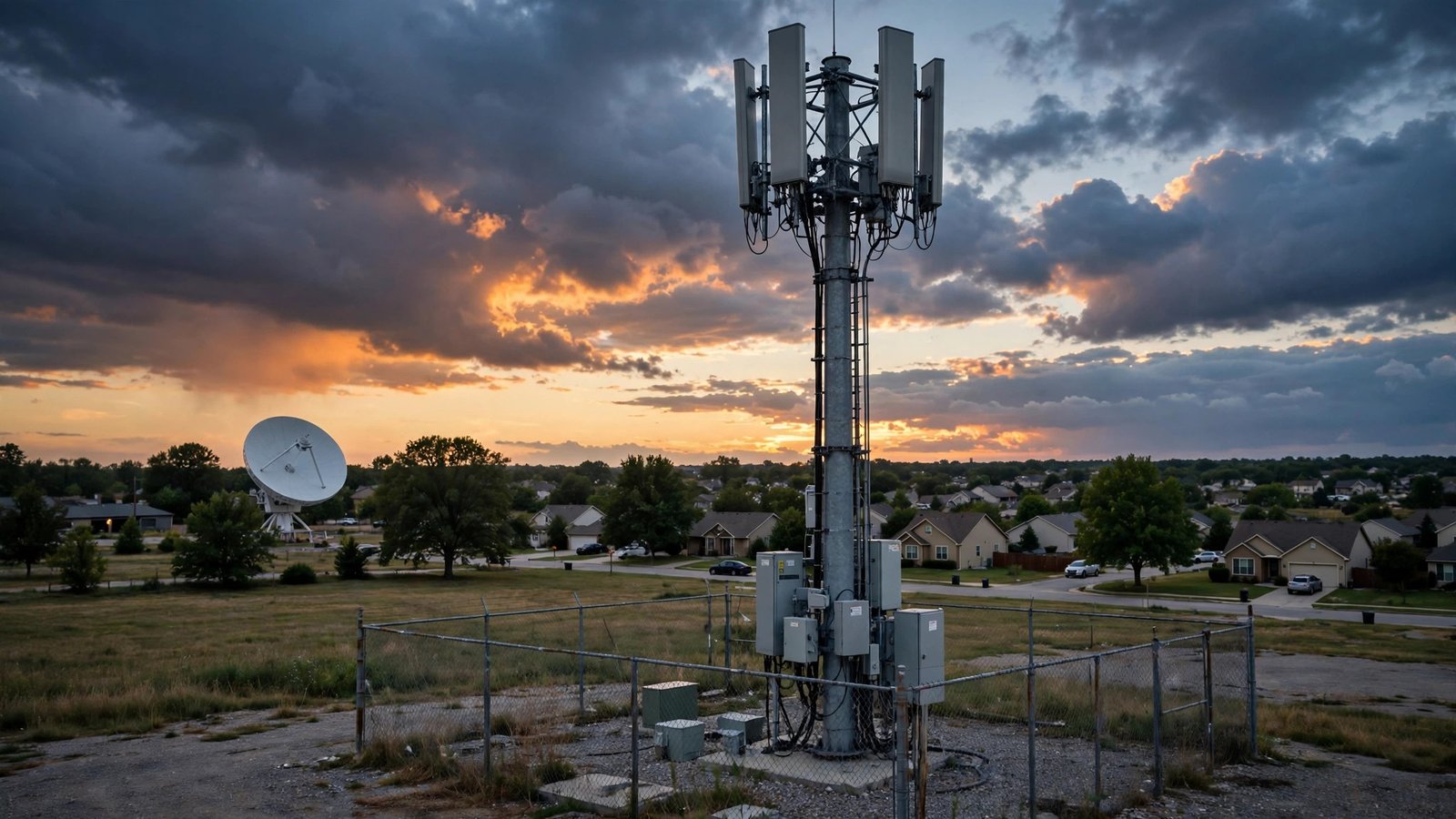
The plan is a terrestrial network, which means ordinary cell towers and rooftop sites, not satellites. Qualcomm said deployment is planned to begin in 2027, with tens of thousands of sites rolled out over the course of the agreement. Financial terms were not disclosed, and neither company has published a coverage map, a price plan, or a date when customers can sign up.
Qualcomm chief executive Cristiano Amon confirmed the deal on the company's fiscal fourth-quarter 2026 earnings call, saying SpaceX had selected Qualcomm to power Starlink Mobile's nationwide terrestrial 5G network in the US.
The hardware inside the base stations
The two platforms in the deal do different jobs inside a base station. The Dragonwing QRU100 provides integrated processing for Massive MIMO radio units, the antenna systems that send and receive signals to many phones at once. The QDU100 handles latency-sensitive Layer 1 processing in distributed units, the part of the base station that manages the physical transmission and reception of signals.
Qualcomm said the radios will use 64 transmit and 64 receive paths, written as 64T64R. That is a heavy antenna setup for a new network, and it is meant to give each site strong capacity in busy areas.
One technical detail stands out. Durga Malladi, Qualcomm's executive vice president for technology planning, edge solutions and data center, told reporters that Massive MIMO is usually deployed at 3.5 GHz and above, while SpaceX plans to use it around 2 GHz. He also said all of the sites will be macro cells, the large traditional towers, rather than small cells. Both platforms are designed to improve performance per watt, which matters when a network has to run tens of thousands of sites around the clock.
The spectrum behind the network
A network is only as good as the airwaves it can use, and this is where SpaceX's deal with EchoStar comes in. SpaceX has described its 2 GHz mid-band spectrum as the high-capacity layer of the network and newly agreed 800 MHz low-band spectrum as the coverage layer that reaches indoors.
The spectrum mechanism sits in EchoStar's November 3, 2026 filing with US regulators. The Federal Communications Commission recorded its approval on May 12, 2026, a trust transfer followed on May 22, and the spectrum acquisition closing is still expected on or about November 30, 2027. Licensed blocks are not the same as a working network, and SpaceX has not said which markets get the 2 GHz capacity layer first.
What the numbers in the headlines do not mean
Two figures have been floating around the coverage, and both need care. The first is 80,000 sites. That number traces to Bloomberg reporting from October 22, 2026, about SpaceX holding talks over access to roughly 80,000 cell sites in the United States. It was reporting about negotiations, not a contractual commitment, and Qualcomm's own release does not confirm it. Later coverage named Crown Castle among the infrastructure firms involved, but no site list has been published.
The second is 100 billion dollars. That is an estimate from Joe Madden, principal analyst at Mobile Experts, reported by Axios on November 4. Madden expects SpaceX to spend at least that much building its combined satellite and terrestrial network, including spectrum costs. SpaceX has not confirmed it as a budget.
Why 2027 matters for US carriers
Starlink Mobile today is a satellite service, and the ground network changes what it can become. Michael Nicolls, senior vice president at Starlink, said the company is building the first fully integrated nationwide satellite and terrestrial network that will keep people connected no matter where they are. In plain terms, a phone could use the ground network in cities and fall back to satellites where towers do not reach.
That puts SpaceX on a path toward competing with AT&T, T-Mobile and Verizon, the three carriers that dominate the US market. The gap between an announcement and a real rival is still wide. SpaceX has not named a core network vendor, published a list of supported phones, or said when the first customer will connect to a Starlink Mobile tower. The first measurable milestones will be physical site deployment in 2027, verified radio performance, spectrum availability, and how well the satellite handoff works in practice.
Qualcomm also called the 5G project a possible foundation for AI-native 6G, a longer-term direction, not a commercial 6G deployment.
What to watch next
The next signals will come from the ground, not from press releases. Watch for the first confirmed site builds in 2027, for tower companies naming SpaceX as a tenant, and for the EchoStar spectrum closing in late 2027, because the coverage layer depends on it.
For now, the Qualcomm deal is the most concrete step Starlink Mobile has taken toward becoming a real US carrier. The chips are chosen, the antenna design is public, and the rollout clock is set for 2027. Everything else, from prices to phones to coverage, is still to be announced.
Frequently Asked Questions
What did SpaceX and Qualcomm announce on November 4, 2026?
Qualcomm said SpaceX selected its Dragonwing QRU100 and QDU100 platforms, plus commercial-grade Layer 1 software, for the Starlink Mobile US nationwide terrestrial 5G network. Deployment is planned to begin in 2027 under a multi-year agreement.
When will Starlink Mobile's 5G network be available to customers?
No consumer launch date has been published. Qualcomm said deployment of tens of thousands of sites is planned to start in 2027, but no plans, prices, supported phones or coverage map have been announced yet.
Is SpaceX spending 100 billion dollars on this network?
No confirmed figure exists. The 100 billion dollar number is an estimate from analyst Joe Madden of Mobile Experts, reported by Axios, covering the combined satellite and terrestrial network including spectrum costs. SpaceX has not confirmed it as a budget.





Post Comment