SpaceX Plans More Than $74 Billion in AI Supercomputing Campuses in Texas and Arizona
SpaceX has unveiled plans to spend more than $74 billion on two giant AI supercomputing campuses in the United States, one at its Starbase site in Texas and one in Cochise County, Arizona. The announcement, made on November 12, 2026, marks the rocket company’s biggest move yet into the race to build computing power for artificial intelligence.
According to Reuters, which reported the figures from a company statement, SpaceX expects to spend more than $24 billion at Starbase and roughly $50 billion on the Arizona campus. The Wall Street Journal also reported the $74 billion figure. The plan raises familiar questions: where the power will come from, who approves it, and how much actually gets built.
What SpaceX announced
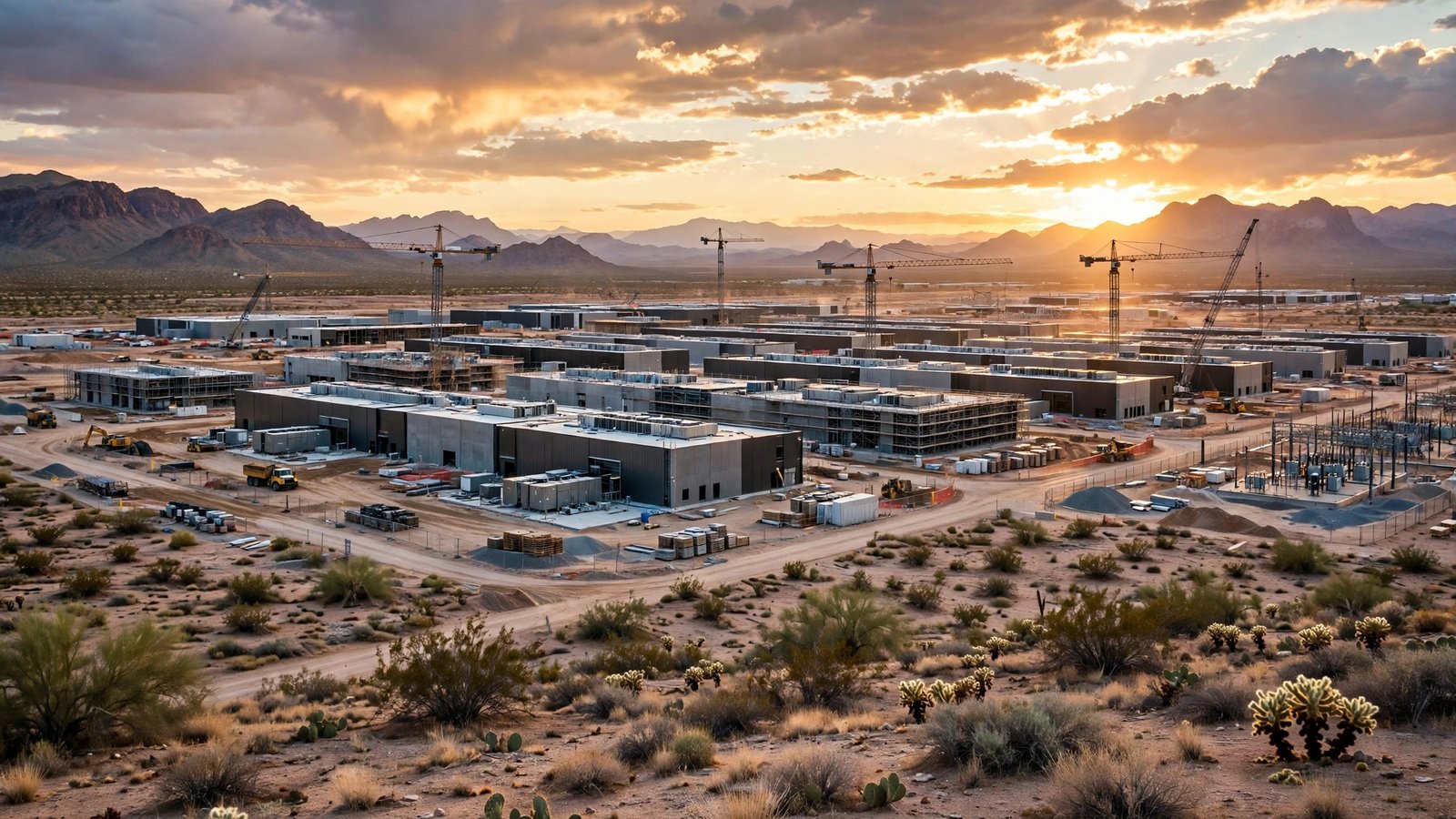
The two campuses are separate projects with different timelines. The Texas site sits at Starbase, the South Texas rocket base where SpaceX already builds and launches its Starship vehicles. The Arizona site is a new development on 747 acres along US Highway 191 near the Willcox Playa, filed under the name of Tombstone Resources LLC, a SpaceX affiliate.
SpaceX said its AI segment generated more than half of its third-quarter revenue, showing how far the company has moved beyond rockets and Starlink. SpaceX went public in June 2026, and this is its first major capital announcement since the listing. The company has not said which customers the campuses would serve.
Planned investment is not money spent. Both projects still face local decisions, and the final cost and size could change.
The Arizona campus: 6 gigawatts near Willcox
The Arizona campus is the larger of the two, at roughly $50 billion, and it is also the one with more to prove. At full build-out it would draw up to 6 gigawatts of power, in four phases of about 1.5 gigawatts each, across nine buildings of about 493,000 square feet each. That would make the site one of the largest single power consumers in the state.
SpaceX has tried to answer the two concerns that usually sink projects of this size: water and power bills. The company said the Arizona site would use dry cooling, with no planned industrial groundwater use. It also said the project could cut power bills for members of the local electric cooperatives by up to 20 percent.
Reuters reported that the Arizona campus would create about 5,500 construction jobs and 1,000 permanent jobs. The project needs approval from Cochise County, and a petition with about 2,400 signatures has asked officials to deny the permit. A county public hearing is set for December, and a zoning hearing is scheduled for December 9. Until those hearings happen, the Arizona campus remains a proposal.
The Texas campus: power from Starbase itself
The Texas project, at more than $24 billion, is in some ways the simpler of the two because SpaceX already controls the land. The Starbase campus would generate its own electricity rather than drawing from the public grid, which avoids the grid queues that slow most new data centers in Texas.
SpaceX said the Texas project has already generated more than 3,000 construction jobs and would support more than 500 permanent jobs once operating. The remaining local decision is a financial one: the Starbase City Commission is due to consider a property tax abatement for the project on December 9. Because Starbase is already an active industrial facility, the Texas campus is likely to move faster than the Arizona one, assuming the tax vote goes SpaceX’s way. Even so, building a supercomputing campus is a multi-year job, and the $24 billion figure covers the full build-out rather than a single year of spending.
Why SpaceX is betting this big on AI computing
The announcement fits a pattern that has defined the AI industry in 2026: companies that once bought computing power from others are now building it themselves. The company appears to be betting that owning the computers matters as much as owning the rockets and the satellites.
The largest AI campuses announced this year have come from cloud providers and chipmakers. SpaceX is a newcomer, but it brings a track record of building large industrial projects quickly at Starbase, and a power strategy that avoids the grid queues slowing rivals down.
At the same time, the plan carries real execution risk. A 6 gigawatt campus needs power equipment, cooling systems, and a workforce at a scale few companies have managed. The Arizona approval process could shrink or delay the project, and demand for AI computing can shift quickly. SpaceX has not disclosed financing details.
What to watch next
The next hard dates are in December. On December 9, the Starbase City Commission votes on the Texas tax abatement and Cochise County holds its zoning hearing for the Arizona site.
Beyond that, watch whether SpaceX names customers or partners, whether it releases a construction timetable with firm dates, and whether rivals answer with projects of their own.
For now, the story is a proposal, not a finished fact. The campuses may end up smaller and slower than announced. Either way, the plan shows how central computing power has become to the AI business.
Frequently Asked Questions
How much is SpaceX planning to spend on the two AI campuses?
SpaceX said on November 12, 2026 that it plans to invest more than $74 billion in total: more than $24 billion at its Starbase site in Texas and roughly $50 billion on a campus in Cochise County, Arizona, according to Reuters.
Does the Arizona campus still need approval?
Yes. The Arizona campus needs approval from Cochise County, and a county public hearing is set for December, with a zoning hearing scheduled for December 9. A petition with about 2,400 signatures has asked officials to deny the permit, so the project is not yet approved.
How much power would the Arizona campus use?
At full build-out the Arizona campus would draw up to 6 gigawatts, in four phases of about 1.5 gigawatts each, across nine buildings of about 493,000 square feet each on 747 acres near Willcox. SpaceX said the site would use dry cooling with no planned industrial groundwater use.
Sources
Reuters, via syndicated reports, November 12, 2026. Tech Current Daily Brief, November 13, 2026. MLQ.ai, November 12, 2026. VoltGrid News, November 12, 2026.




Post Comment