Rivian Buys British Startup Third Dimension AI to Build 3D Driving Worlds
Rivian has bought a 15-person British startup, and the move says a lot about where the self-driving race is really being fought. The electric vehicle maker announced on October 22, 2026 that it has acquired Third Dimension AI, a UK company whose software turns ordinary images and video into 3D environments that developers can control. The whole team is joining Rivian’s autonomy and AI organization, giving Rivian a tool that manufactures driving scenarios on demand instead of waiting for them to show up on public roads.
What Rivian Just Bought
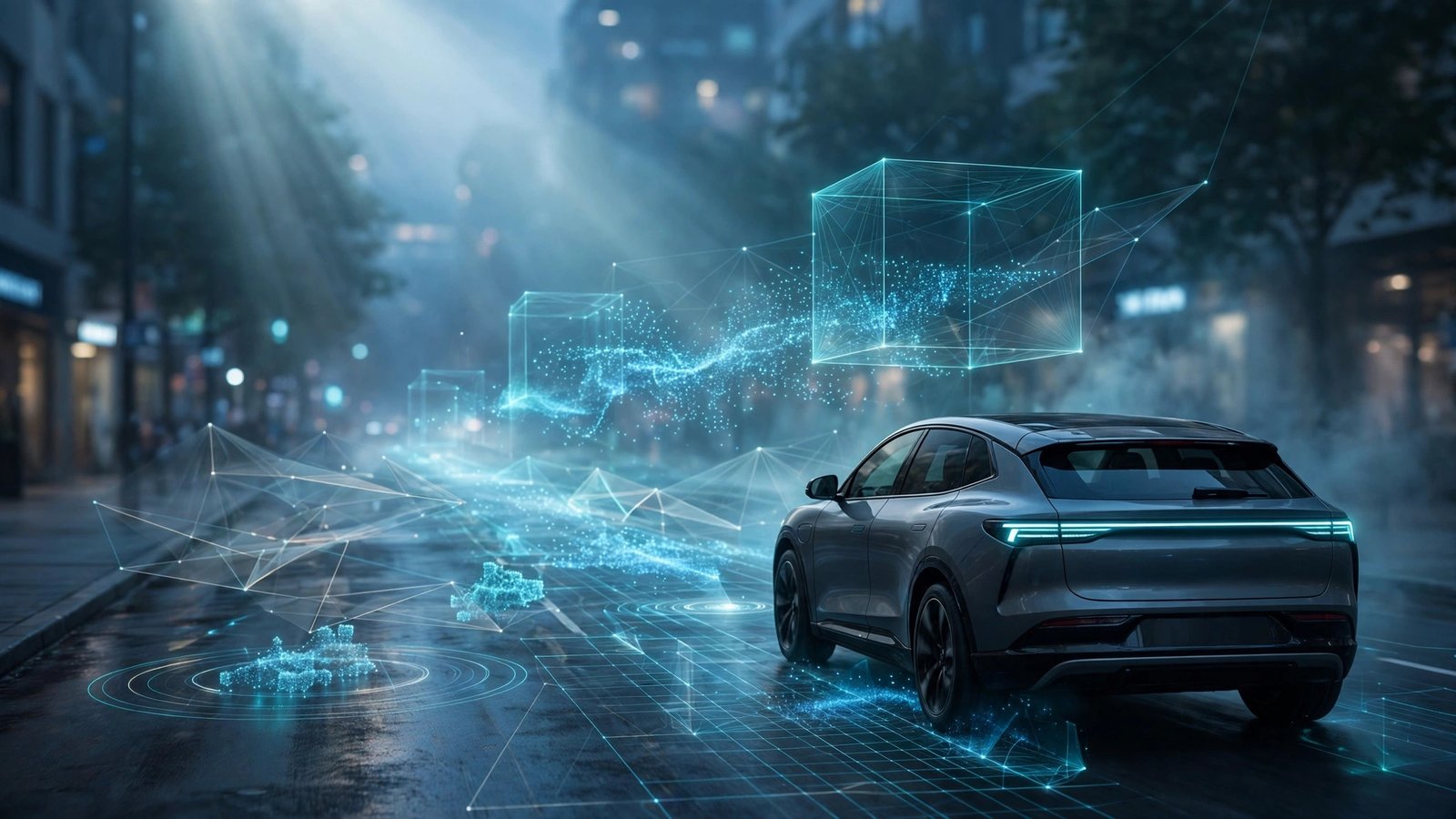
Third Dimension AI builds what the industry calls world models: neural systems that learn how a physical scene looks and behaves, then generate new versions of it. Feed the software footage from a real drive and it can rebuild that street as a 3D space, change the lighting, add new cars and pedestrians, or flip the whole scene to a rainy night.
The team behind it, according to TechCrunch’s reporting, comes from the gaming and autonomous vehicle industries. That combination makes sense: game studios have spent decades building believable virtual worlds, and a self-driving team needs exactly that skill to test its software at scale.
Rivian announced the deal through Business Wire, where it was syndicated by outlets including Yahoo Finance. The financial terms were not disclosed. What is confirmed is the human side: all 15 people are moving into Rivian’s autonomy and AI organization, which James Philbin leads. Buying a team this small only makes sense when it owns a genuinely hard technical capability, and Rivian clearly decided world generation is core infrastructure, not something to rent from a vendor.
Why World Models Matter for Self-Driving
Training a self-driving stack is a data problem as much as an engineering problem. A car learns to drive by studying enormous amounts of footage, but collecting that footage the old-fashioned way has brutal economics. Every unusual scenario costs test miles, fuel, driver time, and storage. The rare events that matter most are, by definition, the ones that almost never appear. A world model changes the arithmetic. One recorded intersection can be spun into dozens or hundreds of variations, each with different traffic, weather, and lighting. The footage a fleet already collected becomes far more valuable because it can be remixed endlessly.
There is a second, deeper use. Rivian framed the acquisition around both synthetic data generation and full-world simulation. Synthetic data gives you training examples: generated frames the model learns from. Full-world simulation goes further by running an entire scene forward in time, so the driving stack can brake, steer, or change lanes and the simulator responds. The system under test behaves the way it would on the road, reacting to a world that is itself generated by software.
The Edge-Case Problem Everyone in Autonomy Hits
Every autonomy program eventually runs into the same wall. Ordinary driving is easy to collect and easy to learn. The slice of situations that decide whether a system is safe enough to drive without a human is the dangerous slice: a child chasing a ball from behind a parked van, a mattress sliding off a truck, a cyclist appearing from a blind spot in heavy rain. Those events almost never appear in a test fleet’s logs, and waiting for them on public roads is slow and carries real risk.
Generated worlds let engineers manufacture rare moments deliberately: a thousand versions of the sliding mattress, with different lighting and traffic around each one, and the software’s response to every one. That is the practical promise behind this deal, and it is why a 15-person startup was worth buying.
The Uber Robotaxi Angle
There is a product story behind the research story. TechCrunch reported that Rivian plans to use Third Dimension’s technology for the self-driving system in robotaxis it intends to supply to Uber. That connection turns the acquisition from a general research bet into something closer to a product timeline, because a robotaxi operator faces a tougher safety bar than a consumer driver-assist feature. In a robotaxi, no human sits ready to grab the wheel.
The companies have not confirmed commercial terms or schedules for the Uber arrangement, so those details stay in the unverified column for now. Still, the strategic logic is straightforward. A supplier that promises robotaxis to a ride-hailing giant has to prove safety to the buyer, to regulators, and to insurers. Simulation evidence at scale helps with all three audiences.
Build Versus Buy, and What Stays Unanswered
Rivian is not alone in chasing this edge. Several autonomy developers train their own world models in-house, while others license the technology. Rivian chose acquisition, which locks both the team and the intellectual property inside one company and keeps that talent away from rivals. In a field where a handful of specialists can move a program forward, that talent lock matters as much as the code.
Quite a few details remain unconfirmed. Some reports online name founders and a seed round for Third Dimension AI, but neither claim appears in the verified record for this story. One report floated the idea that the deal could let Rivian grow a London AI hub, but described that as an opportunity rather than a plan. Rivian has also not published any performance data: we do not know how many scenarios the system can generate, how closely its output matches real sensor logs, or when the tools will influence a shipping product. Until the company releases validation results, the benefit is a reasonable expectation, not a measured gain.
Frequently Asked Questions
What does Third Dimension AI’s technology actually do?
It uses AI to convert images and video into 3D environments that developers can control. Engineers can change lighting, weather, traffic, and pedestrians in those generated scenes, then test driving software inside them.
Why did Rivian acquire Third Dimension AI instead of licensing the technology?
According to the company’s announcement, the technology will power synthetic data generation and full-world simulation for Rivian’s driver-assistance and self-driving systems. Buying the startup outright brings both the software and the 15-person specialist team in-house, which signals that Rivian sees world generation as core infrastructure rather than a vendor service.
When will this technology reach Rivian vehicles?
Rivian has not said. The announcement did not include a timeline for when the simulation tools will influence a shipping product, and no performance data has been published yet. The technology is also expected to support the self-driving system for robotaxis Rivian plans to supply to Uber, but commercial terms and schedules for that arrangement remain unconfirmed.


Post Comment