NSW Data Centre Inquiry Finds Approvals Missed the Cumulative Impact on Power, Water and Roads
New South Wales has been approving data centres one at a time, and a parliamentary inquiry now says that is exactly the problem. The cross-party inquiry found that the state's planning system looks at each facility as a standalone project, even though the strain on electricity, water and local infrastructure builds up across many projects at once. The report, released on 5 November, calls for a proper statewide strategy instead of a halt to approvals.
The finding lands at a tense moment. Sydney is the capital of Australia's most populous state, and developers including NextDC and ChatGPT owner OpenAI are waiting on approval for a data centre there. A state election is due next March, and residents in one Sydney suburb have already pushed a smaller project to be withdrawn.
What the inquiry found
The report's central finding is blunt: New South Wales lacks a coherent strategy to manage the data centre boom and its effects on water, electricity and infrastructure. Current guidelines may underestimate future power demand and water supply limits, and approving facilities in clusters can create pressure points that no single approval ever sees.
"The current planning framework assesses data centres primarily as individual developments despite many impacts being cumulative in nature," the report said. "Data centre impacts are cumulative and are being felt across communities and other industries."
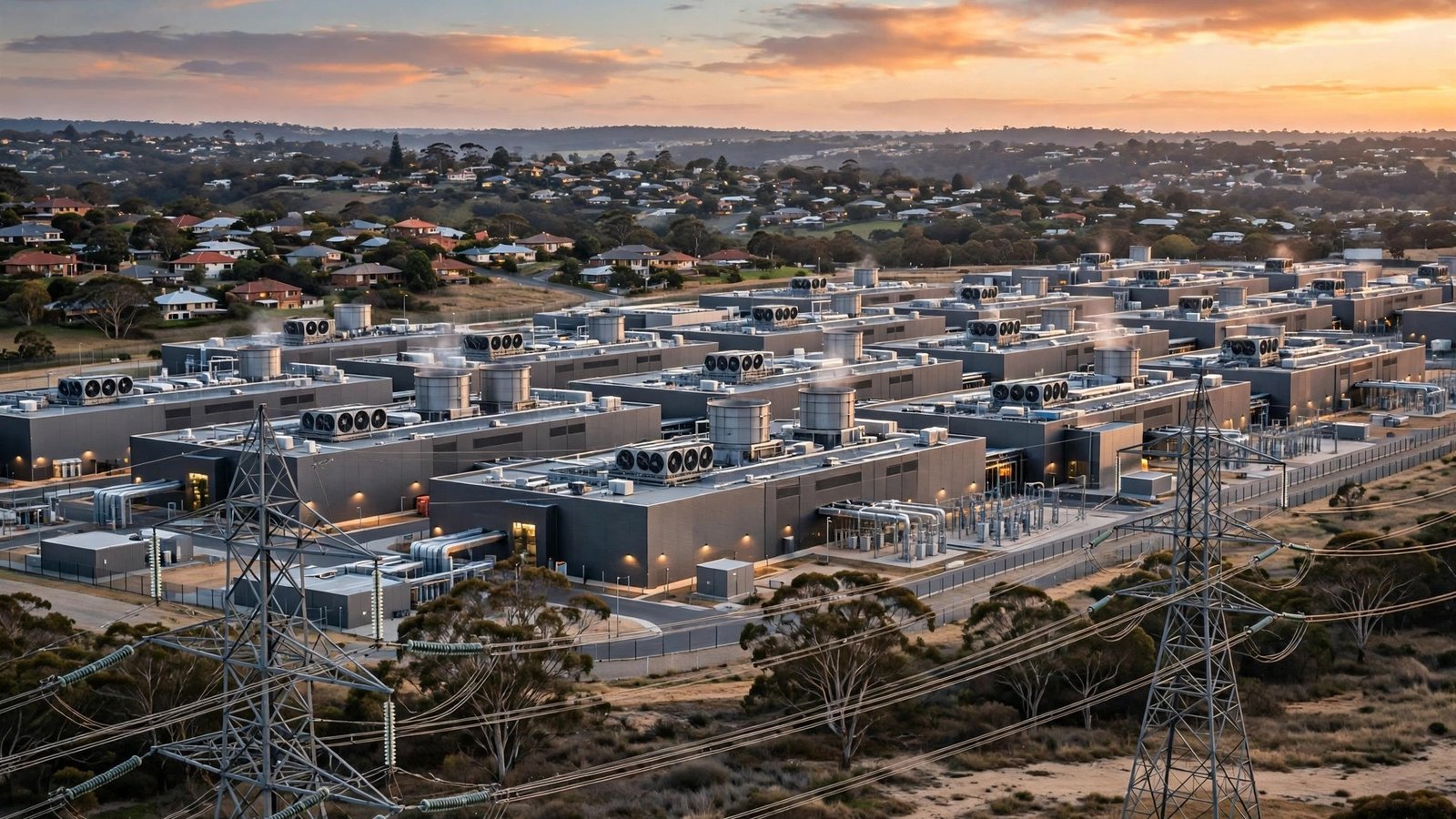
That distinction matters. A single data centre might pass its own environmental and infrastructure checks without difficulty. Ten of them in the same region, drawing on the same grid and the same water supply, tell a different story. The inquiry found the system has no reliable way of adding those effects together before it says yes. When several large facilities sit close together, they can strain the same substations, roads and water networks at the same time, and planning rules that treat each site on its own miss that pattern entirely.
The moratorium vote that split the committee
The inquiry stopped short of recommending a pause on approvals. Instead it called for a comprehensive data centre strategy and better coordination between everyone involved in the approvals pipeline. That softer landing came after a divided vote inside the committee itself.
Minutes attached to the report showed members of the Public Accountability and Works Committee voted 6 to 1 to remove recommendations for a state and national moratorium on data centre approvals "until such time as all social and environmental harms can be fully understood". The lone vote to keep those recommendations came from the committee chair, Abigail Boyd, an upper house member from the Greens party.
Boyd did not hide her frustration. In the report's foreword she described an "AI-fuelled data centre frenzy" that was "threatening to consume incomprehensibly large volumes of energy and water to feed their demands". She went further, writing that "it is increasingly apparent that governments of all persuasions have been suckered in by an AI-fuelled get rich quick scheme, with data centres suiting the needs of governments short on ideas perfectly" and calling the arrangement "a false economy".
Why New South Wales is under pressure
The tension in New South Wales mirrors a debate playing out around the world. Governments want the benefits of the AI boom, while local communities push back against the scale of what is being built near them. Consultancy McKinsey estimates the AI-led buildout will be worth 7 trillion US dollars by 2030, which helps explain the competition to host the facilities.
But the local costs are hard to ignore. Data centres use large amounts of electricity, and many also need substantial water for cooling. In a state where water supply and grid capacity are already live political issues, a cluster of new facilities can look very different to nearby residents than it does in a minister's investment announcement.
The politics are sharpening. With a state election due next March, the data centre question is becoming a suburban issue as much as an economic one. The withdrawal of a smaller project after residents objected shows that community opposition can change outcomes, and it suggests larger projects will face the same scrutiny. The inquiry's findings give that opposition a formal basis: it is no longer just residents saying the system is not working, a parliamentary committee has now said the same thing in writing.
What happens next
The report does not stop any project, and it does not ask the government to stop approving them. Its main recommendation is that New South Wales put together a comprehensive data centre strategy and improve coordination between the agencies and bodies that handle approvals. In practice that would mean the state finally looking at the combined effect of projects, rather than ticking them off one by one.
Whether the government acts on that recommendation, and how quickly, is the open question. A strategy that genuinely measures cumulative demand for power and water would slow some projects down and could change where they are built. It would also give communities a clearer picture of what is coming to their area, which is part of what the inquiry says is missing.
For developers, the report is a warning rather than a roadblock. Approvals are still flowing, but the political ground is shifting, and the next projects will be judged against a public record that says the current system underestimates the strain. The inquiry's core point is simple enough to state: the effects of data centres add up, and a planning system that cannot add them up is not doing its job.
Frequently Asked Questions
What did the NSW data centre inquiry conclude?
The inquiry found that New South Wales lacks a coherent strategy for managing the data centre boom, and that approvals assess each facility on its own even though the impacts on power, water and infrastructure are cumulative. It called for a comprehensive strategy and better coordination, but stopped short of recommending a moratorium.
Why did the committee reject a moratorium on data centre approvals?
Members of the Public Accountability and Works Committee voted 6 to 1 to remove the moratorium recommendations from the report. Only the chair, Abigail Boyd of the Greens, voted to keep them. The report instead recommends a statewide strategy and better coordination between the bodies involved in approvals.
Which data centre projects are waiting on approval in New South Wales?
According to Reuters, developer NextDC and ChatGPT owner OpenAI are awaiting approval for a data centre in the state. Residents in one Sydney suburb have already prompted a smaller project to be withdrawn, and a state election is due next March.





Post Comment