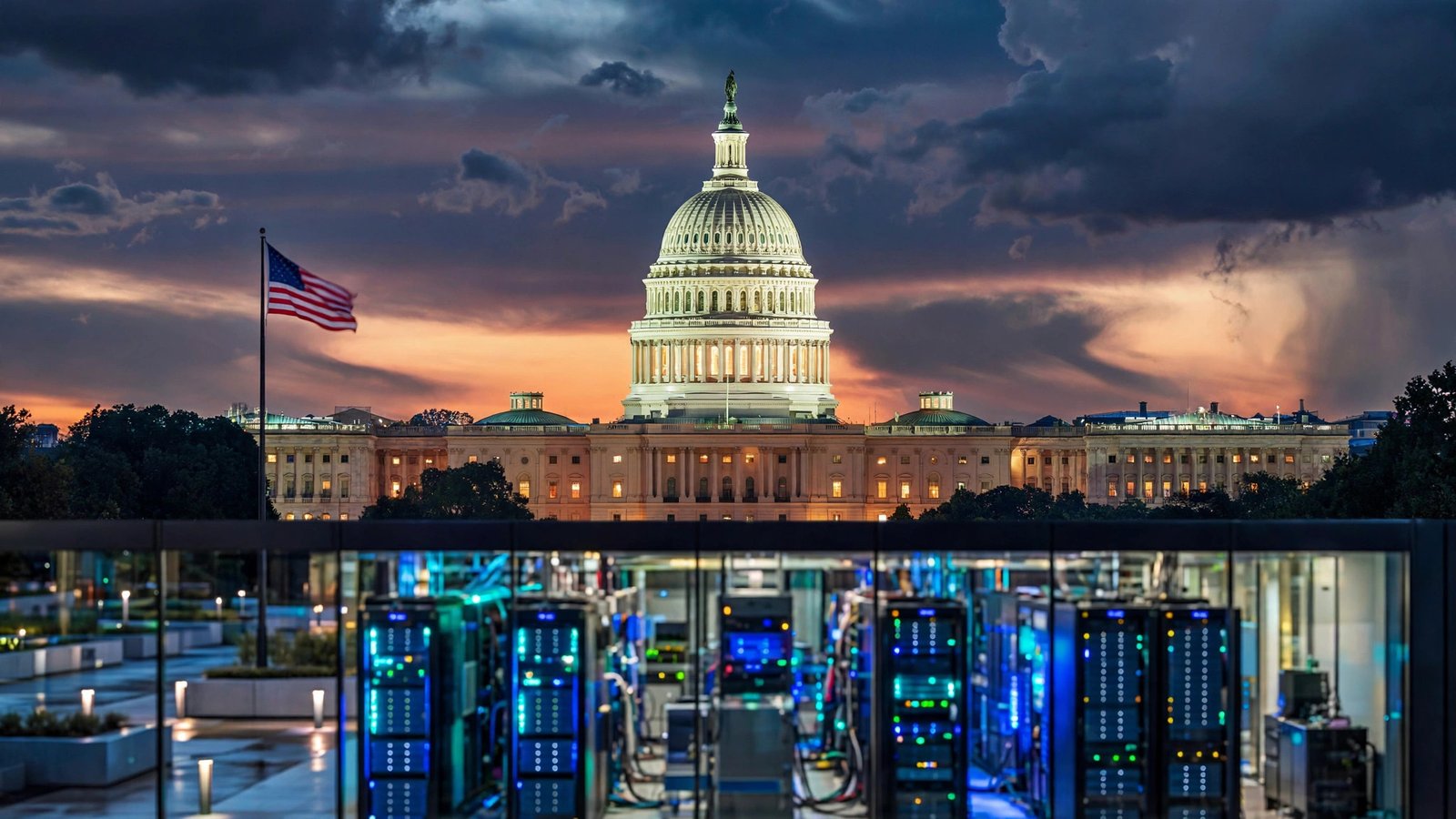
Democrats Plan a Flood of AI Bills: Power Bills, Independent Testing and Liability on the Agenda
Reuters reported on November 6, 2026 that Democrats in Congress are preparing a wave of legislation aimed at artificial intelligence systems and the data centers that power them. The party plans to move the bills once it takes control of Congress in January, and the reported agenda has three clear priorities: shielding consumers from rising electricity costs tied to data centers, requiring independent testing of advanced AI systems, and clarifying when AI companies can be held liable for harm caused by their products.
The timing follows an election night in which AI infrastructure was on the ballot in dozens of places. No bill text, total count or floor schedule has been reported, so the plans are still a statement of intent. Even so, the names and targets are specific enough to read as a drafting calendar.
What Reuters reported
Reuters headlined the story as Democrats planning a "flood" of AI bills once they hold power in Congress. The wire report laid out the agenda in three parts: consumer protection from higher electricity bills linked to data centers, independent testing for advanced AI systems, and clearer liability rules when AI products cause harm.
Coverage by TechRadar added color from individual lawmakers. Representative Ted Lieu said Democrats would hold AI hearings and set what he called "reasonable guardrails on AI." Representative Greg Casar pushed a harder line on executives.
The three priorities in plain terms
The electricity item is the most politically potent of the three. A household that sees its power bill climb does not need a seminar on transformer architecture to form an opinion. Reuters said the planned bills would protect consumers from rising electricity costs associated with data centers, though the report did not detail the mechanism. Possible tools include cost-allocation rules and limits on shifting grid upgrade costs onto residential customers, though the reporting does not confirm any of them. Google, for its part, said it would pay for all electricity used by a planned $17 billion Wyoming data center, according to Bloomberg.
The testing item reaches the frontier model labs. Today the major labs run their own safety evaluations and publish their own results. A requirement for outside evaluation would move the grading out of the lab's building and give regulators and courts a shared reference point.
The liability item reaches anyone who ships an AI product to consumers, from chatbot makers to app developers who build on top of third-party models. When a company knows it can be sued over foreseeable harm, it spends more on testing, logging and incident response before launch. The actual bill text will decide how far that exposure reaches.
Independent testing: the Trahan bill
Representative Lori Trahan of Massachusetts planned legislation requiring independent experts to evaluate leading AI models against safety standards, according to Reuters. The reported design leaves open who certifies the experts, who writes the safety standards and which models count as "leading." Reuters did not report answers, and this article will not guess at them.
Francis Grubar, Trahan's deputy chief of staff, said Trahan would also pursue legislation clarifying corporate liability when AI systems cause harm. That puts a named staffer behind the liability push, which makes it more concrete than a general promise.
Liability rules and the AI LEAD Act
The bipartisan AI LEAD Act points the same way. It was identified as a bill that would establish liability standards for AI systems and let individuals and state attorneys general sue AI companies over alleged harms. Two features stand out. Private plaintiffs gain standing, and state attorneys general gain a new enforcement route. Both widen the number of people who can bring a case,.
Children and AI companions: the GUARD Act
The bipartisan GUARD Act was identified as a bill meant to protect children from potentially harmful effects of AI companions. Companion products simulate friendship or emotional support in long, personal conversations, and child safety has become the least partisan corner of AI policy. A bill with support from both parties has a better chance of moving than a purely Democratic one. The reporting gives no detail on age verification, parental controls or penalties inside the GUARD Act.
A framework with a shutdown power
Representatives Sara Jacobs and Don Beyer were reported to be working on an AI framework with three parts: minimum safety standards, possible government authority to shut down models that fail testing requirements, and liability rules. Of everything in the reporting, the shutdown authority is the boldest item. Giving an agency the power to pull a model that fails testing would turn safety standards from guidance into a gate, though reports describe this as a possibility, not a settled feature.
Hearings come first
Hearings come first because a majority controls the committee calendar on day one, and hearings need no floor vote, no Senate action and no signature. Casar went further on who should appear. He said, "AI company CEOs should be called to testify under oath." Sworn testimony carries legal risk for the witness, which changes how executives prepare and what they will say. A CEO who dodges a question at a product event faces no penalty. A CEO who misleads Congress under oath does.
What is still unknown
The reporting mixes firm facts with open questions, and the gaps matter. No total number of bills has been reported. No floor schedule exists. No final text has been published. Whether the proposals pass is unconfirmed, and any bill reaching the president's desk would need a signature or a two-thirds veto-proof margin, which no reporting suggests Democrats will hold.
Frequently Asked Questions
What did Reuters report about Democrats and AI bills?
Reuters reported on November 6, 2026 that Democrats plan a wave of AI bills once they take control of Congress in January. The three priorities are data-center linked power costs, independent testing of advanced AI systems, and clearer liability rules.
Which lawmakers are behind the testing and liability proposals?
Representative Lori Trahan of Massachusetts planned a bill requiring independent experts to evaluate leading AI models, and her office said she would also pursue liability legislation. Representatives Sara Jacobs and Don Beyer were reported to be drafting a framework with minimum safety standards, a possible shutdown power and liability rules.
Will these AI bills become law?
That is unconfirmed. No bill text, vote schedule or total count has been reported, and any bill would need to pass both chambers and either win the president's signature or a two-thirds veto-proof margin, which no reporting suggests Democrats will hold.




Post Comment