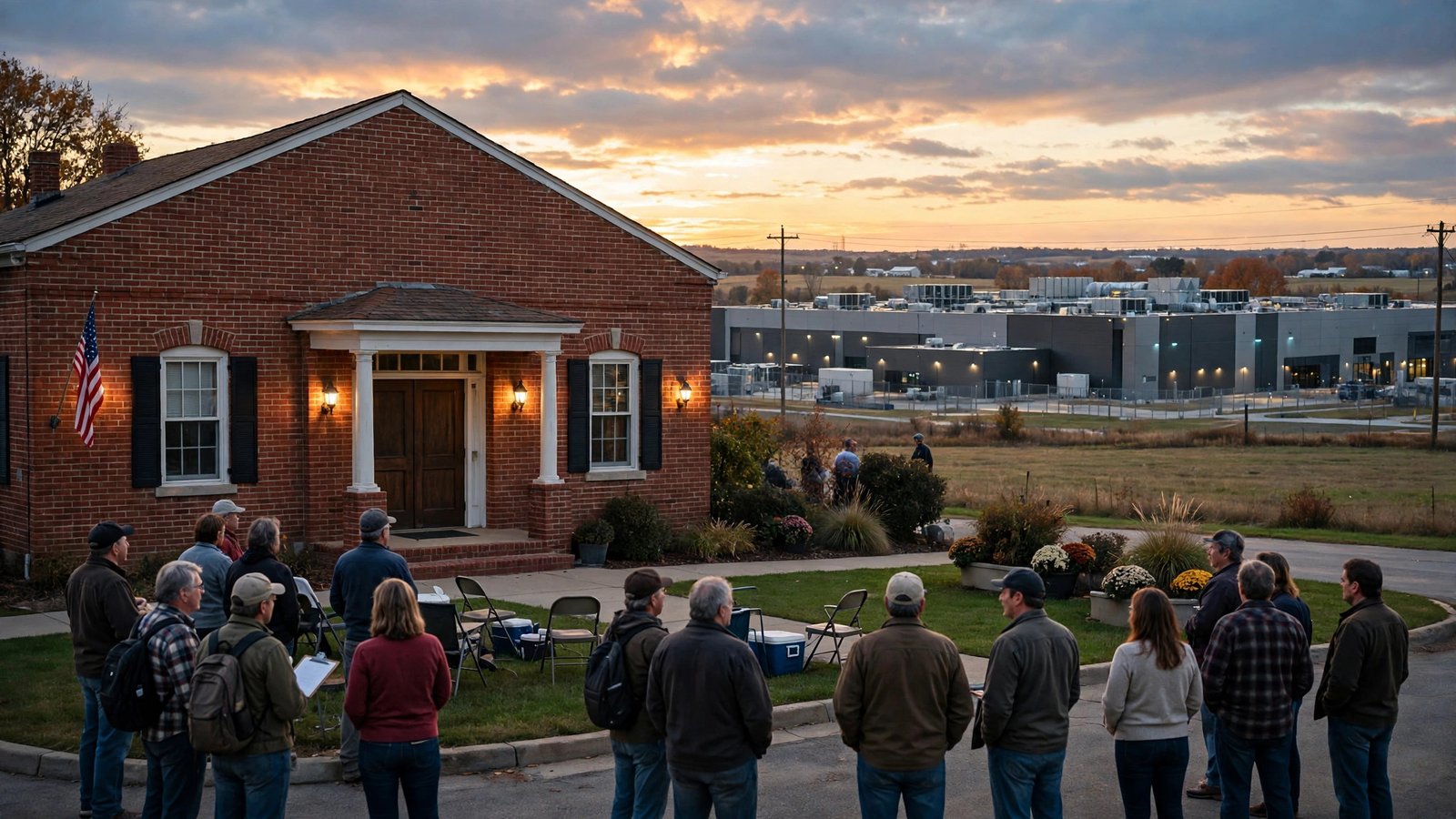
Data Centers Are on the Ballot in the US: 41 Local Measures Will Decide What Gets Built
On November 3, voters in towns and counties across the United States will do something that would have sounded strange only a few years ago. They will vote directly on data centers. According to Ballotpedia, 41 local ballot measures affecting data center policy are on the ballot in 10 states on that day. Some would ban new centers or pause building. Others would change zoning rules to make building easier. Together, they show how a question that once belonged to planning committees and utility regulators has become a neighborhood issue.
The timing matters. The November 3 election is the main general election day in 2026, and voters in 39 states will also decide 145 statewide measures. The data center questions are local, not statewide, which means the results will differ from place to place. A town in Ohio could vote to block a project while a county in Illinois votes to welcome one. For companies planning the huge buildings that power AI, cloud services and video streaming, that patchwork is now part of the business.
What voters will decide on November 3
Ballotpedia counted 41 local data center measures for November 3. A yes vote on 28 of them would limit data center development. That could mean a ban, a moratorium that pauses new projects for a set period, or stricter rules before a project can move ahead. A yes vote on the other 13 would facilitate development, for example through zoning changes that allow a center on a particular site.
It is worth being careful about what a single measure does. Ballot language varies a lot. Some measures are binding, which means local officials must follow the result. Others are advisory, which means voters are sending a signal and officials still make the final call. Some apply to all new data centers in a town. Others apply to one project, one parcel of land, or centers above a certain size. Readers who live in one of these places should check the exact wording on their local ballot, because the headline count alone does not tell you what will happen in your town.
The measures are not spread evenly across the country. Ohio has the largest share, with 21 measures across 18 jurisdictions. Illinois has seven, including four in Madison County. The rest are spread across Maine, Wisconsin, Kansas, California, Arkansas, New Hampshire, Florida, Michigan, Nevada, New Jersey and North Dakota. Smart Cities Dive, reporting on the same Ballotpedia figures, noted that Ohio is one of the fastest growing hubs for data center investment, with 257 data centers in the state according to its report. It also noted that at least 138 Ohio municipalities and townships have already placed moratoriums on data center development, and 23 communities in the state have effectively banned them, according to the Ohio Capital Journal.
Why data centers became a local fight
A data center is not a small building with a few servers. Modern centers can be very large, use a lot of electricity, and need water for cooling. Supporters say they bring jobs, tax revenue and investment to places that want growth. Critics worry about higher electricity costs for nearby homes, strain on water supplies, noise, land use and the long term character of a community. Both sides can be right in different places, which is why the debate has moved from abstract arguments about AI to concrete questions about one site, one power line and one water system.
The earlier results in 2026 point in the same direction. Ballotpedia reported that voters have already decided six data center measures this year, and in each case a majority favored greater limits. That happened either by approving new restrictions or by rejecting a measure that would have facilitated or supported development. The November 3 results will show whether that pattern holds when many more places vote at once, or whether voters in some areas choose a different path when jobs and tax revenue are on the table.
The wider 2026 picture
The November 3 measures are part of a larger set. Ballotpedia is covering 50 local data center measures in 13 states in 2026, including the six already decided and three more that voters will decide after November 3. One example reported by Smart Cities Dive is Clarksville, Arkansas, where voters will decide on December 1 whether to authorize bonds related to specific data centers. So even after election night, the story will not be fully over.
The list of states for the full year is Arkansas, California, Florida, Illinois, Kansas, Maine, Michigan, Nevada, New Hampshire, New Jersey, North Dakota, Ohio and Wisconsin. Most of the measures, 41 of the earlier count of 49, were scheduled for November 3, with the rest earlier or later in the year. The updated Ballotpedia report on November 2 put the full year total at 50, reflecting the three measures after November 3. Small differences in totals between reports reflect updates as new measures are certified or tracked, not a change in the main picture.
What this means for AI and tech building
For the tech industry, the ballot results could shape where the next wave of AI infrastructure gets built. Companies need sites with power, water, land and a predictable approval process. If voters in a fast growing hub vote for limits, developers may look elsewhere, accept longer timelines, or offer more community benefits in exchange for approval. That does not mean building stops. It means the map changes, and projects in friendlier locations may gain value.




Post Comment