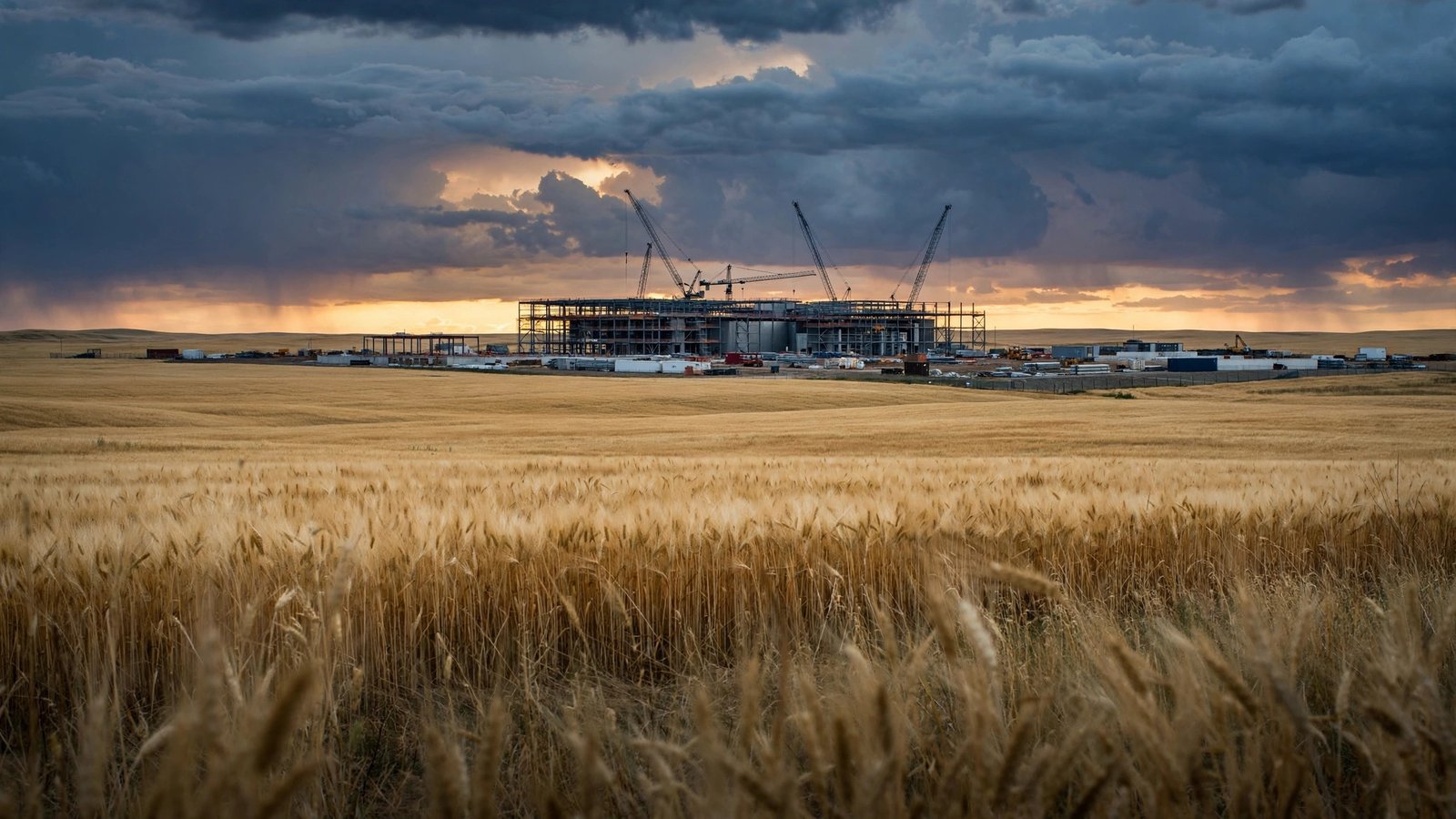
Bell’s 300-Megawatt AI Data Centre Faces a 10-Day Ultimatum From Saskatchewan’s Standing Buffalo Dakota Nation
Canada is building AI data centres at a record pace, and the land beneath them is starting to push back. Standing Buffalo Dakota Nation has given Bell Canada a 10-business-day ultimatum to explain how it consulted the Nation before breaking ground on a 300-megawatt AI data centre just outside Regina, Saskatchewan. According to CBC News reporting, Chief Rodger Redman says the Nation is prepared to go to court if Bell does not respond.
The October 2 letter
In a letter dated October 2, 2026, Standing Buffalo Dakota Nation told Bell it has serious concerns about consultation ahead of construction at the Rural Municipality of Sherwood site, where the data centre is being built. The letter asked Bell for specifics: what consultation took place, with whom, and when, and what the company did to assess the project's effect on Dakota land use in the area.
The Nation's position is that the site sits on unceded traditional Dakota territory. “As a sovereign nation and on treaty land, I believe we have the right to be consulted with,” Chief Redman told CBC News. The letter set a 10-business-day clock for Bell to answer, a deadline that expired around mid-October. Whether Bell responded within that window has not been publicly confirmed.
Redman has framed the dispute as something broader than a single site. Speaking to Global News, he described a pattern of major projects moving ahead before underlying land questions are resolved, and said those issues need to be addressed rather than deferred. An elder and knowledge keeper with the Nation, Wayne Goodwill, told CBC News that Dakota people were part of the Saskatchewan landscape hundreds of years before the treaties, grounding the claim in a history that predates the current regulatory maps.
Bell's flagship project
The project at the centre of the fight is no minor build. Bell Canada and the Government of Saskatchewan announced it on March 16, 2026: a 300-megawatt AI data centre in the Rural Municipality of Sherwood, part of Bell's national Bell AI Fabric network. In its own materials, Bell has described it as the largest purpose-built AI data-centre development in Canada. The province, for its part, framed the investment as the single largest private-sector capital commitment in Saskatchewan's history.
Construction was scheduled to begin in spring 2026, with the first stage expected to come online in the first half of 2027. That timeline is exactly what makes the dispute so consequential. If Standing Buffalo Dakota Nation's claim escalates into litigation, Bell could be defending an active construction site rather than a paper plan, with all the cost and delay that implies.
Bell's public response, relayed to CBC News, has been that its AI data-centre projects comply with applicable regulatory and environmental requirements and that the company remains committed to engaging with local communities and First Nations. That statement stops short of addressing the specific consultation steps the Nation says were missing.
Why a courtroom is not a simple next step
If the Nation does file suit, the legal road is not automatic. As CBC News reporting noted, the burden would fall on Standing Buffalo Dakota Nation to establish its historic connection to the specific Sherwood site, not just to Dakota territory in general. Evidence of historic use and occupation of the particular parcel, from oral history to archaeological documentation, tends to decide these disputes, and assembling it takes time.
There is also a thornier legal question sitting underneath the case. Canadian law has long recognized some form of Crown obligation to consult Indigenous nations when a project may affect their asserted or established rights. How far that duty extends to a private company like Bell, as opposed to the provincial and federal bodies that permitted the project, is itself a live question this dispute could help clarify.
Not an isolated flashpoint
Standing Buffalo's letter is the latest in a string of friction points between Canada's AI build-out and the communities underneath it. Public unease is measurable: a mid-October Angus Reid survey found nearly two-thirds of Canadians want their province to limit large data-centre growth, with water use and higher electricity costs the top concerns. In British Columbia, the Green Party has pushed for provincial veto power over new AI data centres. The underlying complaint keeps recurring: approvals are moving faster than affected communities can weigh in.
What happens next
Three outcomes are on the table. Bell could produce documentation of a consultation process that satisfies the Nation, turning the letter into a paperwork exchange. The two sides could negotiate directly, potentially with the province at the table, over benefit-sharing or revised terms. Or Standing Buffalo Dakota Nation could file suit, turning the flagship Bell AI Fabric site into a courtroom story.
The deadline expired with no publicly confirmed response from Bell, which means the first of those outcomes is already looking unlikely. The second and third both slow the clock on a project whose whole pitch was speed: a 2027 go-live date leaves little slack for litigation or renegotiation.
For Canada's broader AI strategy, the stakes go beyond one data centre. Ottawa has spent the past year selling sovereign AI infrastructure as a national priority, with billions in funding behind it. If flagship projects keep colliding with consultation obligations that were never fully addressed, the strategy's timeline, not just Bell's, starts to slip. Speed and consultation pull in opposite directions, and right now nobody has figured out how to make them pull together.




Post Comment