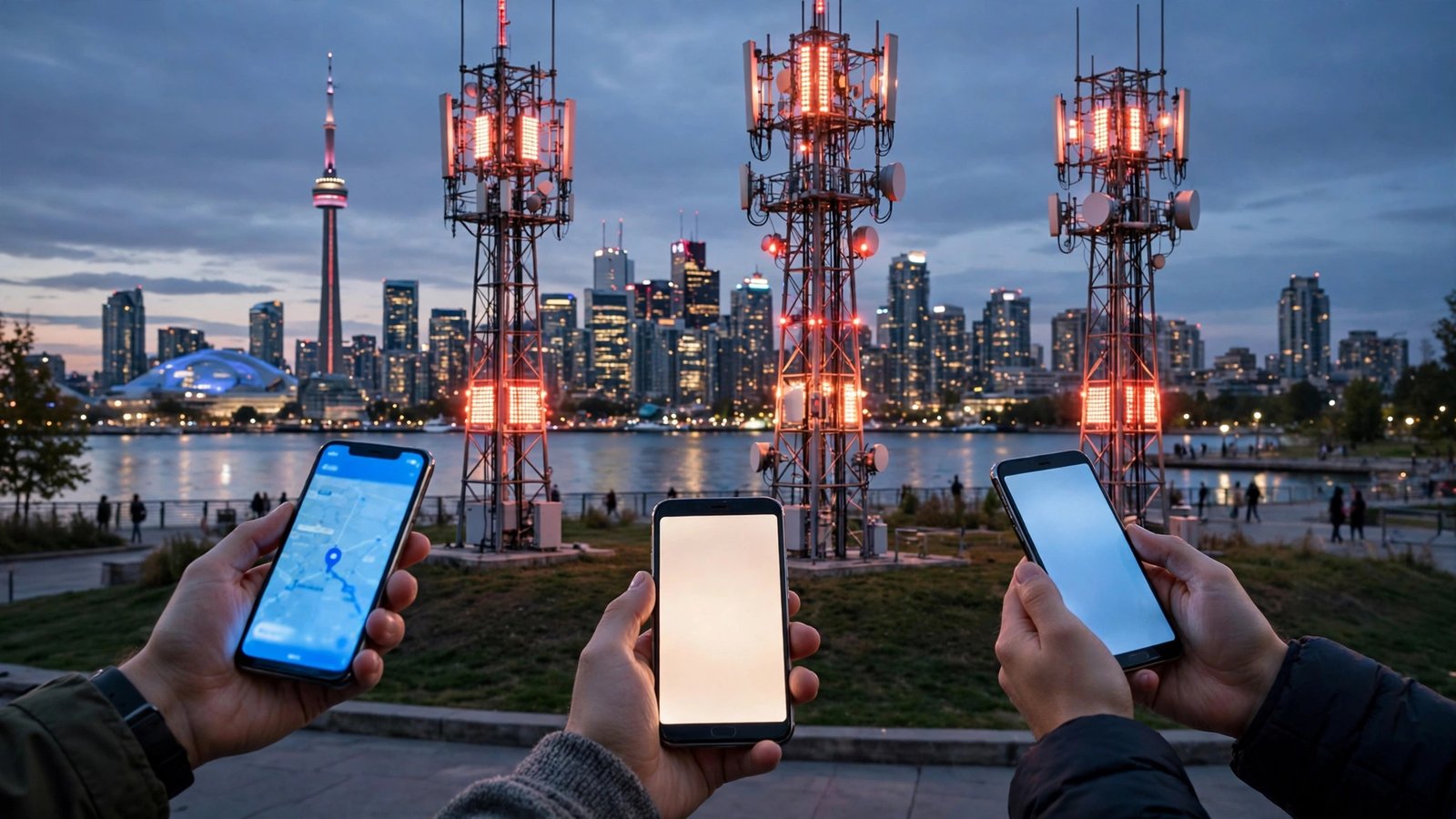
Canada’s Mobile Economy Reaches $120 Billion as 5G Passes 63% of Connections, GSMA Reports
Canada now makes a large share of its economic value through the phone in your pocket. The GSMA, the global mobile industry body, says mobile technologies and services created $120 billion in economic value in Canada in 2025, equal to about 5.4 percent of GDP. About $70 billion of that total came from productivity gains, the kind of value that shows up when work gets done faster, trips get planned better, and small firms reach customers without a shopfront.
The headline number comes from the GSMA 2026 Canada Mobile Economy Report, released in Toronto on October 21, 2026. It is a useful snapshot, not a forecast for a single company or a single network. It pulls together connection counts, coverage, and economic modelling, and it gives Canadians a clearer sense of where mobile sits in daily life. For readers, the most telling figures are not only the dollars. They are the share of connections on 5G, the reach of networks across a vast country, and the slow but real shift toward standalone 5G, the version built to carry newer services.
What $120 billion actually means
A $120 billion figure can sound abstract, so it helps to break it down. The GSMA counts direct value from operators, handset and equipment sales, and related services, plus wider productivity effects across the economy. When a delivery driver uses live routing, a clinic sends appointment reminders by text, or a farmer checks prices from a field, that activity counts in the broader sense even if no one pays a mobile bill for that exact moment.
The report puts the 2025 total at $120 billion and projects growth to $170 billion by 2030. That projection rests on continued 5G growth, more artificial intelligence use, and more digital infrastructure. Projections of this kind always carry uncertainty. They depend on investment, spectrum policy, device prices, and demand from households and firms. Still, the direction is clear: mobile is no longer a side channel for the Canadian economy. It is one of the main ways people work, shop, bank, learn, and stay in touch.
5G now carries the majority of connections
By the end of 2025, 5G accounted for nearly 63 percent of total mobile connections in Canada, according to the report. That is roughly double the global average of 31 percent cited in the same report. By mid-2026, 5G networks had covered more than 94 percent of the Canadian population. The GSMA expects the 5G share to pass 70 percent by the end of 2026 and reach 95 percent by 2030, with about 45 million 5G connections at that point.
Those numbers place Canada ahead of many markets on adoption, even if the country ranks 21st in the GSMA Intelligence 5G Connectivity Index covering 46 markets, with a composite score of 60.2, above the index median of 54.8. Adoption and network quality are related but not identical. A country can have many 5G connections while still working through coverage gaps in rural areas, indoor dead spots, and a move to standalone networks.
Standalone 5G matters because it does not lean on older 4G core networks in the same way. It can offer lower latency, better support for large numbers of connected devices, and network slicing, where a slice of capacity can be set aside for a specific use. The report notes that by the end of 2025, standalone traffic made up less than 9 percent of mobile network traffic in Canada, compared with 32 percent in the United States. All three major national operators have launched standalone services, according to the report, so the gap looks like a rollout stage rather than an absence of the technology.
For most phone owners, the practical point is simple. If your phone and plan support 5G, you are part of the majority now. If you are still on 4G, you are not cut off, but newer features and faster capacity will increasingly be built with 5G in mind.
Where AI fits into the mobile story
The GSMA report also links mobile growth to artificial intelligence and digital infrastructure. It cites Bell Canada's planned 300-megawatt AI facility near Regina and Telus's sovereign AI infrastructure under construction in Rimouski as examples of the buildout behind the scenes. As of September 2025, Canada's operational data centre capacity stood at about 1.4 gigawatts, according to the report.
That infrastructure does not change what you see on your phone screen today, but it shapes what becomes possible next. AI features on phones, from live translation to photo editing to voice assistance, often rely on a mix of on-device processing and cloud computing. Stronger domestic capacity can reduce delays, keep more data handling closer to home, and support services for health care, manufacturing, and public services that need reliable connections.
What this means for everyday users in Canada
For households, the report points to a few plain takeaways. First, check whether your phone and plan actually use 5G. Many people pay for a capable phone but sit on an older plan or a setting that limits the network. Second, coverage still varies by place. A national average above 94 percent does not mean every rural road or basement has a strong signal. Third, standalone 5G will roll out gradually, so benefits like steadier connections for video calls and connected devices should arrive in steps, not all at once.
Frequently Asked Questions
What is the GSMA Canada Mobile Economy Report?
It is an annual-style industry report from the GSMA that tracks connections, coverage, and the economic value of mobile technologies and services in Canada. The 2026 edition was released in Toronto on October 21, 2026, and it reports 2025 figures alongside projections to 2030.
How much did Canada's mobile economy contribute in 2025?
According to the report, mobile technologies and services created $120 billion in economic value in 2025, equal to about 5.4 percent of GDP. About $70 billion of that total came from productivity gains across the wider economy.
What share of Canadian mobile connections use 5G?
By the end of 2025, 5G accounted for nearly 63 percent of total mobile connections in Canada, well above the global average of 31 percent cited in the report. The GSMA expects that share to exceed 70 percent by the end of 2026 and reach 95 percent by 2030.




Post Comment