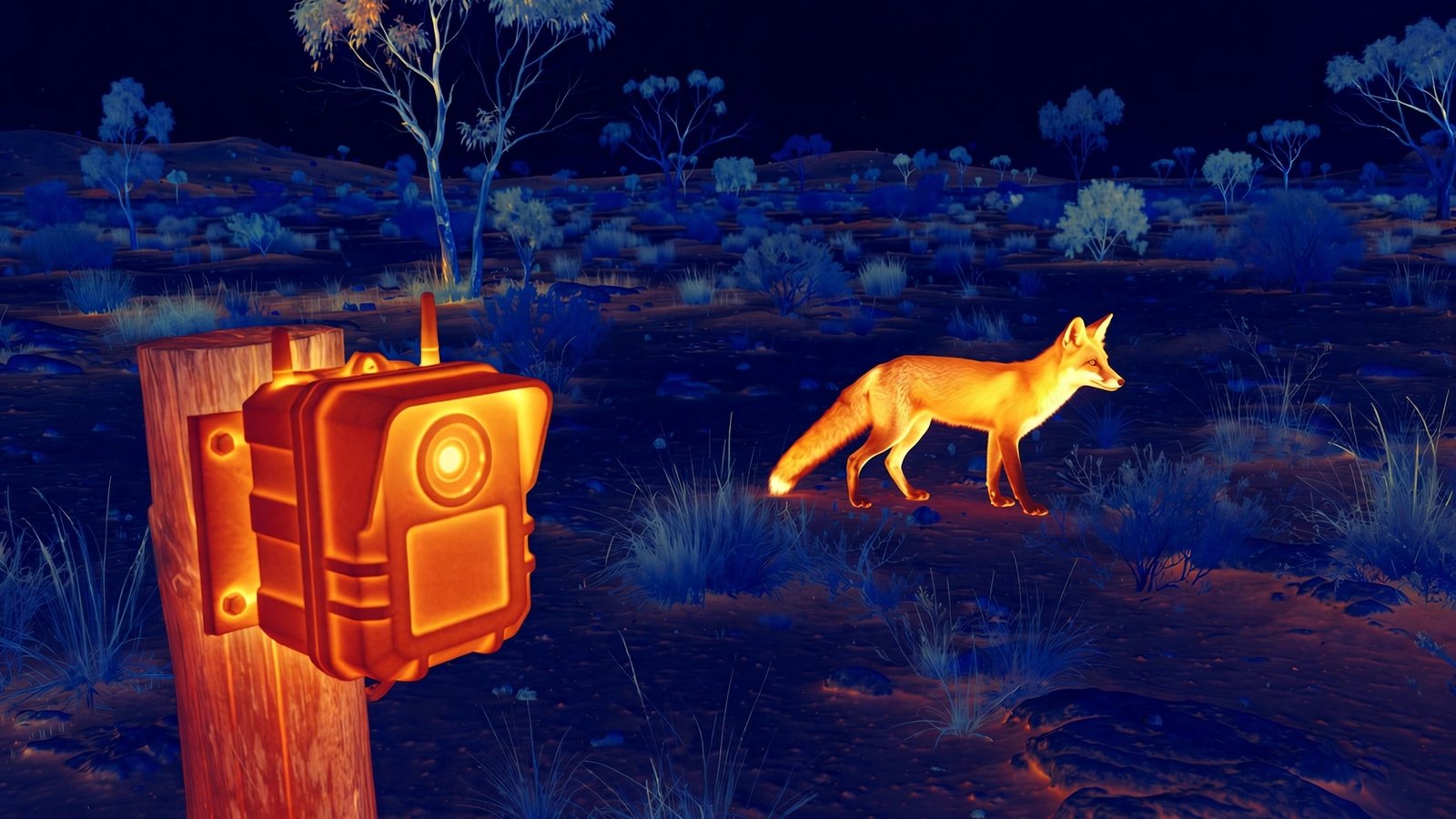
AI-Powered Traps and Smart Baits: Australia’s High-Tech Plan to Curb Its Fox Population
Australia has a fox problem, and it is enormous. Introduced in the 19th century for hunting, red foxes now occupy roughly 80 per cent of the continent and are estimated to kill more than 300 million native animals every year. Now Canberra is responding with technology. A new draft national threat abatement plan puts artificial intelligence at the centre of fox control, proposing smart bait stations, image-recognition traps, thermal cameras and remotely monitored devices that can tell a fox apart from everything else.
The scale of the fox problem
It is hard to overstate how far foxes have spread. In some temperate areas, densities can reach 16 animals per square kilometre, stretching from central Queensland through New South Wales, Victoria and South Australia. Populations are also thriving in Western Australia, and foxes have even moved into urban areas. They prey on a wide range of native mammals, birds and reptiles, and farmers have long complained about foxes attacking lambs and poultry.
Traditional control methods have struggled. Baiting with sodium fluoroacetate, commonly known as 1080, along with shooting and fencing, has had limited success in actually reducing fox numbers. Worse, these blunt tools can kill native animals too. Quolls and bandicoots, already under pressure, are among the casualties of widespread poisoning campaigns. The current national strategy is almost 20 years old, and the new draft plan is the first serious rewrite in that time.
The sentinel bait station: AI that decides who eats
The centrepiece of the plan is a device called a sentinel bait station. Instead of leaving poison out for anything hungry enough to eat it, the station uses AI to distinguish between target and non-target animals, restricting access to bait so that only foxes can reach it.
The idea is simple in concept but demanding in practice. A camera watches the station around the clock. Machine-learning software analyses each visitor, comparing its shape, movement and behaviour against trained models of foxes and native species. If the visitor is a fox, the bait is released. If it is a bandicoot, a quoll or a curious bird, it stays locked away. It is the same basic technology used in security cameras and smartphone photo apps, redirected toward conservation.
This kind of precision matters because the old approach was essentially indiscriminate. Broadcast baiting across a landscape risks exactly the animals Australia is trying to save. A station that refuses to open for anything but a fox could make control campaigns both more effective and far less damaging.
Grooming traps, thermal cameras and remote monitoring
The plan does not stop at bait stations. It also examines upgraded grooming traps, which use image recognition to identify an animal before delivering a dose of poison. A grooming trap normally works by spraying a target animal with a toxic gel that the animal then grooms off its fur. Adding an AI gatekeeper means the spray only fires when the camera is confident the animal is a fox.
Thermal cameras and remotely monitored devices round out the toolkit. Thermal imaging can spot foxes at night, when they are most active, and remote monitoring lets operators check stations without driving hundreds of kilometres through the outback. A trap that phones home when it needs attention is far more useful than one sitting unchecked for weeks.
Why the update is happening now
The timing is no accident. The ecological damage has become impossible to ignore, with foxes listed among the key threats to dozens of native species. At the same time, AI and sensor technology have matured enough to be practical in the field. Cameras are cheaper, batteries last longer, edge computing can run image recognition on the device without a network connection, and machine-learning models trained on wildlife imagery are widely available.
The draft plan explicitly reflects these advances, which simply did not exist when the previous strategy was written nearly 20 years ago. What was once a science-fiction idea, a trap that knows its victim before it acts, is now an engineering problem that researchers are actively testing.
The concerns nobody is ignoring
Not everyone is sold, and the plan’s own analysis flags the concerns. Animal welfare advocates will question the use of poison even in targeted systems. The central risk is misidentification: if the AI confuses a native animal for a fox, the very collateral damage the technology promises to avoid happens anyway. Field trials will need to prove the systems are accurate enough, not just in a lab but in dust, rain and low light.
Then there is the practical side. Cost and deployment across remote areas will face scrutiny. Thousands of smart stations across the outback would need to be built, powered, maintained and eventually replaced. The draft plan is out for public consultation, and the final version will depend on how those trials and that feedback go. Federal budget allocations for implementation will be the next thing to watch.
What to watch next
The immediate next steps are public consultation on the draft plan, followed by field trials of the sentinel bait stations and image-recognition grooming traps. Those trials need to demonstrate both effectiveness against foxes and safety for native wildlife. If they do, Australia could end up with a template that other countries facing invasive predators point to for years.
The fox did not arrive in Australia by choice, and neither did the native animals now fighting for survival. Whether AI turns out to be the weapon that finally tips the balance is still an open question, but for the first time in decades, the plan on the table looks different from everything that came before it.
Frequently Asked Questions
What is a sentinel bait station?
A sentinel bait station is a fox-control device proposed in Australia’s draft national threat abatement plan. It uses AI and cameras to distinguish foxes from native animals, restricting access to poison bait so that only foxes can reach it, reducing the risk of killing non-target species.
How many native animals do foxes kill in Australia each year?
Foxes are estimated to kill more than 300 million native animals every year in Australia. They occupy about 80 per cent of the continent, and in some temperate areas their densities can reach 16 animals per square kilometre.
When will Australia’s new fox control plan be finalised?
The plan is currently in draft form and is going through public consultation. The finalised version will depend on consultation feedback, field trials of the proposed AI technologies and federal budget allocations for rollout.




Post Comment