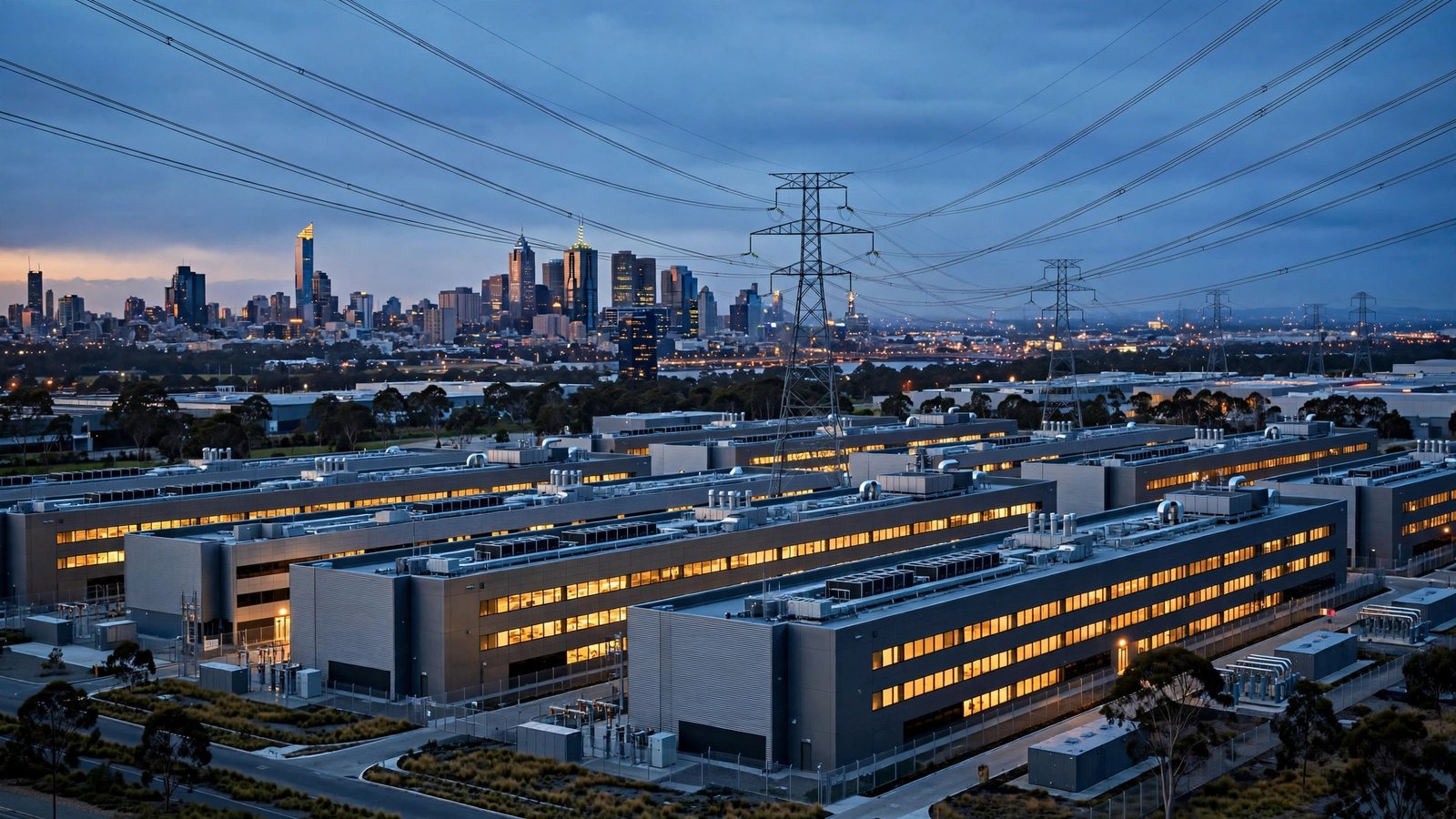
Melbourne Overtakes Sydney as Australia’s Data Centre Pipeline Surges Past 26GW
Australia's data centre map has a new leader. A fresh report from Data Centres Australia and DC Byte puts the national forecast pipeline at 26.8 gigawatts, up from 21.6 gigawatts in April, a jump of 5.2 gigawatts in just six months. The headline inside that number is a changing of the guard: Melbourne has overtaken Sydney for total forecast capacity, while towns and cities outside the two big capitals now hold a much larger share of future projects than they did two years ago. The report, published on 2 November 2026, weighs land, power access, permits, developer track records and how quickly customers are likely to take up capacity, rather than taking every announced grid connection at face value.
What the new numbers show
The national picture is one of fast growth with a shifting centre of gravity. Melbourne's total forecast pipeline jumped by 1.7 gigawatts since April to reach 10.7 gigawatts. Sydney, by contrast, fell from 11.4 gigawatts to 7.8 gigawatts over the same period. The swing is large enough that it cannot be explained by a single project being delayed or cancelled. It reflects a run of decisions by developers about where it is easier, faster and cheaper to build.
Capacity under construction has doubled since the April report, according to Data Centres Australia chief executive Belinda Dennett. More capacity has also moved from early stage to committed, which she presented as evidence that demand in the market remains strong even as questions grow about power, planning and community acceptance.
Why Melbourne pulled ahead
The report points to Victoria's Development Facilitation Program as a key reason for Melbourne's rise. The program helped move projects from early stage planning into committed pipelines faster than New South Wales' State Significant Development process, the report says. Melbourne recorded a 1.2 gigawatt bump in committed capacity, a sign that faster decisions can change where capital goes.
Energy availability and government policy also play a part. Developers choosing a site weigh the cost and timing of a grid connection, the certainty of planning rules, and whether local policy welcomes or slows large power hungry buildings. On those measures, Victoria has recently looked more attractive than New South Wales, at least for projects now entering the pipeline. State efforts to attract investment are, in Dennett's words, a likely reason for the pronounced growth in Victoria over the last six months.
There is a twist, though, and the report does not hide it. The Victorian Government has recently introduced new policies for data centres alongside what the report describes as an apparent approval pause ahead of the state election. Dennett cautioned that recent changes in policy may affect whether the growth continues. Melbourne leads today, but the lead depends on decisions still to come, and developers will watch the post election settings closely before committing the next wave of projects.
Why Sydney slipped back
Sydney's contraction, from 11.4 gigawatts to 7.8 gigawatts, reflects a different set of pressures. The report cites announced energy constraints, longer approval timelines and shifting policy winds. Sydney has long been Australia's default data centre hub, close to submarine cable landings, financial firms and a deep pool of enterprise customers. That advantage has not vanished, but it no longer guarantees that every new project lands there.
Energy is the sharpest constraint. Large AI facilities need power at a scale that can strain local networks, and securing a firm connection can take years. Where a developer faces a long queue or an uncertain upgrade timetable, a site in another state starts to look appealing even if it is further from the traditional customer base.
The rise of the regions
Beyond the two big cities, the most striking trend is regional growth. In the third quarter of 2024, regions outside Sydney and Melbourne accounted for just 19 percent of the forecast pipeline. By September 2026, that share had climbed to 31 percent. The projects span early stage proposals across Queensland, Tasmania, South Australia, Western Australia and regional pockets of New South Wales and Victoria.
Several forces explain the shift. Energy constraints in the capitals push developers to places where power and land are more available. Different AI workloads also favour different sites, so some facilities can sit further from city centres if the grid connection and fibre links work.
Pipeline versus reality
It is worth keeping the pipeline in proportion. A forecast pipeline of 26.8 gigawatts is not the same as 26.8 gigawatts of working capacity. Many projects in early stages will change size, slip in timing or never proceed. The report's method tries to account for that by testing each project against land, power, permits, developer history and customer demand, but no forecast can remove the uncertainty entirely.
That gap is why the operational figure deserves attention. Moving from 1.6 gigawatts today to a projected 3.9 gigawatts by 2030 would still be a major build out, more than doubling working capacity in four years. It would require steady progress on grid upgrades, construction labour and equipment supply, all of which have been tight across Australia.
Frequently Asked Questions
How big is Australia’s data centre pipeline now?
According to the Data Centres Australia and DC Byte report published on 2 November 2026, the national forecast pipeline stands at 26.8 gigawatts, up from 21.6 gigawatts in April, a rise of 5.2 gigawatts in six months.
Why has Melbourne overtaken Sydney?
The report points to faster planning pathways in Victoria, including the Development Facilitation Program, which helped move projects into committed pipelines more quickly. It also cites energy availability, government policy and approval timelines, with Sydney facing announced energy constraints and longer waits.
How much data centre capacity is actually running in Australia today?
Australia has 1.6 gigawatts of operational capacity across 163 tracked facilities, the report says. That figure is projected to reach 3.9 gigawatts by 2030, up from an earlier forecast of 3.2 gigawatts.




Post Comment