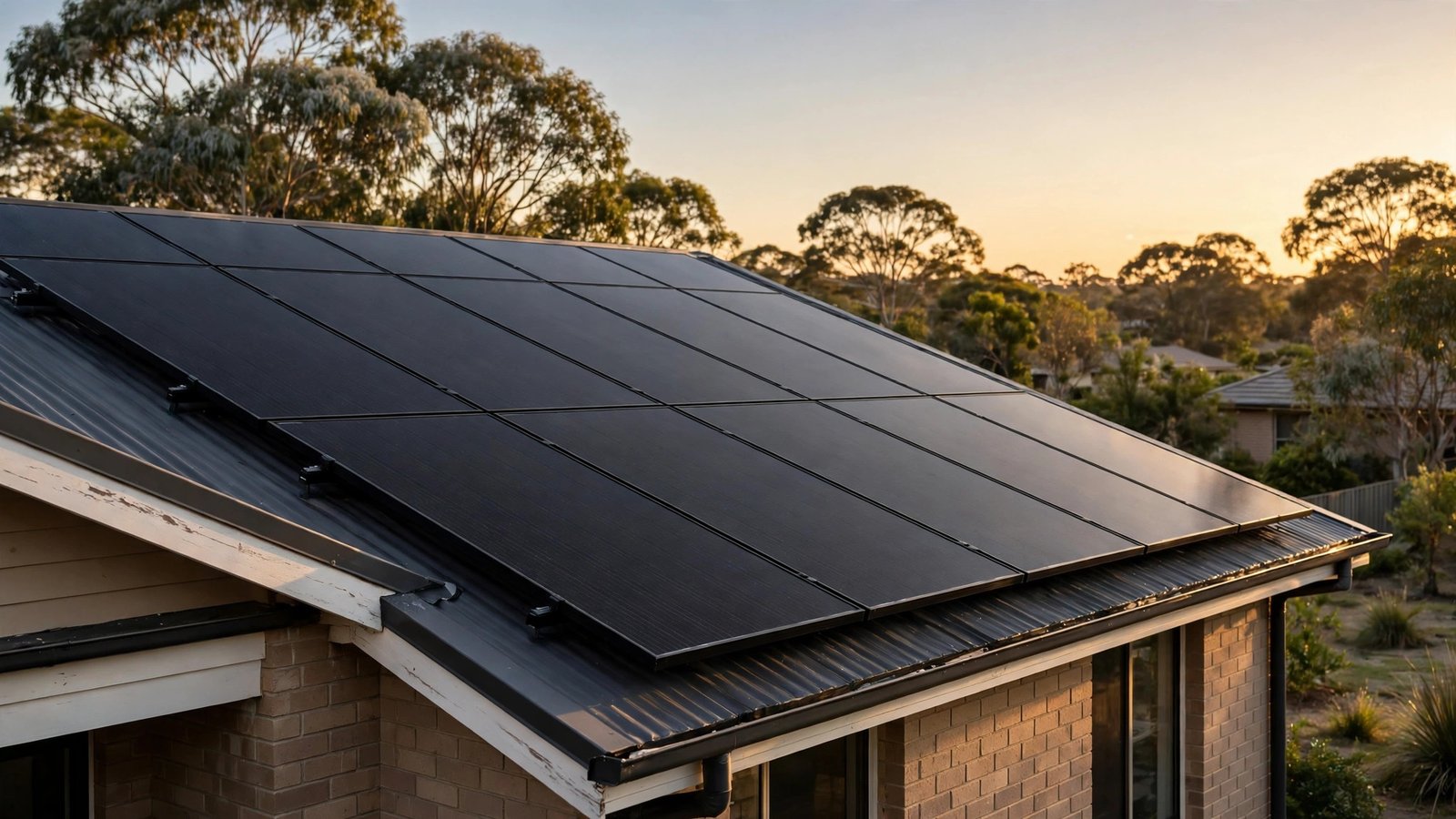
Suntech Wins 2026 EUPD Top Innovation Award in Australia for Its 480W Rooftop Solar Module
Australian rooftops just got a new talking point. Solar maker Suntech has won the 2026 EUPD Top Innovation Award in Australia for a residential module built to squeeze more power from a limited roof. The award, announced on 3 November 2026, puts the spotlight on a 480W panel that pairs a clean black look with efficiency figures most homeowners would once have associated with far larger systems.
EUPD Research is one of the best known names in solar market research, covering photovoltaics, energy storage and energy management. Its Top Innovation Award is meant to recognise products that move the technology forward while still making sense in real homes, not just in a laboratory. For Suntech, which is marking its 25th anniversary, the win is also a statement about where the company sees its future in Australia.
What won, and why it matters for rooftops
The winning product is the 480W Ultra T 3.0 Quarter-Cut Black Module, designed for residential rooftop use. It combines N-type TOPCon 3.0 cell technology with Poly-Finger, edge passivation and multi-slicing techniques, according to Suntech. Together, those features are aimed at lifting conversion efficiency and getting more usable energy from each panel.
The headline number is efficiency of up to 24.0 percent. That matters because roof space is often the limiting factor for a household solar system. A more efficient panel can produce more electricity from the same area, which can mean fewer panels for the same output, or more output from a roof that is partly shaded, oddly shaped or simply small. Suntech also highlights a lightweight design, which it says suits residential rooftop installations where weight and handling matter for installers.
For Australian homeowners, the practical question is rarely the technology name on the datasheet. It is how much power the roof can produce across a full year, in heat, in cloud and in the low light of winter mornings. Efficiency is only one part of that answer, but it is a useful starting point when comparing panels of a similar size.
How the module handles heat and low light
Heat is a familiar enemy of solar performance in Australia. As panels get hot, their output typically falls, and a summer afternoon can test even a well designed system. Suntech quotes a temperature coefficient of minus 0.26 percent per degree Celsius for the award winning module, which it presents as support for stable power output when temperatures vary.
The module also reports bifaciality of up to 90 percent, meaning it can capture additional light from the rear side under suitable installation conditions. On a typical dark rooftop, rear side gains are limited, but on lighter surfaces or raised mounting systems, the extra capture can add to total yield. Suntech is careful to frame this as dependent on installation conditions, and that caution is worth keeping in mind. A panel does not deliver its best numbers on its own. Tilt, orientation, shading, inverter choice and installer workmanship all shape what a household actually sees on its bill.
The sleek black appearance is another part of the pitch. Many homeowners care about how panels look from the street, and a uniform black module can blend in more easily than a panel with a bright frame or visible grid lines.
What the award says about the wider solar market
EUPD describes its award as honouring solutions that advance technological innovation, product development and sustainability while delivering tangible value in real world applications. That wording points to a shift in the solar market. Early rooftop solar was often sold on price per watt alone. Today, buyers are also weighing efficiency, appearance, durability and how a system performs over decades.
What Australian homeowners should check before choosing
If this module, or any high efficiency panel, is on your shortlist, start with your roof. Ask your installer how many panels fit, what orientation they will use and whether shading from trees, chimneys or neighbouring buildings will affect output at different times of day. A high efficiency panel helps most when roof space is tight, but it cannot fix a poorly oriented array.
Warranties also deserve close reading. Panel makers typically offer separate warranties for product defects and for performance over time, and the terms can differ in important ways. Check who honours the warranty in Australia, how claims are handled and what happens if the original installer is no longer trading. Those details matter more over a 25 year life than a small difference in headline efficiency.
Finally, think about future plans. If you expect to add a battery, an electric vehicle charger or a heat pump in the next few years, tell your installer now. A system designed with that growth in mind can save rewiring and extra cost later, and a panel choice that leaves headroom on the inverter can make expansion simpler.
The bigger picture for home solar in Australia
Australia already has one of the highest rates of rooftop solar uptake in the world, and the market keeps moving toward higher efficiency and smarter systems. Panels are getting more powerful, inverters are getting more capable, and batteries are becoming a more common part of the conversation. Against that background, an award for a 480W residential module is a reminder that innovation has not stopped at the panel level.
For Suntech, the Australian win caps a milestone year and strengthens its pitch to local homeowners and installers. For buyers, it adds one more credible option to consider, with numbers that are easy to compare: 480W, up to 24.0 percent efficiency, a temperature coefficient of minus 0.26 percent per degree Celsius and bifaciality of up to 90 percent.
Frequently Asked Questions
What is the Suntech module that won the 2026 EUPD Top Innovation Award in Australia?
It is the 480W Ultra T 3.0 Quarter-Cut Black Module, a residential rooftop panel that combines N-type TOPCon 3.0 technology with Poly-Finger, edge passivation and multi-slicing techniques, according to Suntech.
How efficient is the award winning Suntech panel?
Suntech rates the module at up to 24.0 percent efficiency. That figure can help a household generate more power from limited roof space, although real world output also depends on orientation, shading, inverter choice and installation quality.
When was the Suntech EUPD award announced?
The award announcement was published on 3 November 2026. Suntech says the recognition reflects its focus on photovoltaic innovation and its commitment to the Australian market as it marks its 25th anniversary.





Post Comment