Ottawa Startup Blumind Launches BM110 Kit for Ultra-Low-Power Analog AI
An Ottawa chip startup has put a new kind of AI hardware into developers' hands. Blumind announced on Monday, November 9, 2026, that its BM110 Evaluation Kit is now available to qualified customers. The kit is built around the company's AMPL analog compute technology, which is designed for always-on audio and sensor inference in devices that have to listen all day without draining a small battery. It is a small launch from a small company, but it points at a real problem in wearables: the smarter our glasses, watches and rings get, the faster they run out of charge.
What Blumind Announced
Blumind is headquartered in Ontario, Canada, with operations in California. Its new BM110 Evaluation Kit is a complete hardware and software platform that lets developers measure the accuracy and power of its analog compute technology on their own bench, running real models in real time.
The kit is available now to qualified customers. Blumind is also showing it at electronica 2026 in Munich, November 10 to 13, at Hall B5-560. Niraj Mathur, Blumind's CEO and co-founder, said the kit lets developers measure analog AI accuracy and power on their own bench, running real models in real time, and called it the foundation the rest of the company's AMPL roadmap is built on.
How Analog Compute Works in the BM110
Most AI chips today are digital. They store neural network weights in memory, fetch them, and multiply them in a digital array. That constant shuttling of data between memory and compute is the dominant energy cost of digital inference, and it is why always-on features like wake-word detection are so hard to run on a tiny battery.
Blumind takes a different path. Its AMPL technology stores neural network weights directly in the BM110 fabric and computes in the analog domain, so the data movement that eats power in a digital chip largely disappears. The company says this lets the BM110 neural network compute core run continuously at under 3 microwatts. With the microphone included, total always-on power is about 50 microwatts, according to the company.
Those numbers are small enough to change what a wearable can do. A microwatt is a millionth of a watt, and a chip that listens at that level can stay awake around the clock in a device with a battery the size of a coin. The open question is whether analog compute can match digital accuracy on real workloads, and that is exactly what an evaluation kit is for.
What Is Inside the Evaluation Kit
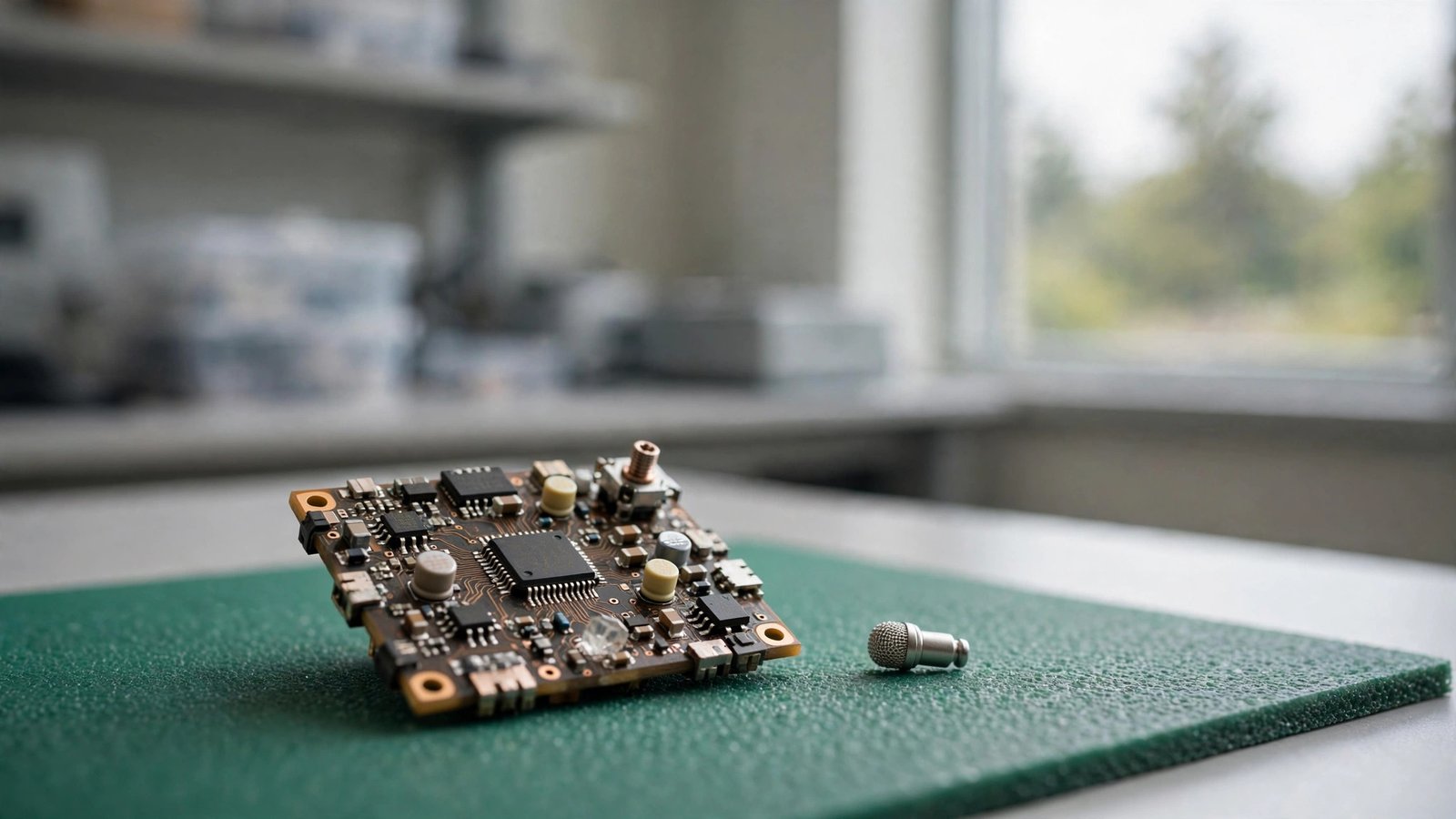
The kit is more than a bare chip. It ships with the BM110 silicon configured as a reference always-on audio board, complete with an analog microphone and an integrated signal-processing front end. Battery management is built in, and a series sense resistor lets developers measure always-on system current on the board in real time, which makes the power claims testable instead of theoretical.
On the software side, the kit includes a software development kit with a hardware abstraction layer and a model import flow for networks trained in standard cloud and server frameworks. Pre-loaded reference models cover voice activity detection and keyword spotting. A BM110 datasheet and the AMPL Technology Validation Report round out the package, and kits come with direct applications engineering support through model bring-up. The audience is engineering teams at device makers, not hobbyists.
Why Always-On Devices Care About Microwatts
Always-on AI is the feature set behind the next wave of wearables. Smart glasses need to hear a wake word without a button press. Smartwatches need to listen for a fall or a call for help. Rings and earbuds need to spot a keyword or a sound without waking a power-hungry main processor every few seconds. In each case the listening has to run all day, and the battery is small.
The usual answer has been to put a tiny digital signal processor in front of the main chip and accept its power draw. Blumind is betting that analog compute can do the same job at a fraction of that draw. The company says its technology targets smart glasses, smartwatches, rings and other wearable and mobile devices that need all-day, always-on AI.
Where the Kit Fits in the Wearables Market
The wearables market is crowded with big names, and a startup from Ottawa is not going to displace them overnight. Blumind does not need to. Its play is to supply the companies that build the devices. An evaluation kit is the first step in that sales cycle: get the silicon onto an engineer's bench, let the measurements speak, and then talk about volume orders.
Smart glasses have had a strong year, with several large companies pushing AI glasses as their next big product line, and each of those products needs always-on audio that does not kill the battery. The BM110 is not a general-purpose AI accelerator, and Blumind is not claiming it is. It is a specialist part for a specialist job, and the kit exists so device makers can judge whether the specialist is good enough.
There are open questions. Pricing and volume availability are not public, and the validation report is Blumind's own document, so independent results will carry more weight when they appear. The real verdict will come from the developers who test the board.
What Happens Next
The next few months will tell the story. Blumind is at electronica 2026 until November 13. If device makers pick up the BM110 for always-on audio in glasses, watches or earbuds, the first products using it could appear in 2027, though the company has not announced any product timeline.
Frequently Asked Questions
What is the Blumind BM110 Evaluation Kit?
It is a hardware and software platform that lets developers test Blumind's AMPL analog compute technology. The kit includes the BM110 chip on a reference audio board, an analog microphone, a software development kit, pre-loaded models for voice activity detection and keyword spotting, a datasheet and a technology validation report.
How much power does the BM110 use?
Blumind says the BM110 neural network compute core runs continuously at under 3 microwatts, with total always-on power including the microphone at about 50 microwatts. The kit includes a series sense resistor so developers can measure always-on system current on the board in real time.
Who can buy the BM110 Evaluation Kit?
The kit is available now to qualified customers, which in practice means engineering teams at device makers building always-on products. Blumind supplies the kit with its datasheet and validation report plus direct applications engineering support.





Post Comment