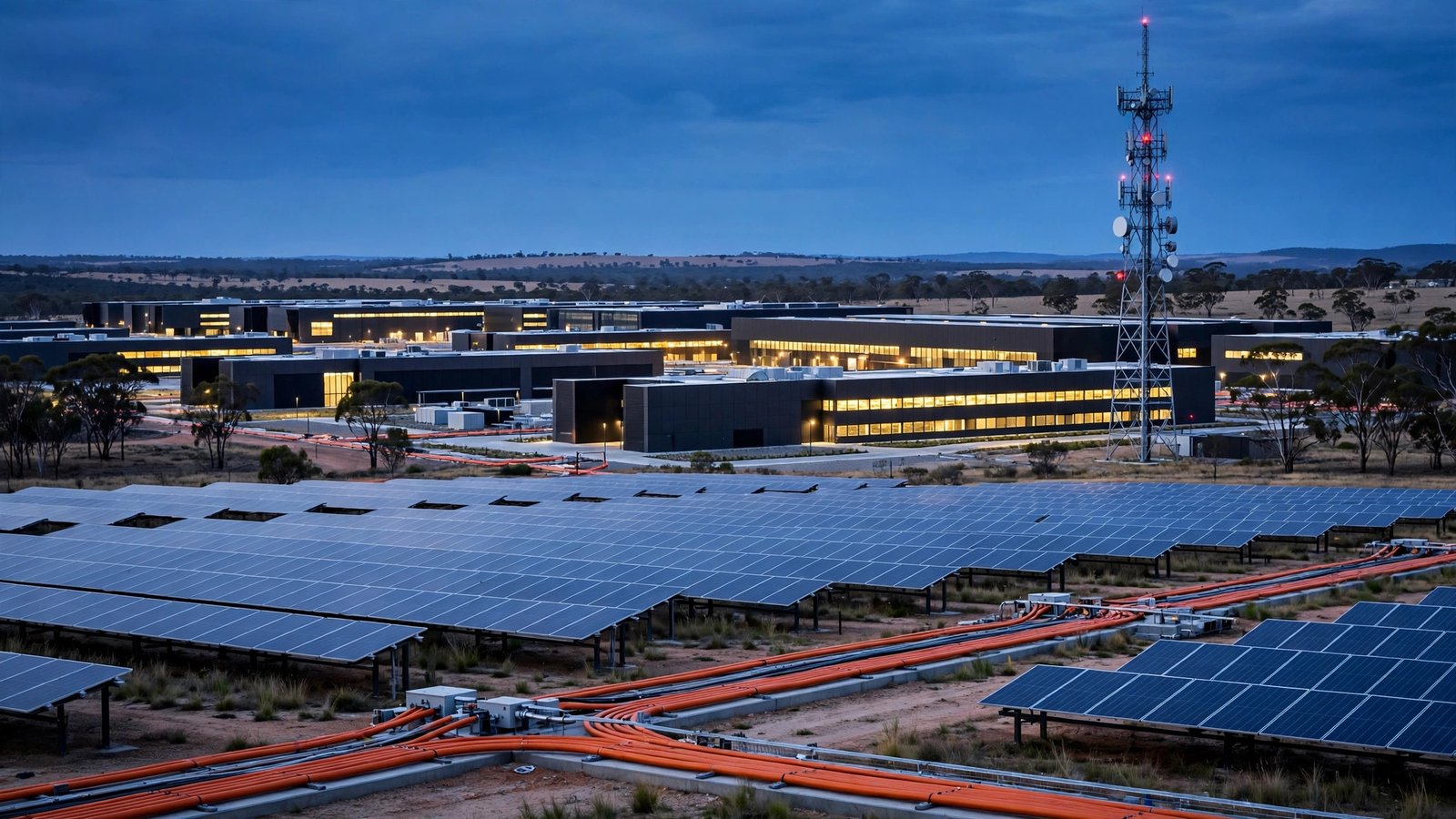
Telstra Says Australia Could Become Asia-Pacific’s Trusted AI Hub as Data Centre Capacity Doubles by 2030
Australia could become the trusted home of artificial intelligence in Asia-Pacific. That is the view of Telstra, the country's biggest telecommunications company, which says Australia has the right mix of power, chips and connectivity to win a bigger share of the AI boom. Telstra Digital Infrastructure chief revenue officer Roary Stasko made the case in an interview with Fierce Network published on 3 November. Australia has about 1.6 gigawatts of operational data centre capacity today, and that figure is expected to reach 3.9 gigawatts by 2030, according to data from DC Byte and Data Centers Australia. The longer-term pipeline is far larger still, at 26.8 gigawatts.
Why Telstra is betting on Australia
Singapore, South Korea, Malaysia and Thailand are all growing fast as data centre hubs as AI demand keeps climbing. Telstra still picks Australia as the place to watch. Stasko told Fierce Network that he looks at the question through three lenses: power, chipsets and connectivity. All three are inputs for data centres, and Australia is well positioned across them all, in his view.
The claim lands as the AI buildout becomes a political issue in Australia, with communities asking how much power and water the new facilities will use. Telstra's case rests on conditions that are hard for rivals to copy quickly: abundant land, a stable legal system and strong ties to the United States, which controls access to the most advanced AI chips.
Power, chips and cables: the three inputs
Power comes first. Stasko pointed out that Australia is a global leader in solar and wind power generation, which leaves it in a good position to meet rising data centre power demand even as power becomes a key constraint elsewhere. The catch, according to the Smart Energy Council, is timing: new renewable projects need to arrive alongside data centre builds so households are not hit with higher energy bills.
Then there are the chips that run AI workloads. The United States has banned exports of certain chips to China, while Chinese companies such as Huawei are looking to sell their chips outside the mainland. Australia sits on the friendly side of that divide. Stasko said Australia is a market where the United States has been more comfortable exporting chipsets. Malaysia, by contrast, is emerging as a destination for Chinese chipsets, while Australia has already classified Huawei as a high-risk vendor for 5G networks. Stasko expects what develops in Australia to have a more Western bend.
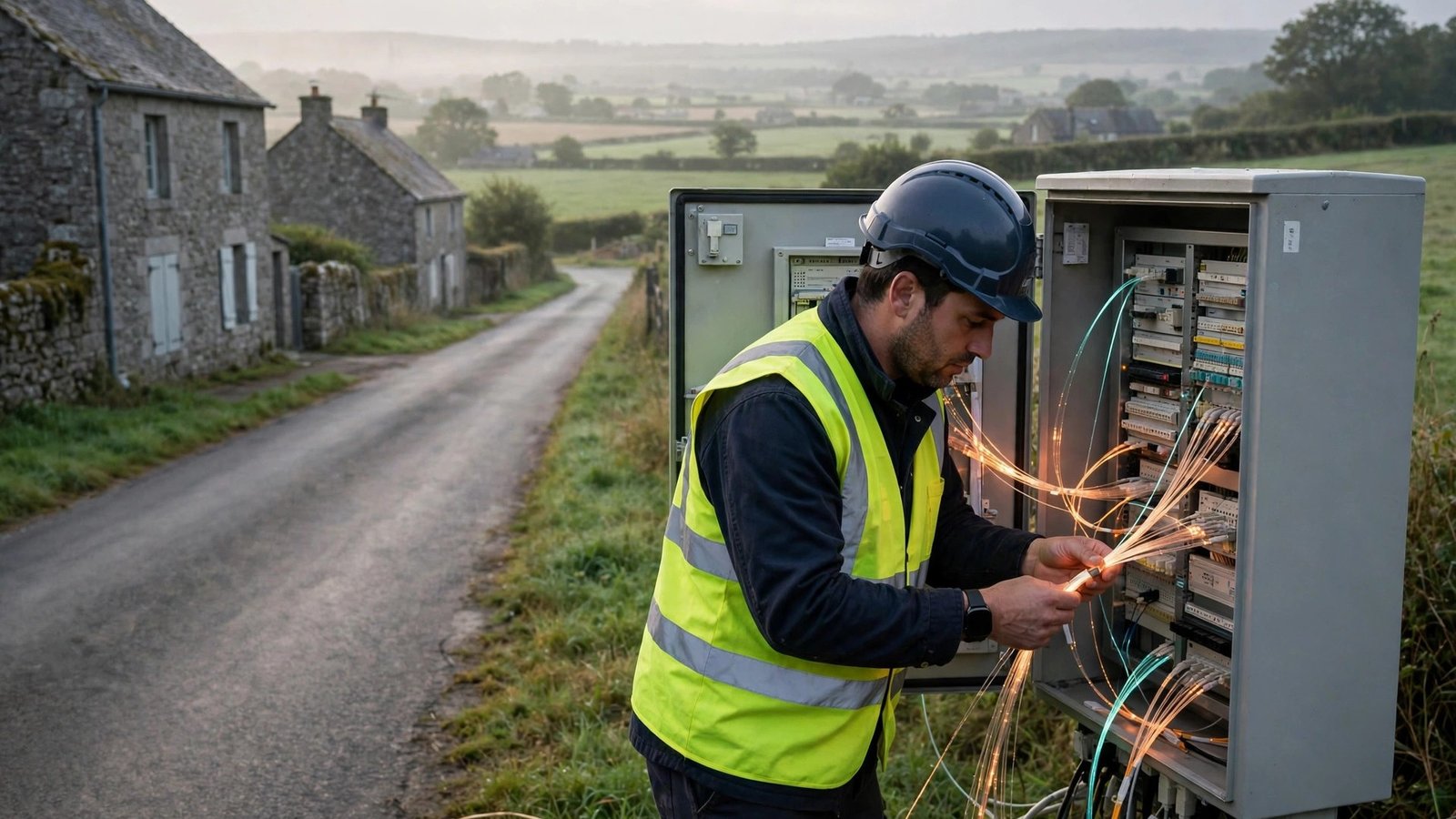
Connectivity is the third input. On land, Telstra has been building fibre ahead of the market, and new subsea cables to Asia-Pacific countries and across the Pacific to the United States are underway.
The Aura Network: 14,000 kilometres of fibre
Telstra has spent the past several years building toward rising demand with its Aura Network project, a billion-plus-dollar initiative aimed at deploying 14,000 kilometres of fibre across Australia. Stasko said the company is a little bit more than 60 percent of the way through that project now, and it is already seeing demand for data centres come through.
The first tranche focused on areas of clear demand and return. Now Telstra is moving to a second tranche, and Stasko said rising demand has lifted the company's confidence.
The scale of the wider buildout puts the Aura Network in context. AirTrunk has secured 4.25 billion dollars in debt to fund its SYD3 campus in Western Sydney, a 400 megawatt site targeted for completion by mid-2028, as part of a plan to spend 75 billion dollars on AI infrastructure in Australia over the next decade, according to DC Atlas. Microsoft has also won New South Wales approval for a 1.26 billion dollar, 96 megawatt Sydney data centre.
The subsea cable question
More subsea cables are also needed, including regional cables to Asia-Pacific countries and trans-Pacific cables to the United States. The problem is that subsea cable systems are multi-year, multi-billion-dollar projects, commonly undertaken by hyperscale cloud companies either alone or with partners, and not every cable deployed offers capacity to the broader market.
Stasko said the question is where hyperscalers build and how much capacity they offload. Telstra will partner where it can, but additional systems will be needed that serve more than a single tenant. What worries Stasko is not the 2030 horizon, he said, but probably 2035 and 2040, because these are projects that take years to come into being.
The other side of the boom
Not everyone is cheering the buildout. A New South Wales cross-party inquiry reported on 5 November that data centre approvals had failed to consider the cumulative effect on resources and infrastructure, though it stopped short of calling for a moratorium. Committee members voted 6 to 1 to remove recommendations for a state and national moratorium, prompting a sharp rebuke from the chair, Greens upper house member Abigail Boyd. Developer NextDC and ChatGPT owner OpenAI are awaiting approval for a data centre in the state, and there is a state election next March.
Governments want the investment and the jobs, while communities ask who pays for the power, the water and the roads. Telstra's answer is that Australia can manage the trade-off better than most, thanks to its renewable energy pipeline and its greenfield market.
What happens next
The test will come in stages: whether the 3.9 gigawatt forecast for 2030 holds and the power grid and fibre arrive on time, whether Australia keeps its privileged access to advanced chips, and whether the subsea cables get built fast enough. If all three land, Australia really could become the trusted AI hub Telstra describes.
Frequently Asked Questions
How much data centre capacity does Australia have now?
Australia has about 1.6 gigawatts of operational data centre capacity today, according to data from DC Byte and Data Centers Australia. That is expected to more than double to 3.9 gigawatts by 2030, with a long-term pipeline of 26.8 gigawatts.
What is Telstra's Aura Network?
The Aura Network is Telstra's billion-plus-dollar project to deploy 14,000 kilometres of fibre across Australia, linking data centre sites to customers and to subsea cables. The company says it is a little bit more than 60 percent of the way through the build.
Why does Telstra think Australia can beat its regional rivals?
Telstra's argument comes down to three inputs: power, chips and connectivity. Australia leads in solar and wind generation, the United States is comfortable exporting advanced chips there, and Telstra is building fibre ahead of demand. The open question is whether subsea cables and power grid upgrades can keep pace.




Post Comment