Agility Robotics Starts Trading on Nasdaq as AGLT, the First US-Listed Pure-Play Humanoid Robot Company
Humanoid robots took a big step out of the lab and onto Wall Street this week. Agility Robotics, the Oregon company behind the two-legged warehouse robot Digit, began trading on the Nasdaq on November 5, 2026, under the ticker symbol AGLT. The listing makes Agility the first publicly traded American company focused purely on humanoid robots with machines already working in real warehouses.
The debut closed a deal that had been building for weeks. Agility completed its merger with Churchill Capital Corp XI, a special purpose acquisition company, on November 4. Trading in the combined company started the next day. Rather than a traditional initial public offering, Agility used the SPAC route, merging with a publicly traded shell company to reach the market faster.
A $465 million raise and a $2.5 billion valuation
The merger and related financings delivered about $465 million in gross capital to Agility before transaction expenses, according to the company's announcement on October 30. That figure breaks down into roughly $164 million left in the SPAC trust account, a $201 million private investment led by Foxconn at $10 a share, and $100 million Agility had already received earlier.
Bloomberg reported that the transaction valued Agility's existing equity at about $2.5 billion. That pre-money valuation is not the same as the company's market value once its shares start trading, since the share price can move up or down from there. Still, the number puts Agility among the most valuable robotics startups to reach the public market.
The shareholder vote that cleared the deal took place on November 2, and the Securities and Exchange Commission had declared the joint registration statement effective on October 13. With those steps done, the closing went ahead as planned on November 4.
What Digit actually does
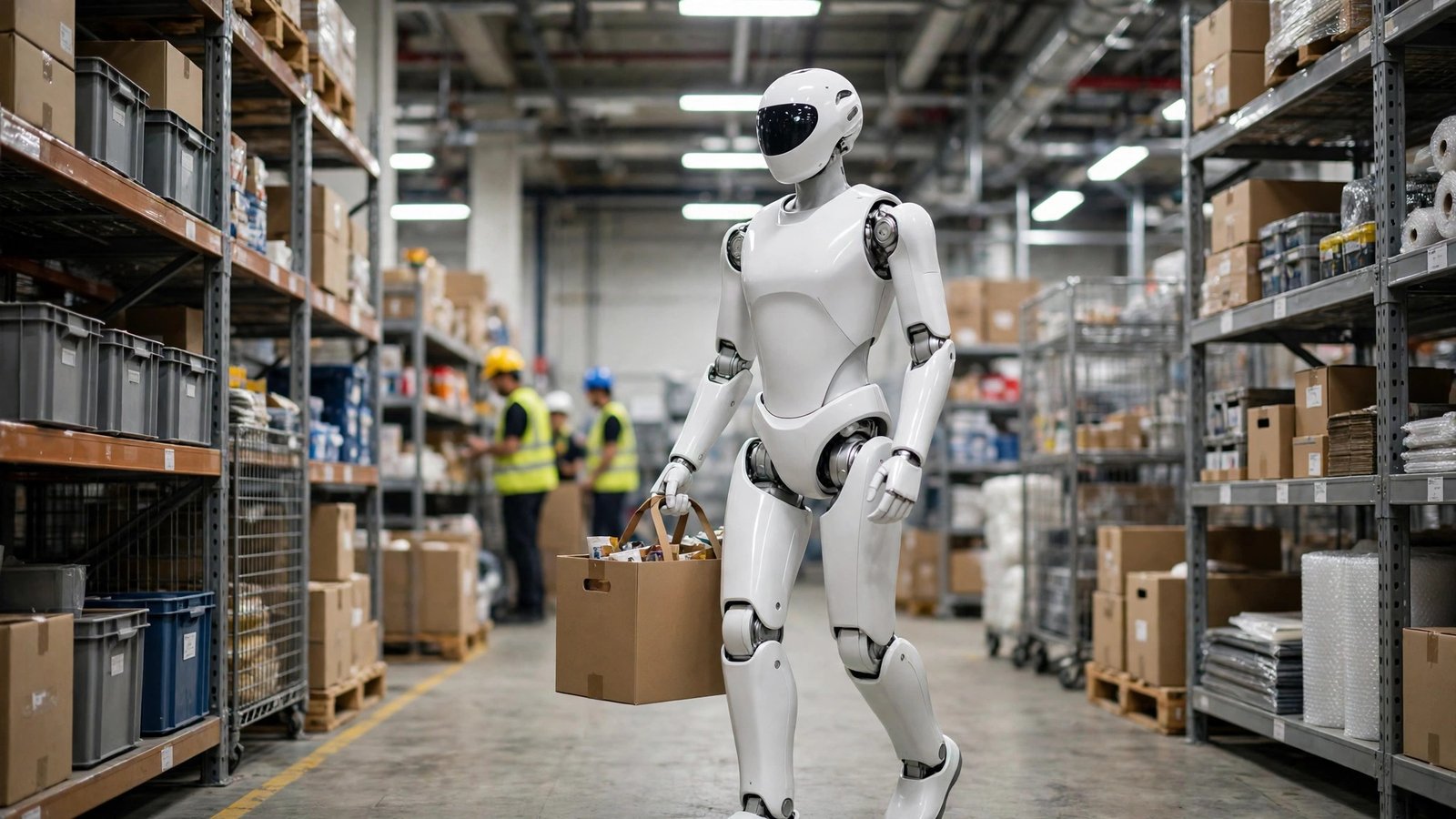
Digit is a humanoid robot built for warehouses and factories. It walks on two legs, carries totes, and moves material between stations in buildings designed for people. Agility says the platform has logged more than 65,000 hours of real-world operation, with deployments or work involving logistics provider GXO, auto supplier Schaeffler, and Toyota Motor Manufacturing Canada.
That operating history matters because it separates Agility from many humanoid startups that have shown impressive demos but little commercial work. The company's pitch to investors is that Digit is not a research project. It is a product with paying customers and a growing order book.
The next version, Digit 5, was unveiled on September 15, 2026. Agility describes it as safer to work alongside people and able to handle a wider range of industrial tasks than earlier models. The company reported more than $300 million in committed multi-year orders for Digit 5, but that figure needs a careful read. The orders are subject to contractual conditions and milestones, and they represent potential value over several years rather than revenue already booked.
Big-name backers
Agility's investor list reads like a who's who of the companies most interested in robots. Strategic investors and partners include Nvidia, Amazon, SoftBank, and Foxconn. Amazon is a customer as well as an investor, having tested Digit in its facilities. Foxconn, the electronics manufacturer, led the $201 million private investment tied to the listing.
GXO, one of the world's largest contract logistics providers, plans to deploy Digit at two more sites in the United States, in Statesville, North Carolina, and Lebanon, Tennessee, starting in early 2027. Those deployments will use Digit 4, the current generation, while Digit 5 moves toward wider availability.
What happens next
Agility has set out a timeline for its new robot. Early-access deliveries of Digit 5 are expected in the first half of 2027, with broader availability targeted for the end of that year. Both dates are plans, not completed deliveries, and they will depend on manufacturing and testing going to schedule.
As a public company, Agility will now report quarterly results, giving the market a rare public benchmark for humanoid robot revenue and unit counts. Investors will be watching how fast the order book turns into recognized sales, and whether the company can bring down the cost of building each robot.
The listing also lands at a moment when humanoid robots are drawing serious money across the industry. In the same week Agility went public, Bedrock Robotics raised $600 million, and several AI labs were reported to be pointing robots at data center construction. The field is crowded, and Agility's claim to be the only US-listed pure-play humanoid company with proven commercial deployments is now a public promise it has to keep.
For now, the Nasdaq debut gives Agility the cash and the visibility to scale up. Whether Digit becomes a common sight in American warehouses will depend on what happens after the ticker starts trading.
Frequently Asked Questions
What is Agility Robotics' stock ticker?
Agility Robotics trades on the Nasdaq under the ticker symbol AGLT. Warrants trade under AGLTW. Trading began on November 5, 2026, the day after the company completed its merger with Churchill Capital Corp XI.
How much money did Agility Robotics raise in its Nasdaq listing?
The merger and related financings provided about $465 million in gross capital before transaction expenses. That includes roughly $164 million from the SPAC trust, a $201 million private investment led by Foxconn, and $100 million Agility had already received.
What is Digit 5 and when will it be available?
Digit 5 is Agility's next-generation humanoid robot, unveiled on September 15, 2026. The company says it is designed to work safely alongside people and handle more industrial tasks. Early-access deliveries are expected in the first half of 2027, with broader availability targeted for the end of 2027.





Post Comment