US Midterm Voters Push Back Against AI Data Centers, From Ohio Ballot Bans to Texas and Georgia
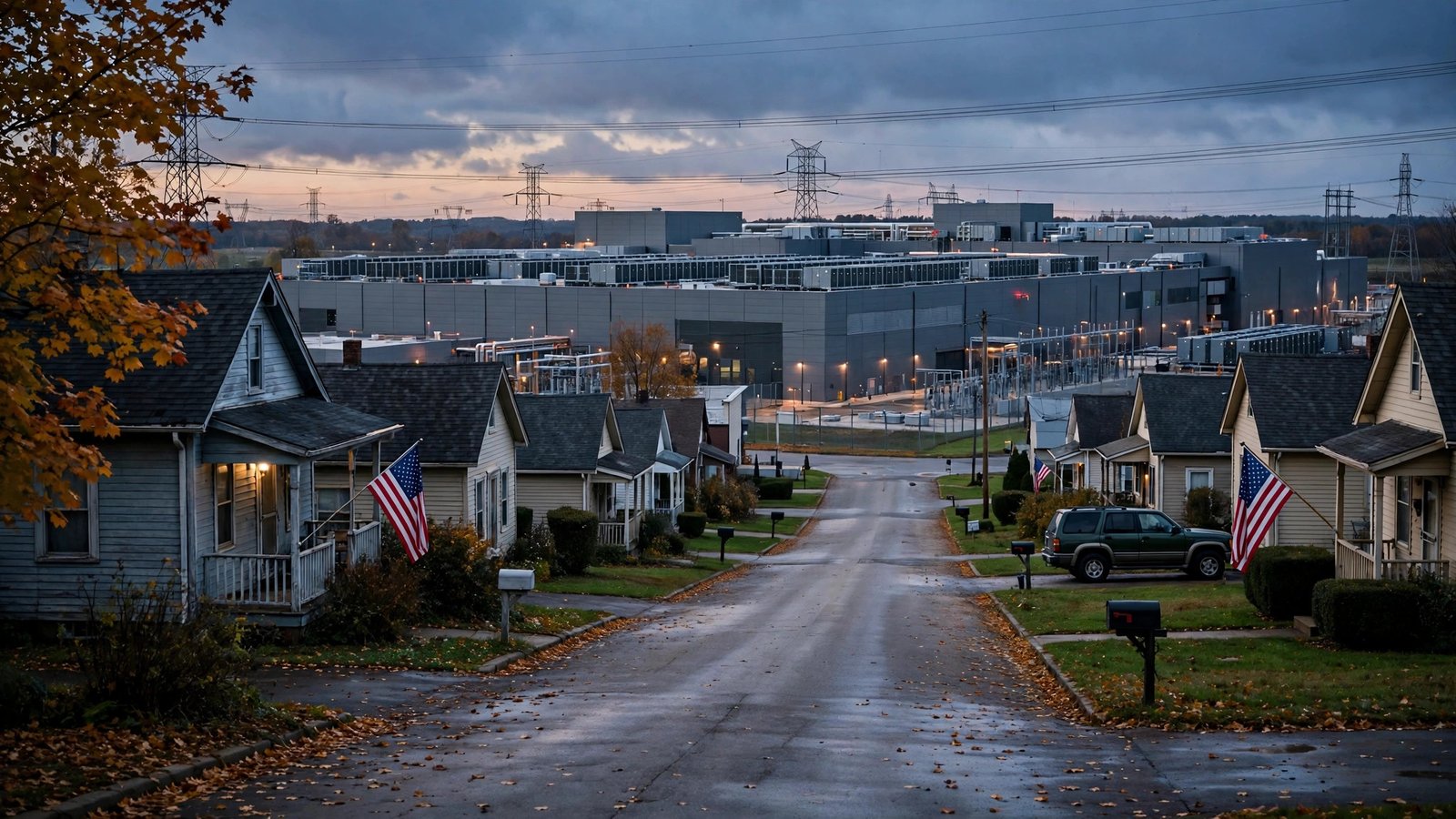
Voters in the United States sent the artificial intelligence industry a message on Tuesday, November 3. In town after town, in governor races and on local ballots, Americans pushed back against the giant data centers that power AI. Results are still being counted in places, but the early picture is clear: a buildout tech companies treated as inevitable now faces a serious fight.
Ohio led the local revolt
No state voted on data centers more than Ohio. According to a Ballotpedia count published on election day, voters in 10 states faced 41 data center measures on November 3. Ohio alone had 21, followed by Illinois with seven, Maine with four, and Kansas with three. A yes vote on 28 of the 41 would limit data centers, through bans, moratoriums, zoning rules, or public votes. The other 13 would help them get built.
By Wednesday, 33 local measures restricting data centers had passed or were leading in counts still under way, according to Stateline, citing the tracker Data Centers on the Ballot. The strongest results came from central Ohio. According to unofficial counts reported by NBC4, voters went against data centers in Ashville, Pataskala, Grove City, Sunbury, and Granville. Pataskala, Sunbury, and Granville amended their charters to ban data centers of 25 megawatts or more. Grove City passed a referendum requirement. In Ashville, voters blocked a referendum that would have let EdgeConneX build two data centers, one already under construction.
In Urbana, a ban passed with about 77 percent of the vote. Earlier in 2026, every data center measure decided before November also went for tighter limits, Ballotpedia found, including a Monterey Park, California, ban that won 88.3 percent.
Texas and Georgia chose candidates who promised a pause
The local votes were only part of the story. In Texas, the state with the most planned AI data center capacity, Democrat Gina Hinojosa beat Governor Greg Abbott after promising a moratorium on new construction. The Associated Press called the race at 11:17 p.m. Eastern on Tuesday, and Abbott conceded, according to Yahoo Finance. With about 93.5 percent counted, she led 52.8 percent to 45.7 percent.
In Georgia, Keisha Lance Bottoms won after calling for a pause on new data centers, leading Rick Jackson 54.2 percent to 45.8 percent with 98.2 percent counted. In Ohio, Democrat Amy Acton beat Vivek Ramaswamy 52 percent to 44.7 percent.
Texas matters most to the industry's plans. Wells Fargo puts 27 percent of planned US data center capacity in Texas, with 7 percent in Georgia and 5 percent each in Ohio and Pennsylvania. A pause in Texas would hit a large share of planned projects.
Power bills and water drove the backlash
The backlash did not come out of nowhere. Data centers use enormous amounts of electricity, and residents near proposed sites have spent two years asking who pays for the new power lines and water cooling they need. A June 2026 report from Lawrence Berkeley National Laboratory estimated data centers could account for 11.8 percent of total US electricity consumption by 2030, with projections ranging from 9.5 percent to 15.3 percent.
In Ohio, one Senate campaign made the issue central. Sherrod Brown called for data centers to pay the full cost of their power so household bills do not rise. Surveys pointed the same way: a Washington Post poll cited in election week coverage found two-thirds of Americans oppose building new AI data centers, and an NBC exit poll found more than half of voters called AI and data centers a crucial or major factor.
Local opposition has been building project by project. According to Data Center Watch, a research project run by 10a Labs, at least 45 data center projects were disrupted in the second half of 2026 due to local opposition. The November votes turned that scattered opposition into a single night of results.
Markets noticed, and so did Elon Musk
Investors reacted quickly. Nasdaq-100 futures fell 0.8 percent overnight, and shares in AI cloud company CoreWeave dropped 7 percent while Oracle fell 4 percent in overnight trading, CNBC reported. The worry is simple: if permits slow down and power gets costlier, the data center boom slows too.
Elon Musk, building a massive AI data center cluster in Memphis, reacted on X: "Data centres in space looking pretty appealing right now." The joke captured the industry mood: building on Earth just got politically harder.
The companies behind the buildout still have strong arguments. OpenAI, Anthropic, Google, Meta, and xAI all need vast new data centers, and much of that capacity is planned in exactly the states that voted this week. Supporters say the projects bring jobs, tax revenue, and computing power the US needs. Those arguments did not win on Tuesday night, but they will be heard again in legislatures and utility hearings.
What happens next
Most results are still unofficial, and state canvasses and certifications will follow over the coming days and weeks. A local ban does not automatically stop every project, and a governor's moratorium promise still has to become law or executive action. What changed is the politics: candidates who promised to slow the buildout won in states holding more than a third of planned capacity, and voters in dozens of towns voted directly to limit it.
For the AI industry, the message is that the next phase of the data center boom will be negotiated in public, town by town, rather than approved quietly. For residents near proposed sites, the midterms showed local votes can change the outcome.
Frequently Asked Questions
Did voters ban data centers across the whole country?
No. The November 3 votes were local measures in 10 states and governor races in states like Texas, Georgia, and Ohio. No national ban was on the ballot. Local bans affect specific towns, counties, or states, and most results are still unofficial.
Why do AI data centers need so much power?
Training and running large AI models requires thousands of specialized chips working at once, plus cooling to keep them from overheating. A single large data center can use as much electricity as a small city, which is why power bills and water supplies have become central to the debate.
What happens to projects that are already under construction?
That depends on each measure's wording and on state law. In Ashville, Ohio, voters blocked a referendum tied to a project already partly under construction, but the legal consequences for individual projects will be worked out in the weeks ahead. Developers, towns, and courts will test the new restrictions case by case.





Post Comment