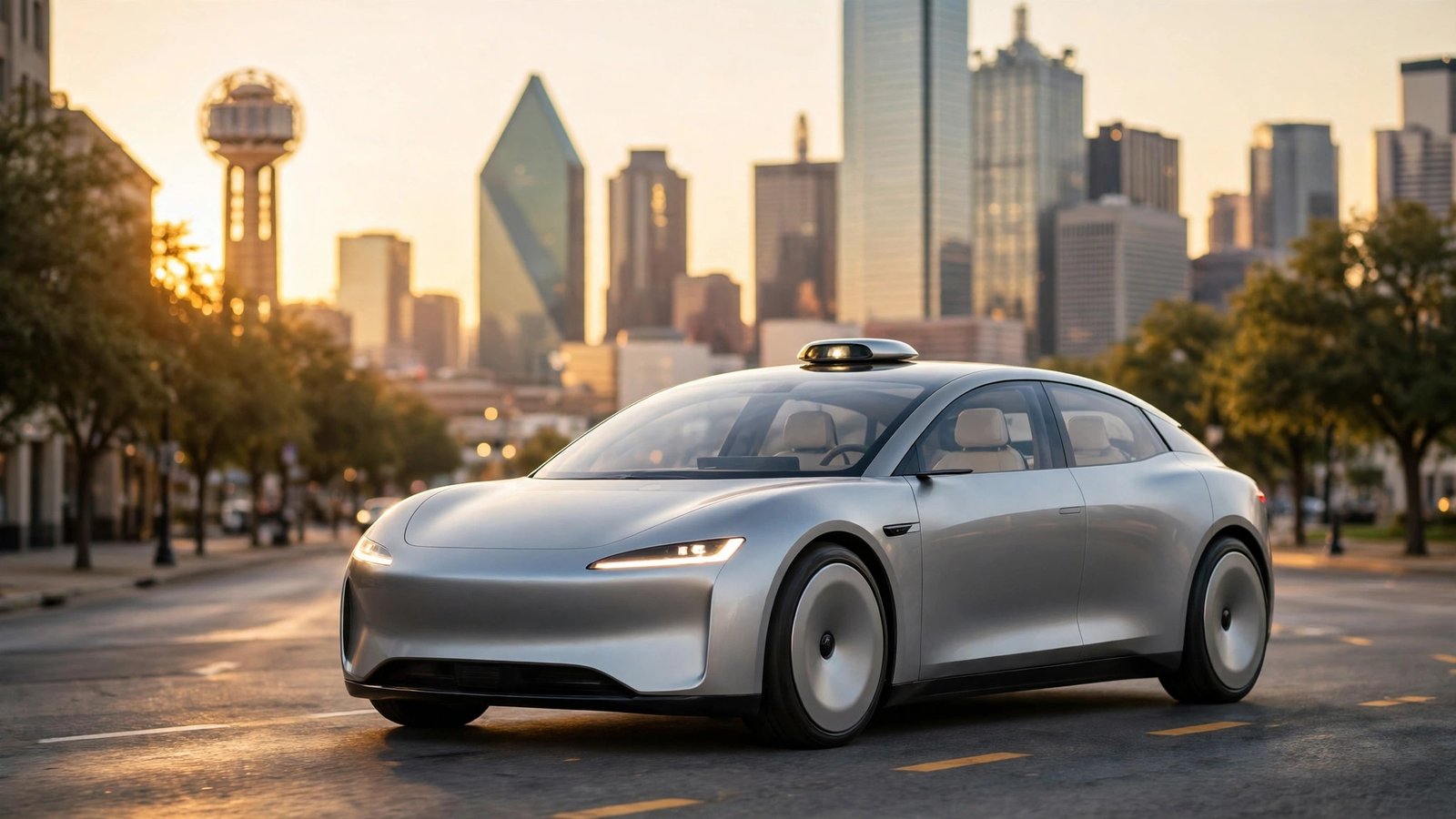
Tesla’s Cybercab Heads to Dallas as Its Texas Robotaxi Fleet Hits 1,204 Cars
Tesla is getting ready to take its purpose built robotaxi beyond Austin. According to a November 1 report from The Motley Fool, the company plans to expand its Cybercab presence to Dallas in November, a step that would turn Texas from a one city test into a multi city service. The timing lines up with a fast growing state registry, which listed 1,204 vehicles under Tesla Robotaxi LLC as of October 31. That total is a useful snapshot of how quickly Tesla is scaling, even if it does not tell the whole story about how many people are actually riding in these cars each day.
What the Texas numbers actually show
The Texas Department of Motor Vehicles records cited in recent coverage list 631 Model Y vehicles and 573 Cybercabs, for a combined total of 1,204. That is up from 739 vehicles on October 9, a jump of 465 vehicles in about three weeks. The mix changed along the way. On October 9, the register showed 319 Cybercabs and 420 Model Ys. By October 27, Cybercabs had moved ahead for the first time, at 544 to 507. Then, in the final days of October, Tesla added 124 Model Ys, which put the Model Y back in front at 631 to 573 on October 31.
Those swings matter because they show Tesla is still balancing two fleets at once. The Model Y is a familiar car that Tesla converted for robotaxi work, while the Cybercab was designed from the start as a driverless taxi, with no steering wheel and no pedals. A registry that flips back and forth between the two suggests Tesla is adding whichever vehicles it can get ready fastest, rather than waiting for one type to dominate. It also shows why a single day of data can mislead: a headline that said Cybercabs outnumber Model Ys was true on October 27 and no longer true on October 31, even though the overall fleet kept growing.
Why Dallas is the next logical step
Austin was the proving ground. Public Cybercab rides began there on September 3, and Tesla said on October 10 that more than 300 Cybercabs were serving Austin, an eightfold rise in 30 days. On the same day, Tesla AI lead Ashok Elluswamy added two words that set up the next move: “Dallas soon.” He gave no date, and Tesla has still not disclosed a Dallas launch date in the reports published so far, but the company said on its October 21 earnings call that it intended to bring Cybercab operations to Dallas in November 2026.
The bigger Texas race
Texas is not a Tesla only story. The same October 31 snapshot cited by the Texas Autonomous Vehicle Tracker put Waymo at 1,259 registered vehicles in Texas, which leaves Tesla 55 vehicles behind on that ledger. Avride was listed at 344 vehicles and Zoox at 63. That ranking is a reminder that registration is only one measure of a robotaxi business. A company can have more cars on the books and still run fewer paid trips, depending on hours, coverage, and demand.
Tesla has one cost argument that it keeps repeating. Its chief financial officer has reiterated a goal of cutting robotaxi operating costs to about 0.30 dollars per paid mile. That figure is a target, not a published fare, and it does not mean every ride will cost that little. It does explain why Tesla is pushing a purpose built car like the Cybercab. A car with no steering wheel, no pedals, and no driver controls to maintain could, in theory, be cheaper to build and run at scale than a converted passenger car. Whether that theory holds up in daily service, with cleaning, charging, repairs, and remote support, is something only months of real operation can prove.
Regulators are watching the same expansion. According to reports, the National Highway Traffic Safety Administration opened an Audit Query, designated AQ26002, into how Tesla certified the Cybercab under federal safety standards, focusing on whether certain standards apply to a car without a steering wheel, pedals, or mirrors. An audit query is a request for information, not a recall or a sales ban, and Tesla received an extension that pushed its response deadline to October 30, 2026. A fast rollout and a careful safety review are happening at the same time, and both will shape how quickly the service can grow.
What the registry does not tell you
The most important caveat in this story is also the easiest to miss. A DMV registry shows which vehicles are cleared to operate as robotaxis under a statewide authorization. It does not show how many of those vehicles are carrying passengers at any given hour, which city each car is assigned to, or how many trips each car completes in a day. The Texas register cited in recent coverage has no city breakdown, so it cannot confirm how many of the 1,204 vehicles are meant for Dallas, Austin, or Houston.
For now, the direction is clear even if the pace is not: Tesla went from 739 registered Texas robotaxis on October 9 to 1,204 on October 31, and Dallas is the named next stop for November.
Frequently Asked Questions
When will Tesla Cybercab launch in Dallas?
Tesla has said it intends to bring Cybercab operations to Dallas in November 2026, according to its October 21 earnings call coverage, but it has not disclosed an exact launch date in the reports published so far. Expect a staged rollout in a limited area first, rather than citywide coverage on day one.
How many Tesla robotaxis are registered in Texas?
Texas Department of Motor Vehicles records cited in November 1 coverage list 1,204 vehicles under Tesla Robotaxi LLC as of October 31, made up of 631 Model Ys and 573 Cybercabs. That is up from 739 vehicles on October 9. Registry counts show vehicles cleared to operate, not how many are carrying riders at a given time.
Is the Cybercab different from a Tesla Model Y robotaxi?
Yes. The Cybercab was built from the ground up as a robotaxi, with no steering wheel and no pedals, and it runs on Tesla Full Self-Driving software. The Model Y robotaxis are converted passenger cars. Public Cybercab rides began in Austin on September 3, and Tesla said more than 300 Cybercabs were serving Austin by October 10.




Post Comment