Gridsight’s A$36 Million Raise: The Sydney Startup Teaching Power Grids to Find Their Own Spare Room
The biggest infrastructure opportunity of the AI era might not be building more. It might be finding what we already have. That is the bet Insight Partners just made on Sydney startup Gridsight, which closed a Series B worth US$26 million (about A$36 million) for its AI platform that finds unused capacity hiding inside power grids.
The round was led by Insight Partners, with Galvanize joining alongside backers Airtree, Energy Transition Ventures and Aera VC. It is one of the largest early-stage raises for an Australian AI company this year, and it puts Gridsight at the centre of the energy transition's most awkward problem: the wires are full, but they are not.
The paradox of the overloaded grid
Utilities face two pressures at once. Demand is surging: rooftop solar and home batteries feed power back into local networks, electric vehicles load them up, and AI data centres arrive with appetites measured in hundreds of megawatts. Yet new poles, wires and substations take years to build and cost billions.
Gridsight's insight is that congestion is not evenly spread. The company says as much as three-quarters of grid capacity can sit unused on average, because limits vary by location, time of day and season. A transformer stressed on a hot afternoon may have headroom at night. If a utility can see that dynamically instead of relying on worst-case assumptions, it can connect new customers, new solar and even new data centres much faster.
"For the majority of the year, significant capacity exists," co-founder and chief executive Brendan Banfield said around the raise. "But it is uneven, dynamic and geographically dependent."
What the software actually does
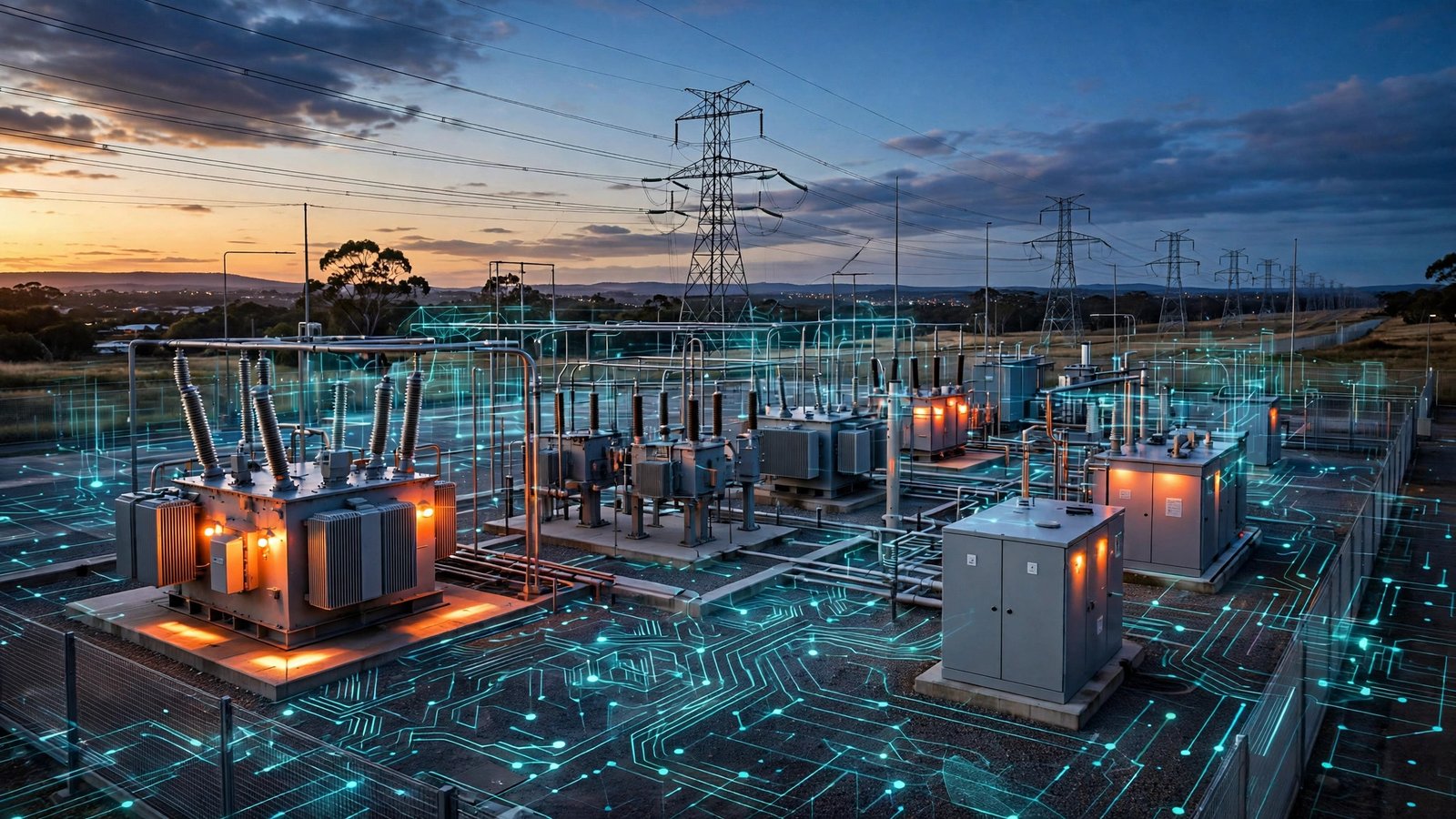
Gridsight builds what it calls a Foundational Grid Model: a continuously updated digital model of a utility's network that unifies fragmented grid data with electrical physics. In plain terms, the platform ingests smart-meter readings and network data, then runs AI agents against a physics-aware model to show operators where capacity exists at any point in the network.
Utilities have historically set connection and export limits using static assumptions. A household might be capped at exporting 5 kilowatts of rooftop solar back to the grid, not because the wires cannot handle more, but because nobody could prove they could. Gridsight turns that static guess into a live, decision-ready view.
Squeezing more out of existing assets is dramatically cheaper and faster than rebuilding infrastructure. New York is reportedly running a US$24 million program funding similar technologies, a sign that regulators are starting to think the cheapest capacity is the capacity already in the ground.
The proof is in the solar exports
The showcase result comes from Endeavour Energy, an Australian network operator working with Gridsight since 2021. Using the platform's real-time dynamic control, Endeavour reportedly doubled household solar export limits from 5kW to 10kW without new poles and wires, expected to unlock more than A$100 million in customer value and 600 megawatts of additional solar capacity.
Endeavour chief executive Danny Cooper called the software an invaluable strategic partner. "We've doubled customers' solar export capacity within our existing poles and wires, are operating the grid closer to its full potential, and delivering better value for our customers," he said, according to Startup Daily.
That is exactly what investors paid for. A Series B is a scaling round: the product works, a reference customer can quantify the value, and the money goes toward rolling it out wider.
America is the prize
Founded in Sydney in 2020, Gridsight had raised about US$7.5 million in a Series A roughly 16 months earlier. It already operates across Australia, New Zealand, the US and the UK, but this raise is squarely aimed at the American market.
The timing is no accident. The US is adding AI data centre load at a pace its grids were never designed for, and interconnection queues stretch for years. A tool that credibly shows a utility how to host more load without a multi-year upgrade cycle lands right in the middle of that pain.
Gridsight has already signed US customers including Xcel Energy and United Illuminating, an Avangrid subsidiary, according to industry reports. Insight Partners managing director Rachel Geller said the energy transition is "stress-testing utility networks in ways they were never designed to handle," and that Gridsight provides "the intelligence, visibility and control needed to unlock latent capacity."
Why this raise matters beyond one startup
There is a bigger story inside this funding announcement. For years, climate-tech investing chased supply-side moonshots: cheaper solar, better batteries, novel reactors. Gridsight represents the less glamorous but more urgent side of the transition: the operations layer that decides how fast new supply can actually connect.
Grid operators have always been conservative, and for good reason: getting it wrong means blackouts. What changed is data. Smart meters, sensors and weather feeds have turned the distribution network into something measurable in near real time, so upgrades that used to need new hardware can increasingly be solved with software.
That is what resonated with Insight Partners, a software investor managing more than US$90 billion in regulatory assets. To them, Gridsight is an enterprise software company whose enterprise happens to run the power grid.
The risks are real. Utilities are slow-moving, regulated buyers, and the physics-aware AI has to be right every time, because a wrong capacity call has consequences no software patch can fix.
But if Gridsight can repeat the Endeavour playbook across American utilities, the payoff is structural. Every megawatt unlocked without new construction is a data centre connected sooner and a ratepayer spared the cost of a bigger grid.
Frequently Asked Questions
What does Gridsight do?
Gridsight is a Sydney AI company building capacity-management software for utilities. Its Foundational Grid Model combines network and smart-meter data with electrical physics, letting AI agents identify unused capacity so operators can connect more load without new infrastructure.
How much did Gridsight raise and who led the round?
Gridsight raised US$26 million (about A$36 million) in a Series B announced September 1, 2026. The round was led by Insight Partners, with Galvanize joining as a new investor and existing backers Airtree, Energy Transition Ventures and Aera VC also participating.
Why does grid capacity matter for AI data centres?
AI data centres need hundreds of megawatts each and are arriving faster than grids can be expanded. Software like Gridsight's, which reveals capacity already in the ground, can let utilities connect new loads sooner without multi-year construction.




Post Comment