Australia Just Told AI Giants: Pay Up for Your Training Data
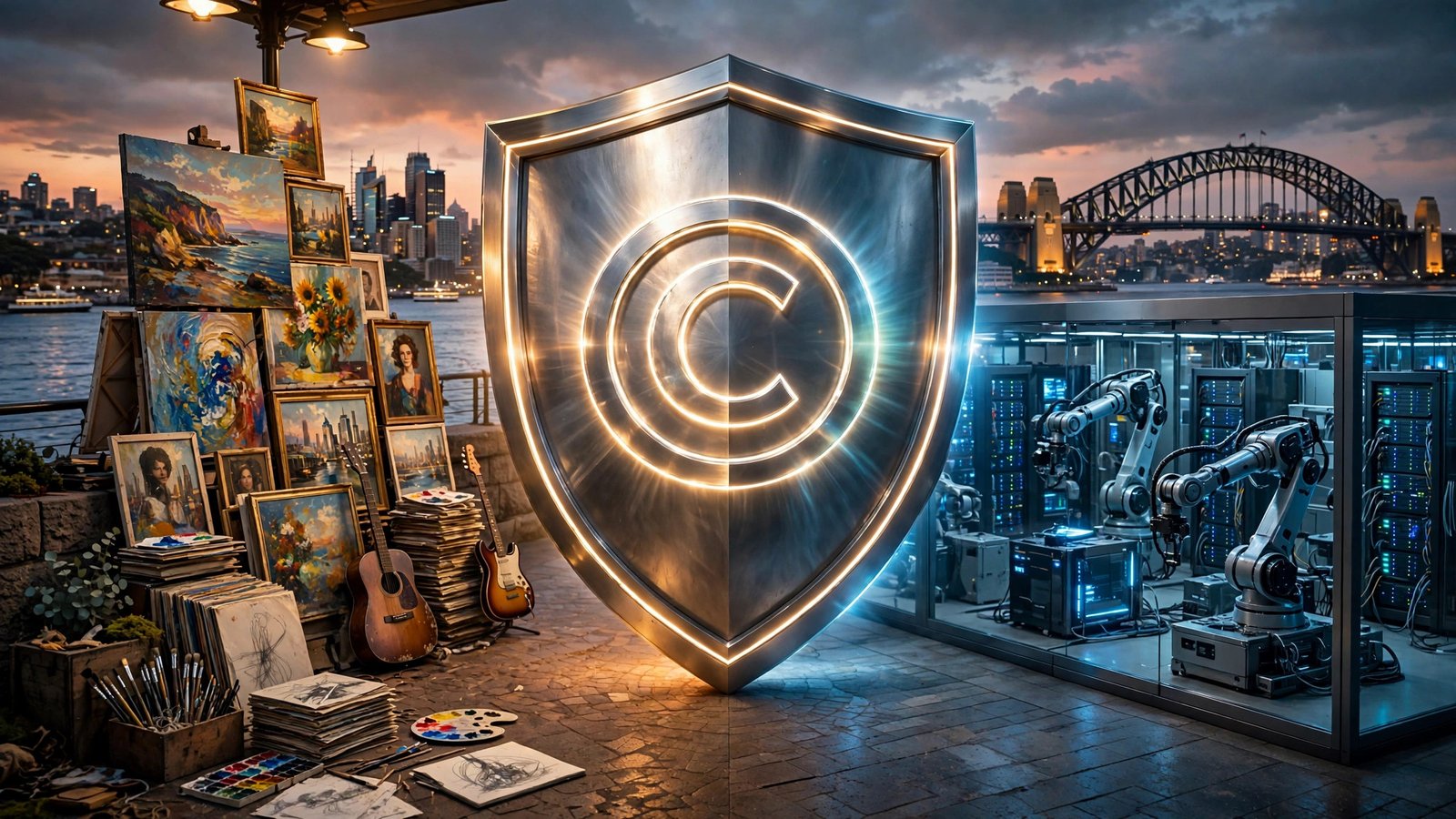
Australia just drew one of the clearest lines in the world on AI and copyright, and it landed squarely on the side of the people who make the music, write the articles, and paint the pictures. The Albanese government has ruled out a “text and data mining” exception to copyright law, which means AI companies will not get a free pass to vacuum up Australian creative works to train their models. If they want the data, they will have to ask and, most likely, pay.
The announcement came from Attorney-General Michelle Rowland this week. For creators who have watched their life’s work disappear into training datasets without permission or payment, it feels like vindication.
What the Government Actually Announced
The core of the decision is simple. Australia will not create a text and data mining exception in copyright law. Such an exception would have let AI developers copy and analyse large volumes of copyrighted material, from news articles and photos to songs and video, without asking the rights holder first. The Productivity Commission had floated the idea as a way to reduce friction for AI developers, but the government has now rejected it.
Instead, Australia’s copyright regime will stay permission-based for the foreseeable future. Rowland said AI offered significant opportunities for Australia and its economy, but that Australian creatives deserved to benefit from those opportunities too. She added that the government had repeatedly made clear it had no plans to weaken copyright protections when it comes to AI.
Why Creators Are Cheering
The response from Australia’s creative and media industries was swift and overwhelmingly positive. Annabelle Herd, the CEO of ARIA and PPCA, called the move “a landmark decision that reinforces Australia’s commitment to its artists and creative industries.” Herd sits on the government’s new Copyright and AI Reference Group, which is meeting in Canberra this week to work out what a fair system actually looks like.
“The government has made the right call in rejecting a TDM exception and backing the rights of artists, authors, creators and rights-holders over a small group of large, powerful tech companies,” Herd said. Growing numbers of music licensing deals between AI companies and rights holders, she added, showed that ethical AI development and creator protection could coexist.
News Corp Australia’s executive chairman Michael Miller called the decision “a welcome catalyst for tech and AI companies to license Australian content.” He said it reinforced the principle that creators should control access to their work, set the terms of use, and receive payment. Miller also urged the government to move quickly on its planned News Bargaining Incentive and News Media Assistance Program, meant to support smaller and regional publishers still under financial pressure.
What It Means for AI Companies
For AI developers, the practical effect is straightforward: training a model on Australian copyrighted works without a licence carries legal risk. Global platforms will need to negotiate directly with Australian rights holders instead of relying on implied permissions or on “fair use” arguments common in other jurisdictions.
The reference group is expected to examine alternatives that still give AI companies legal access to data. The leading idea is a paid collective licensing model, similar to how music licensing already works, letting AI developers pay into a system that distributes money to rights holders. The group will also look at how copyright applies to AI-generated content itself, and at cheaper ways for smaller creators to enforce their rights, possibly through a low-cost small claims system.
Herd has been blunt about what the AI labs want. In a parliamentary setting earlier this month, she said companies like OpenAI and Anthropic wanted to train in Australia on the condition that they did not have to abide by Australian copyright law, calling it a free ride. The government’s decision takes that option off the table.
How Australia Compares to the Rest of the World
Australia’s stance puts it closer to the European Union’s more creator-protective approach, and contrasts sharply with the United States, where the open use of copyrighted material for AI training remains largely untested in the courts. Major lawsuits are still running, and whether training on copyrighted text counts as fair use has no settled answer.
Meanwhile, regional competitors have gone the other way. Japan and Singapore both have broad statutory exceptions supporting data analysis and machine learning, under which no payment goes to copyright owners. That raises an uncomfortable question for Canberra: will stricter rules make Australia a less attractive place for AI companies to build and train?
The government’s bet is that the trade is worth it. In July 2026, Prime Minister Anthony Albanese announced a new Office of AI within the Department of the Prime Minister and Cabinet, and declared that Australian artists, writers, journalists, and musicians should have full control over their works, describing the free use of creative works by AI companies as theft.
What Comes Next
The reference group meeting this week is where the detail starts to take shape. Legal experts suggest the likely landing point is some form of paid licensing scheme, whether a statutory licence under the Copyright Act or a collective model administered through bodies like the Copyright Agency. Either way, the goal is the same: AI developers get a clear legal path to training data, and creators get paid.
Frequently Asked Questions
What is a text and data mining exception?
Text and data mining is the automated process of copying and analysing large volumes of digital material to find patterns. A TDM exception would have let AI companies do this with copyrighted works without first getting permission from the rights holder. Australia has now ruled out creating one.
Does this decision ban AI training in Australia?
No. AI companies can still train models in Australia, but they cannot simply scrape copyrighted material without permission. They will need to licence the data they use, either through direct deals with rights holders or through a collective licensing system the reference group is expected to design.
How does Australia’s approach differ from the United States?
In the United States, AI companies often rely on the “fair use” doctrine to argue that training on copyrighted material is legal, but courts have not settled the question and major lawsuits are still running. Australia has no equivalent fair use provision, and the government has confirmed its copyright regime will remain permission-based, closer to the EU’s creator-protective model.


Post Comment