Semi-Solid-State Power Banks: What Makes Them Better
Every power bank you have ever owned runs on the same basic chemistry: lithium-ion cells filled with flammable liquid electrolyte. It works, but it is the reason airlines limit battery sizes and the reason cheap power banks occasionally make headlines for the wrong reasons. A semi solid state power bank changes the formula by replacing much of that liquid with a gel-like semi-solid electrolyte. The result is a battery that is harder to catch fire, holds more energy in the same size, and lasts through more charge cycles. Here is what the technology actually means for your next purchase.
What semi-solid-state actually means
Think of a conventional lithium-ion cell as a sandwich soaked in liquid. The liquid electrolyte shuttles lithium ions between the electrodes, and it does the job well, but it is volatile. Puncture it, crush it, or overheat it, and the liquid can ignite. That is the fundamental safety trade-off of every phone, laptop, and power bank battery in your home.
Semi-solid-state cells keep the same sandwich but swap most of the liquid for a gel or clay-like material. Ions still move, so the battery still works, but there is far less flammable material inside. The chemistry is a stepping stone toward fully solid-state batteries, which remain expensive and difficult to manufacture at scale. Semi-solid is the pragmatic middle ground: most of the safety benefit, achievable with today's factories.
For a power bank, this matters more than for a phone. Power banks are high-capacity batteries you toss in backpacks, leave in hot cars, and take through airport security. A chemistry that tolerates abuse better is a genuine upgrade, not a marketing line.
Why they are safer
The safety advantage comes down to thermal runaway, the chain reaction where one overheating cell ignites its neighbors. In liquid-electrolyte cells, the flammable liquid both fuels the fire and spreads heat quickly. With far less liquid present, semi-solid cells are much harder to push into runaway in the first place, and failures tend to stay contained.
Independent safety testing on the underlying cell chemistry has shown better results in nail-penetration and crush tests compared with conventional cells. Those are the nightmare scenarios: a battery punctured by keys in a bag or crushed under luggage. No battery is indestructible, and you should still treat any power bank with respect, but the margin of safety is meaningfully wider.
This also explains the regulatory angle. Airlines and shipping rules restrict lithium batteries because of fire risk. Safer chemistries could eventually ease some of those limits, though rules change slowly and you should always check current airline policies before flying with any large power bank.
More energy in the same size
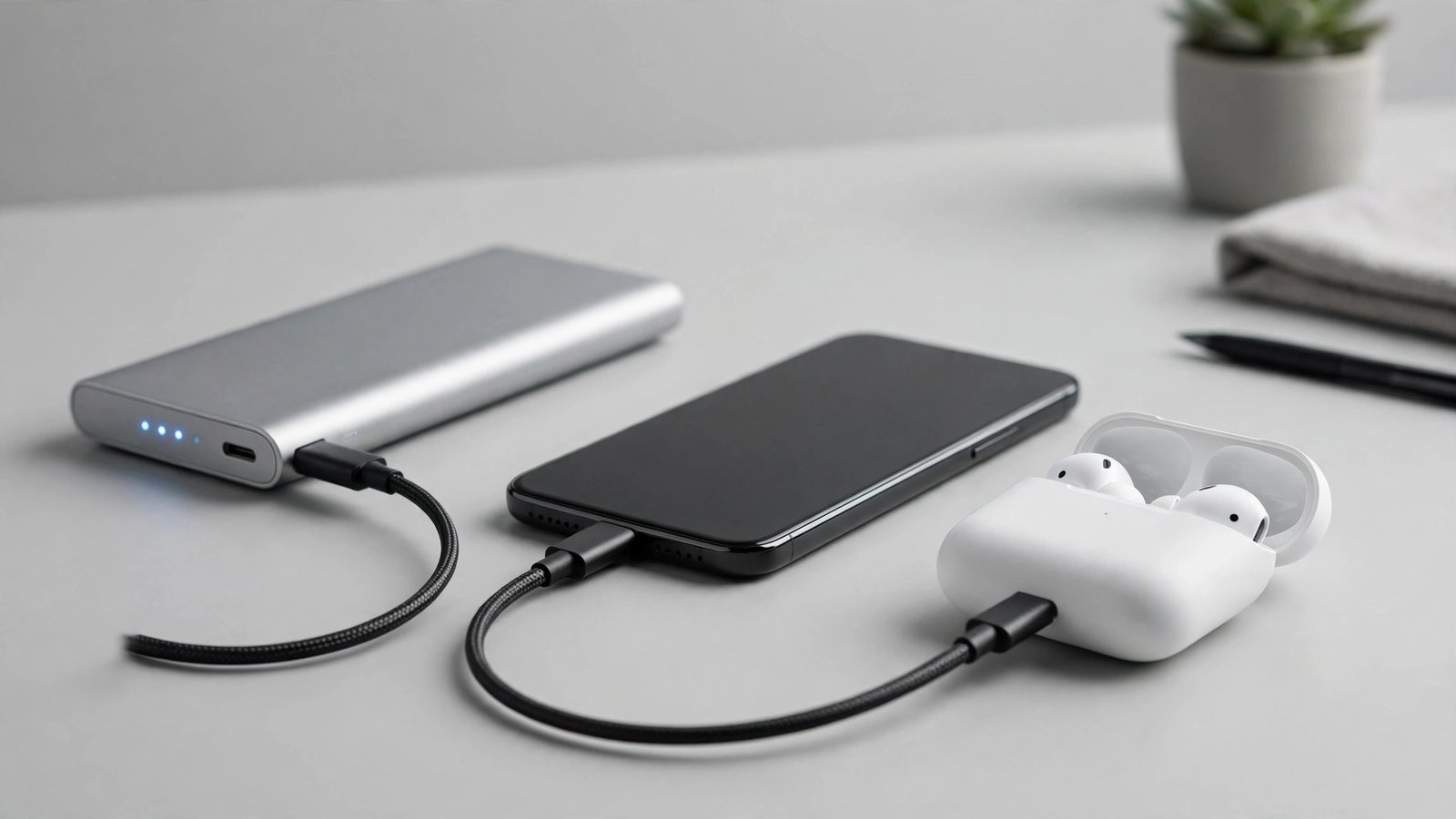
Safety gets the headlines, but energy density is the quiet win. Semi-solid-state cells can pack more capacity into the same physical volume, which means a 20,000mAh-class power bank can get smaller and lighter, or the same size can hold more charge. For travelers, every ounce matters, and a semi solid state power bank shrinks the brick in your bag without losing capacity, which is a real quality-of-life improvement.
Longevity improves too. All rechargeable batteries degrade with each cycle, but semi-solid chemistries generally tolerate more charge cycles before capacity fades noticeably. A power bank that still holds most of its charge after hundreds of cycles is simply a better long-term purchase than one that fades after a year of heavy use.
Charging speeds are keeping pace as well. The first wave of these power banks supports fast charging standards for both input and output, so you are not trading safety for sluggish performance. Refilling the bank itself is quick, and topping up your phone or laptop runs at the speeds you would expect from a premium conventional bank.
Should you buy a semi solid state power bank?
Expect to pay more, at least for now. New battery chemistry costs more to produce, and early products carry a premium over conventional power banks with similar capacity. Prices should fall as manufacturing scales, but today you are paying for the safety and density advantage.
Availability is still limited compared with the ocean of conventional options. A handful of established accessory brands have launched semi-solid-state models, and more are coming. If you need a power bank this week and cannot find one, a high-quality conventional bank from a reputable brand remains perfectly safe for normal use. Do not buy a sketchy no-name bank just to get the new chemistry.
Check the real specs that matter regardless of chemistry: total capacity in mAh or Wh, output wattage for your devices, number and type of ports, and whether it supports the fast-charging standard your phone or laptop uses. A semi-solid-state bank with weak output is still a weak bank.
Also verify airline compliance for larger capacities. Anything under 100Wh is generally fine in carry-on luggage without approval, and most consumer power banks fall well under that. The new chemistry does not exempt you from the rules.
Our view: the semi solid state power bank represents the first meaningful change in portable battery chemistry in years, and it is worth seeking out if you travel often or just want the safest option in your bag. But a good conventional power bank from a trusted brand is still a fine buy. Chemistry is one factor among several, not the whole decision.
Are semi-solid-state power banks completely fireproof?
No battery is fireproof, and you should never treat one as indestructible. Semi-solid-state cells are significantly more resistant to thermal runaway than conventional lithium-ion cells, which makes fires far less likely. Normal precautions still apply: avoid physical damage, extreme heat, and cheap chargers.
How long do they last compared to regular power banks?
They generally hold up better over time, retaining more of their original capacity after hundreds of charge cycles. In practical terms, expect a longer useful life before you notice the bank holding less charge. Exact lifespan depends on usage patterns and build quality, as with any battery.
Can I take a semi-solid-state power bank on a plane?
Yes, under the same rules as any lithium battery. Keep it in your carry-on, never in checked luggage, and stay within the airline's watt-hour limits, which most consumer power banks do. The safer chemistry does not change the regulations, so check your airline's policy for larger capacities.