Pocket Gimbal Cameras: Are They Worth Buying in 2026?
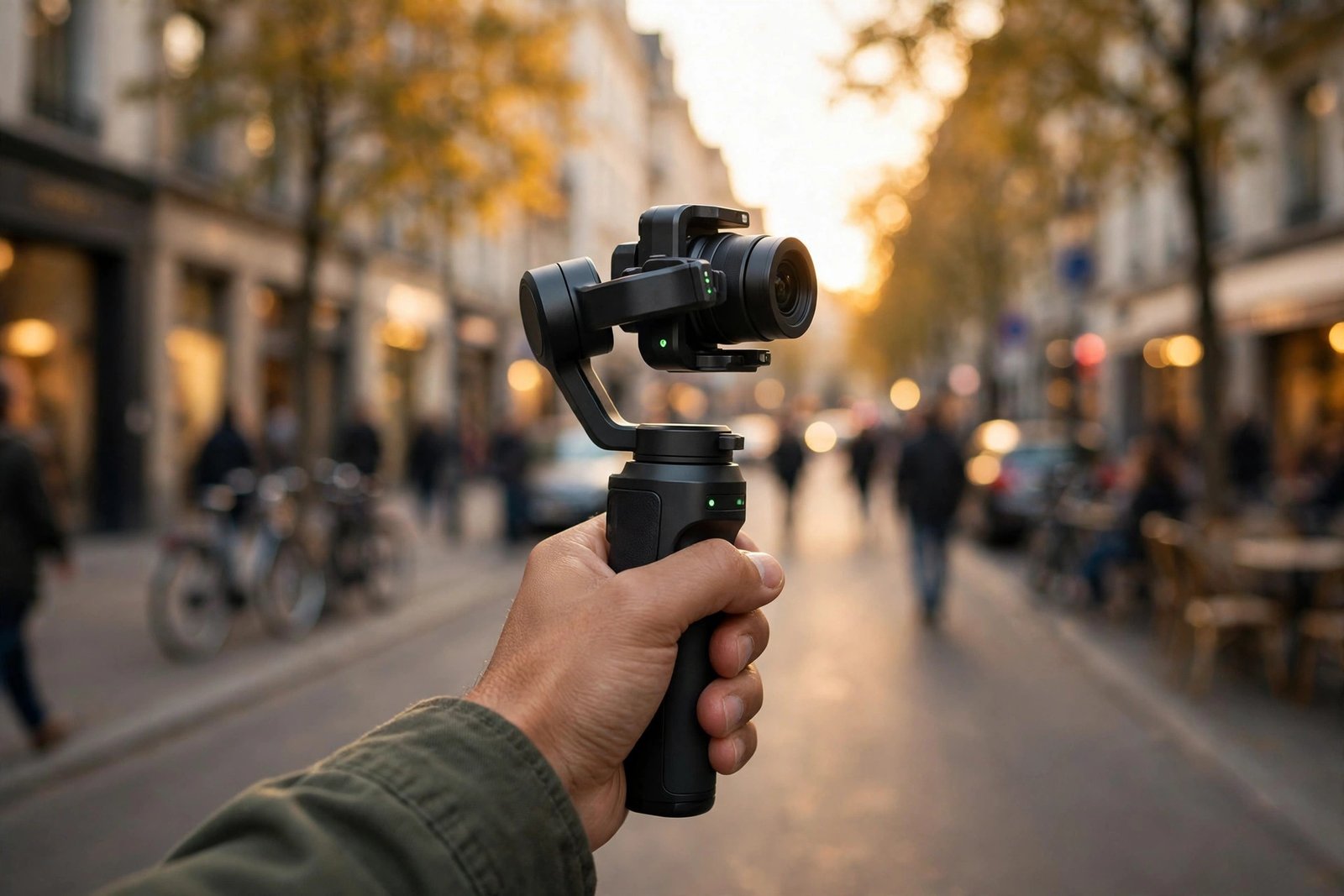
A pocket gimbal camera is one of those gadgets that looks like a toy until you see the footage. It is a tiny camera on a motorized three-axis stabilizer, small enough to slip into a jacket pocket, and it shoots video so smooth it looks like it was captured on a rail. The category was defined by DJI's Osmo Pocket line, and in 2026 the concept has matured into genuinely capable cameras. But your phone already shoots 4K video, so the real question is whether a separate device earns its place in your bag.
What a pocket gimbal camera actually does
The magic is the mechanical gimbal. While your phone relies on software to steady shaky footage, which crops the image and can look wobbly during movement, a pocket gimbal camera physically counteracts your hand's motion with tiny motors. Walk down a trail, ride in a car, or chase a toddler around the yard, and the horizon stays level. The difference is most obvious in motion: walking shots look like they were filmed on a dolly instead of by a person with coffee jitters.
Modern models pair that stabilization with surprisingly serious imaging. The current generation typically includes a large-for-its-size sensor, 4K video at high frame rates, and intelligent tracking that locks onto a face or subject and follows it automatically. Vloggers love the tracking for hands-free talking shots. Parents love it because the camera follows the kid, not the parent's shaky arm.
Size is the whole point. These cameras weigh roughly as much as a deck of cards and start up in seconds. That portability changes behavior: you actually bring it places where a mirrorless camera would stay home.
Who should buy one
Travel vloggers and content creators are the core audience. If you film yourself talking while walking, review places, or document trips, a pocket gimbal camera replaces an awkward rig of phone, stabilizer, and microphone with one device. The tracking and stabilization directly improve the content, which is the entire job.
Active families are the sleeper audience. Phones are fine for stills, but video of kids playing sports, running on beaches, or opening presents benefits enormously from real stabilization. If your camera roll is mostly shaky clips you never rewatch, this fixes the actual problem.
It also suits anyone who finds phones distracting to film with. A dedicated camera keeps you out of notifications and lets you hand the filming to someone without handing over your unlocked phone. Small thing, but parents and travelers mention it constantly.
Who should skip it
If you mostly take photos, skip it. Pocket gimbals are video-first devices, and their stills will not beat your phone. If your videos are short clips for social media shot standing still, your phone's stabilization is already good enough. The gimbal advantage appears in motion, and standing still is not motion.
Budget matters too. A good pocket gimbal camera sits in the mid-range camera price bracket, and that money could upgrade your phone instead. If your phone is three years old and your videos look rough, a newer phone improves everything you shoot. If your phone is already recent, the gimbal adds something the phone cannot.
Low-light shooters should check expectations. The sensors have grown, but physics still favors bigger cameras. Evening and indoor footage is decent, not miraculous. If most of your filming happens after dark, temper your hopes.
Phone vs pocket gimbal: the honest comparison
Phones win on convenience, sharing, and editing. You shoot, trim, and post from one device. They win on stills, on app ecosystems, and on the fact that you already own one. For casual use, the phone wins outright.
The pocket gimbal wins on motion smoothness, subject tracking, and battery dedicated to filming. It wins on ergonomics for long recording sessions: holding a phone at arm's length for twenty minutes is miserable, while the gimbal's grip is designed for it. It also wins on discretion in a subtle way, since a tiny camera draws less attention than a phone held aloft.
Audio is the tiebreaker nobody talks about. Both rely on built-in mics that struggle in wind. Serious creators add an external wireless mic either way, so call this a draw unless you buy the accessory bundle.
Our take: the phone is the better default camera, and the pocket gimbal is the better video tool. Buy the tool if video is the thing you actually care about improving.
How is a pocket gimbal different from a phone gimbal?
A phone gimbal is a motorized handle you clamp your phone into. A pocket gimbal camera has the camera built in, so it is smaller, lighter, and starts recording faster. Phone gimbals are cheaper if you already own a good phone, but they are bulkier and the setup takes longer.
Can a pocket gimbal camera replace my phone for video?
For dedicated video projects, yes, and it will do a better job in motion. For everyday clips, probably not, because the phone is always with you and shares instantly. Most owners use both: the phone for quick moments, the gimbal for anything they plan to keep or publish.
Do I need extra accessories?
At minimum, consider a small tripod or extension grip for tabletop and vlogging shots. A wind cover for the microphone helps outdoors. Creators who care about audio should budget for a wireless mic system, since built-in mics on tiny cameras have physical limits.