When the Lights Go Out: Inside the BBC’s Plan to Keep Britain Informed During a Black Sky Blackout
The BBC has revealed its plan for the worst day in British broadcasting: a total failure of the national electricity grid. The plan, described by the BBC's media and arts correspondent David Sillito in a report published on 7 November, relies on a technology older than television itself: FM radio. Around 100 staff would run a self-sufficient emergency studio, broadcasting pre-written government advice. There is no specific threat to the grid, the government says, and the Cabinet Office says Britain has never had a complete nationwide power outage in the grid's 75-year history.
What is a Black Sky event?
A Black Sky event is the civil contingency name for a catastrophic, long-lasting failure of critical national infrastructure, above all the electricity grid. Power, water, shops and communications would fail at the same time, and the outage could last days rather than hours.
The scenario is not new: the National Risk Register lists a nationwide loss of power as a low-likelihood but high-impact risk. The huge blackout that hit Spain, Portugal and south-western France in April 2025 gave the subject fresh urgency across Europe. In Britain, the Be Ready campaign, relaunched in October, asks households to keep three days of food and drinking water and to own a battery-powered radio.
At a recent UK resilience summit, one phrase kept coming up: "nine meals from anarchy", the idea that three days without food would be enough to turn a crisis into widespread disorder. That is why the planning horizon is 72 hours.
The night Lancaster went dark
The BBC report starts in Lancaster, on 5 December 2015, when the River Lune flooded and cut electricity to 61,500 people. Homes lost heating and lighting, some water supplies stopped, and shops, petrol stations, cash machines and traffic lights all failed. Roger Kemp, an engineering professor at Lancaster University, was watching television when the power went out. The next day he described the scene as almost like a zombie movie, with residents searching for phone reception and queuing at the only working telephone box.
Only two communication systems kept working that night: copper landlines and FM radio. The local station, The Bay, kept broadcasting on an emergency generator and a single landline. That night is why the BBC's Black Sky plan is built around FM radio: when mobile networks, broadband and television all depend on mains power, a radio signal from a generator-powered transmitter can still reach almost every home.
Inside the BBC's emergency studio
The centrepiece is a small, dedicated radio studio that almost nobody outside a tiny circle knows about in full. Around 100 BBC staff are designated to run it in the event of a Black Sky, using secure lines independent of the internet, with enough fuel, water and food for at least three days without resupply.
The studio would broadcast pre-prepared government announcements, with scripts published online on 16 December 2025 by the government and the four UK Chief Medical Officers. They cover practical matters such as daily water needs and how to dispose of toilet waste when flushing is impossible. Extra reporting would come from satellite vehicles and journalists at emergency centres around the UK.
The transmission network is built for the same job. Transmitters are isolated from the internet and run on diesel generators, with fuel tanks holding between 5,000 and 40,000 litres, enough for roughly three days of power. Satellite phones would keep teams in contact. The original scenario imagined outages lasting five to seven days, while the latest advice from the National Energy System Operator suggests power could be restored within two to three days.
Why FM radio, and why now
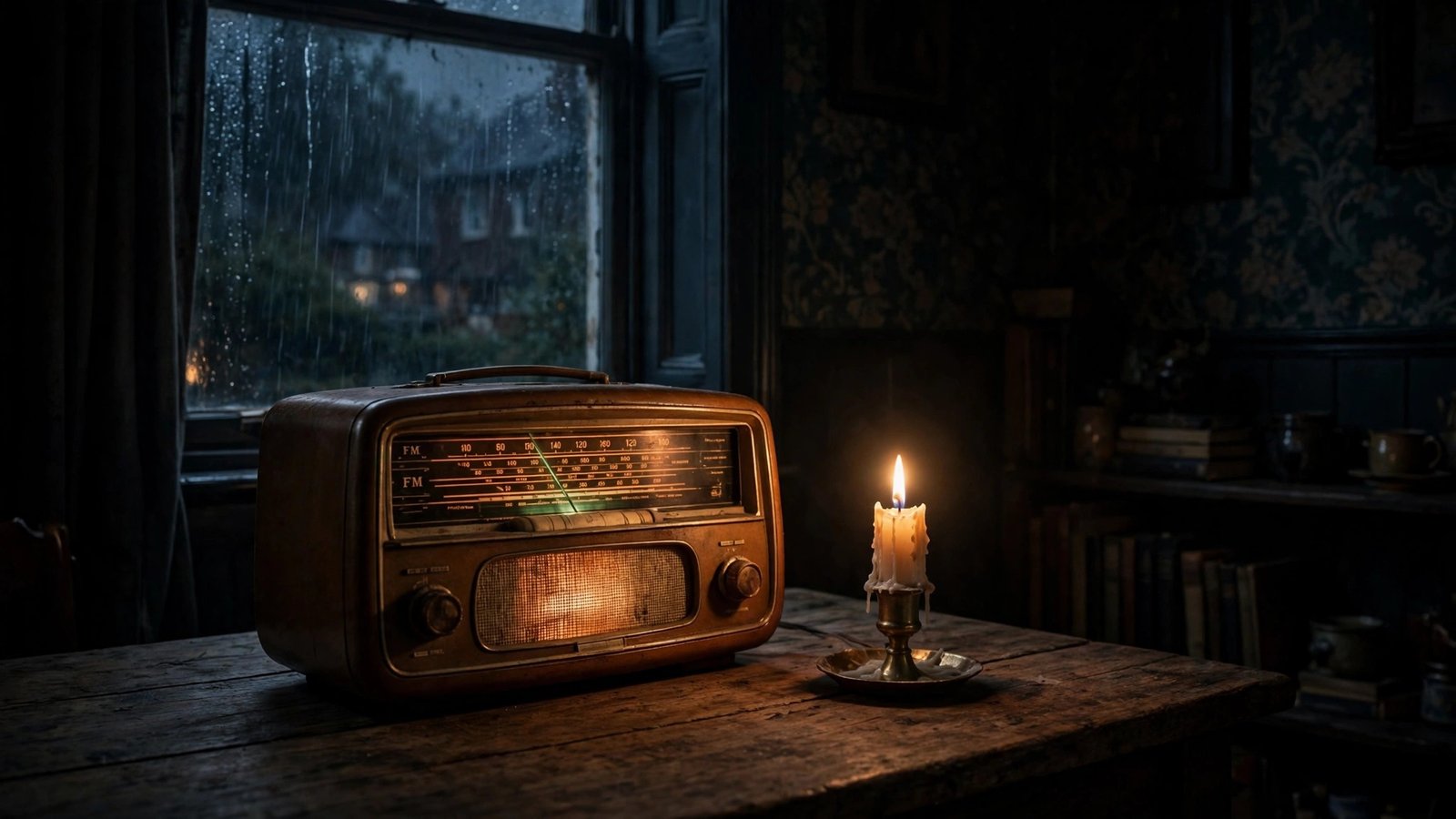
The choice of FM radio looks old-fashioned, and that is the point. FM transmitters are simple, robust and independent of the internet, and a battery or wind-up radio needs no mains power and no mobile signal. In Lancaster, that simplicity is what kept people informed when everything newer failed.
The timing matters too. Britain is preparing to switch off its copper landline network on 31 January 2027, and the future of FM radio is also under review. Kemp argues that the switch-off shows little thought for how people would communicate during a long power cut. The government says copper landlines have become unreliable and hard to maintain. Lord Harris, chair of the National Preparedness Commission, says decades of efficiency-driven decisions have quietly removed essential redundancies from the system.
Other work is under way. ARIA, the government's Advanced Research and Invention Agency, is investing 70 million pounds in high-altitude aircraft designed to provide at least a week of emergency mobile and internet connectivity. The National Energy System Operator must also meet a restoration standard by 31 December 2026: 60 percent of each region's demand back within 24 hours, and all of Great Britain within five days.
The official advice has not changed, and no emergency is expected. The Be Ready campaign asks households to keep at least three days of food and drinking water, plus a torch, a charged power bank, some cash and a battery-powered or wind-up FM radio. The Cabinet Office puts it plainly: "The UK has one of the most resilient electricity systems in the world, and there has never been a complete outage in the grid's 75-year history." The BBC's plan is not a warning that the lights are about to go out. It is a look at what would happen if they did, and a reminder that the oldest technology in the house might be the one that matters most.
Frequently Asked Questions
What is a Black Sky event in the UK?
A Black Sky event is the informal name used by emergency planners for a catastrophic, long-lasting failure of the national electricity grid, in which power, water, shops and communications fail at the same time. The government says there is no specific threat and Britain has never had a complete nationwide outage.
How would the BBC keep broadcasting during a nationwide blackout?
Around 100 BBC staff would run a dedicated emergency radio studio with secure communications independent of the internet, plus enough fuel, water and food for at least three days. Transmitters would run on diesel generators, and the studio would broadcast pre-written government advice on FM radio.
What should UK households keep ready for a power cut?
The Be Ready campaign advises keeping at least three days of food and drinking water, a torch, a charged power bank, some cash and a battery-powered or wind-up FM radio. Officials stress this is general preparedness advice, not a sign that a blackout is expected.



Post Comment