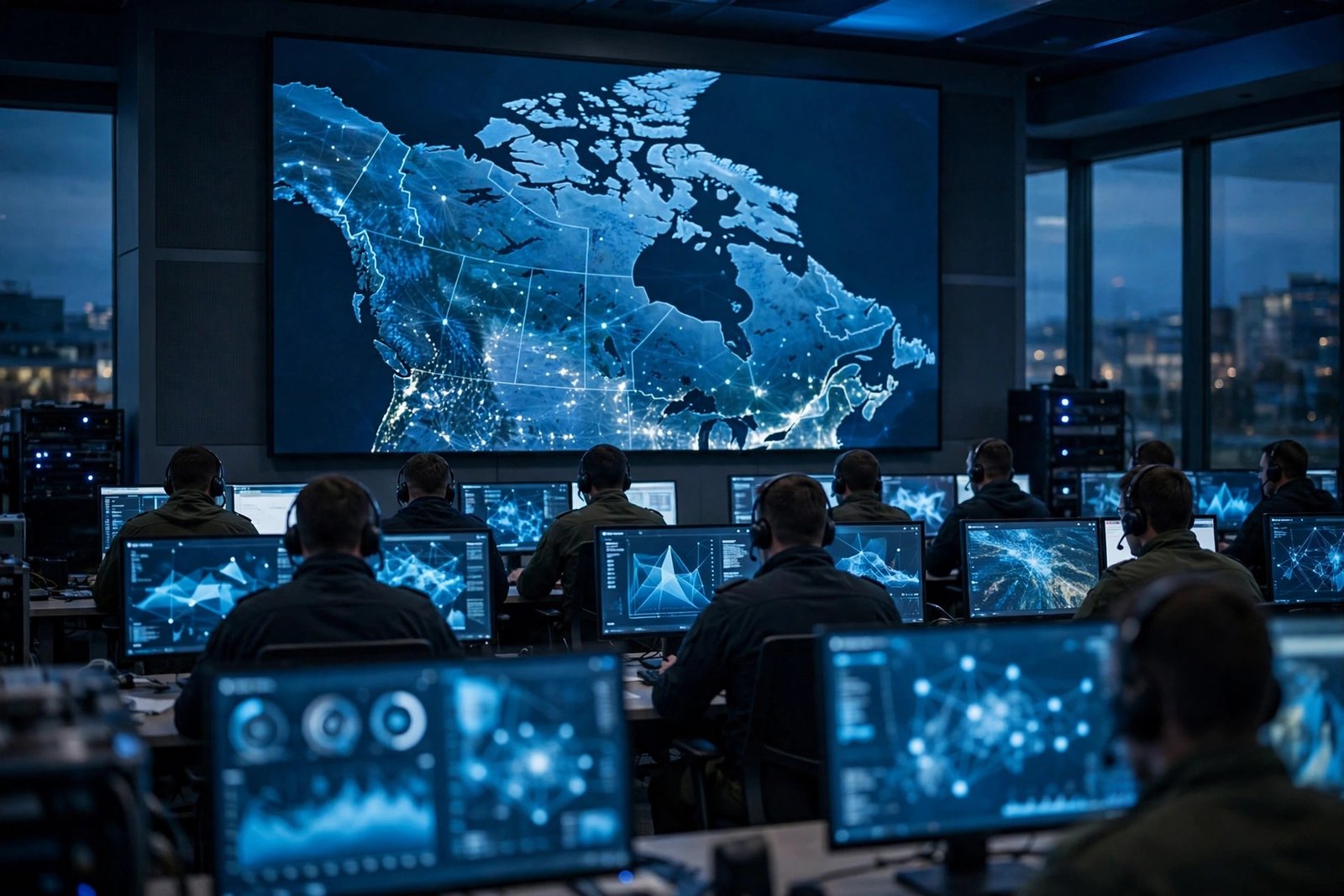
Canada’s Military Has Used Palantir’s Gotham Software Since 2020. Now the Contract Is Public
Canada's Department of National Defence has held a contract for Palantir Technologies' Gotham software since 2020, according to documents obtained by the Investigative Journalism Foundation and reported by CBC News on 7 November 2026. The deal was initially valued at $14 million and could reach up to $63 million, and the contract was internally flagged as not for public disclosure. The revelation has reopened a debate in Canada about how far the country should rely on foreign technology for its most sensitive military data.
The story matters because Gotham is not ordinary office software. It is a data platform built to pull together information from many different sources and make it searchable and analysable in one place. For a military, that kind of tool can be powerful, and it raises hard questions about who ultimately controls the data, and under which country's laws.
What the documents show
The documents obtained by the Investigative Journalism Foundation show that the Department of National Defence, known as DND, has had a Gotham contract in place since 2020. The contract was initially valued at $14 million, with the potential to grow to as much as $63 million. According to the reporting, the contract was internally marked as not for public disclosure, which is why its existence only became widely known this week.
This was not the only Palantir deal in the picture. Reporting by the Toronto Star earlier in 2026 described a separate $3.7 million contract, running from June 2025 to June 2026, for a data integration and analytics platform subscription. An earlier agreement from March 2020 was valued at about $14.4 million, and a 2019 contract worth almost $1 million covered information technology and telecommunications consultants. Taken together, the records point to a relationship between the Canadian military and Palantir that has run for years, largely out of public view.
What the military says the software does
According to DND, Gotham brings together information from military databases. The department says the system operates on closed, classified networks inside secure facilities in Canada. It has declined to say exactly what information the software processes, citing national security concerns.
DND also says its security assessment determined that no government data, prompts, outputs or metadata handled under the contracts can be stored, accessed or processed outside Canada. Officials maintain that the United States CLOUD Act has no authority over servers located in Canada.
A Palantir spokesperson told CBC News in an email that the company is a software company and rejected suggestions that it takes ownership of or uses its customers' information. That is the company's standard position: it sells the software, and the customer keeps control of the data. Defence Minister David McGuinty has defended the arrangement as a legitimate procurement, noting that Palantir Canada is a Canadian company and a subsidiary of the United States parent.
Why critics are not reassured
Independent experts are not convinced by those assurances. Barry Appleton, an international lawyer who practises both Canadian and American law, points to the U.S. CLOUD Act as a mechanism that allows American authorities to compel covered American companies to produce data in their possession, custody or control, regardless of where that data is physically stored. In his view, the location of the servers does not settle the question, because the legal obligation follows the company.
Jennifer Evans, a policy researcher and founder of PatternPulse AI, agrees that the legislation creates potential data visibility at high levels of the United States government. She has suggested that DND should disclose more details about the contract, including whether air-gapping is used to isolate the networks.
Vass Bednar, managing director of the Canadian Shield Institute, framed the issue as one of sovereignty. She warned that Canada risks growing a digital dependency and enriching what is fundamentally an American company at the expense of its own sovereignty. She compared the situation to reliance on SpaceX's Starlink internet service in Ukraine, where military operations reportedly faced disruptions after accusations that speeds had been throttled.
A wider push for digital sovereignty
The Canadian debate is part of a broader international movement. In July, France and Germany moved to reduce foreign reliance by examining domestic alternatives after ending Palantir contracts with their intelligence services. In the United Kingdom, members of parliament urged the government to end a 330 million pound National Health Service contract after a report that a small group of company employees had accessed identifiable patient data.
For Canada, researchers have pointed to domestic options such as Vancouver-based Caseway and Ottawa-based Anvil, though experts acknowledge they do not yet match Palantir's breadth and depth. Palantir was co-founded in 2003 by five people, including chief executive Alex Karp and board chair Peter Thiel, and its software is used by American agencies including Immigration and Customs Enforcement.
What happens next
The contract is now public, but many details remain undisclosed. The department has not said exactly what data Gotham processes, how many people use it, or what the full $63 million ceiling would cover. Parliamentary questions and further reporting are likely to keep pressure on the government to explain the arrangement in more detail.
The bigger question is a policy one. The government has repeatedly said it wants more control over the country's digital infrastructure, and the 2026 federal budget included major technology measures. The Palantir contract shows how hard that goal is to reach, when the most capable tools are built abroad and domestic alternatives are still catching up. For now, the military keeps using Gotham, and the debate about whether that is the right call is only getting louder.
Frequently Asked Questions
What is Palantir's Gotham software?
Gotham is a data platform built by Palantir Technologies that brings together information from many different databases and makes it searchable and analysable in one place. Governments and militaries use it to connect data that would otherwise sit in separate systems.
How long has Canada's military used Palantir's Gotham?
According to documents obtained by the Investigative Journalism Foundation and reported by CBC News in November 2026, the Department of National Defence has held a Gotham contract since 2020. The contract was initially valued at $14 million and could reach up to $63 million.
Why are experts worried about the CLOUD Act?
The United States CLOUD Act lets American authorities seek data held by American companies, even when the data is stored outside the United States. Critics say this could expose Canadian military data to American legal orders, while the defence department says no government data can be stored, accessed or processed outside Canada.





Post Comment