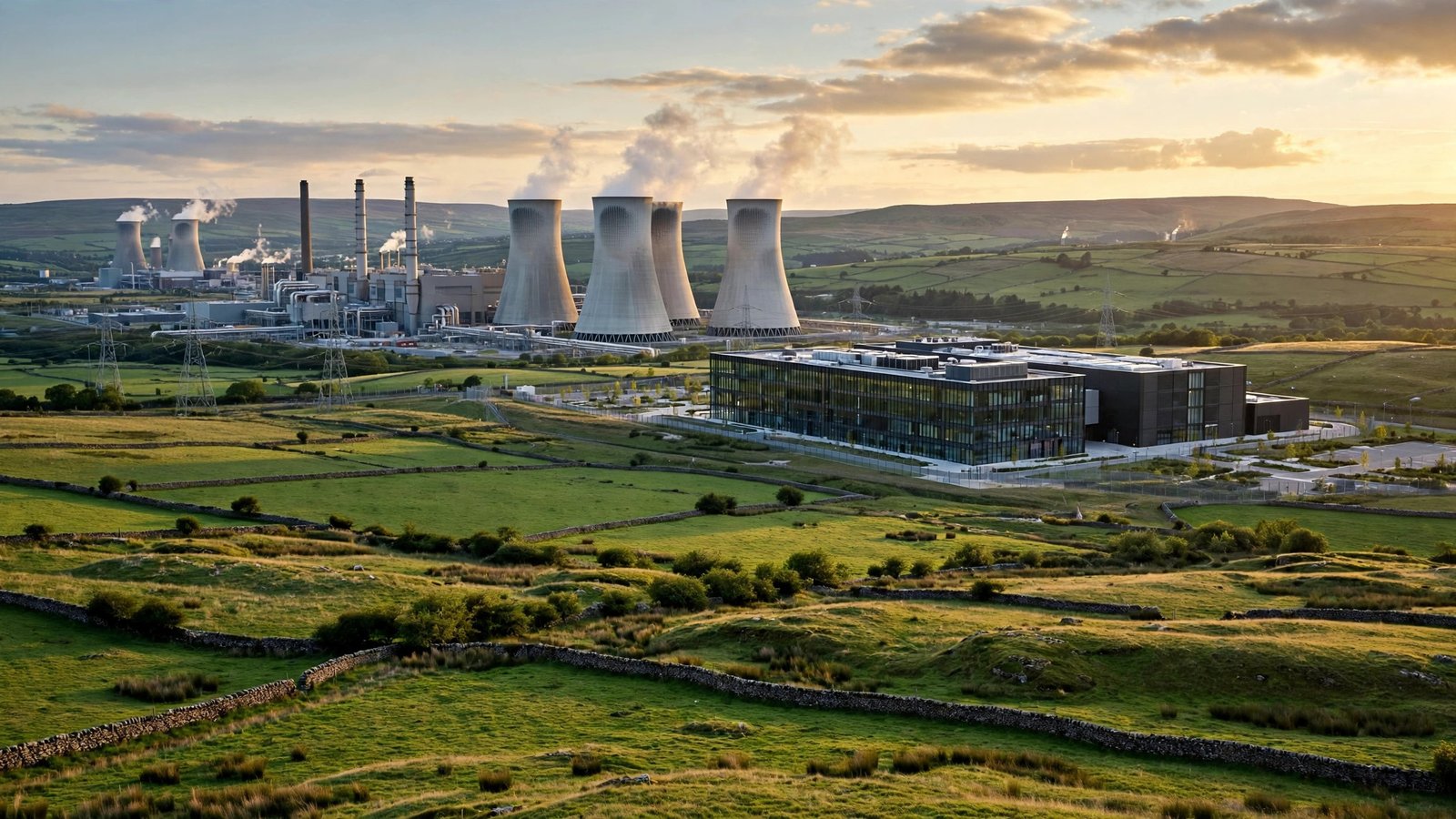
Drax Signs £20 Billion Deal With Brookfield to Build a Gigawatt-Scale AI Data Centre in North Yorkshire
Britain's biggest push yet to put AI data centres next to power stations took a big step on 3 November 2026, when Drax Group announced a partnership with Brookfield and its AI infrastructure platform Radiant to build a gigawatt-scale AI data centre at Drax Power Station in North Yorkshire. Brookfield estimates that total investment could pass £20 billion once every planned phase is built, including the computer chips that would fill the halls.
The deal tackles the problem that has held back Britain's AI ambitions more than any other: power. Data centres need enormous amounts of electricity, and the grid connections they need can take years to arrange. Drax already has both the land and the grid access, so this project starts from a position most proposed sites can only dream of.
What the deal covers
Drax confirmed in a stock-exchange announcement on 3 November that it has signed an agreement to develop a strategic partnership with Brookfield Asset Management and Radiant, Brookfield's UK-headquartered AI infrastructure platform. The three will jointly develop, deliver and operate the data centre on the Drax Power Station estate, near Selby in North Yorkshire.
Radiant will be responsible for designing, building and operating the facility. Capital for the project is set to come through the Brookfield-Qai AI infrastructure joint venture, announced in 2025. Qai is the AI subsidiary of the Qatar Investment Authority, Qatar's sovereign wealth fund, which gives the project backing from one of the world's largest pools of long-term capital. The announcement follows the government's Data Centre Covenant, published on 28 October, which set out how large data centre projects should handle grid access, community benefits and environmental protection.
The numbers behind the plan
The headline figure is the one Brookfield put on the whole project: total potential investment, including semiconductor chips, could exceed £20 billion, which works out at $26.8 billion. That is an estimate, not money already spent or firmly committed.
The first phase is more concrete. It targets a data centre of up to 100 megawatts of computing capacity, with around £2.5 billion of investment, and aims for commercial operation from the first quarter of 2028. A 100-megawatt facility would rank among the largest data centres currently operating in the UK.
After that, the plan steps up sharply. A second phase aims to add 500 megawatts of capacity between 2028 and 2031, powered directly by the power station, with more capacity after 2031. Taken together, the site is targeting more than one gigawatt of data centre capacity, which would make it one of the largest AI campuses in Europe.
Why Drax, and why now
Drax Power Station is one of Britain's largest power stations, and it now burns wood pellets rather than coal. That history is part of the attraction for an AI data centre: the estate covers more than 1,000 acres and has around 4 gigawatts of grid access, alongside 2.6 gigawatts of dispatchable generation capacity and established cooling systems. For a data centre developer, that combination of space, power and cooling is rare, and it is the main reason Brookfield picked this site.
Investors liked the news. Drax shares rose more than 8 percent on 3 November to around 878p, a top FTSE 250 riser that day. The timing also fits a wider race. Britain, the United States and other countries are competing to host the computing capacity that AI companies need, and the UK government has made AI infrastructure a priority.
What still has to happen
For all the size of the announcement, the project is still at an early stage. No tenant has been named, which means no AI company has yet signed up to use the capacity. No final investment decision has been made by any of the parties. A planning application for the first phase is being prepared, and a public consultation process is expected to start in November 2026. The first phase also depends on planning consent, regulatory and network approvals, and the negotiation of commercial agreements. That means the £20 billion figure should be read as an ambition, not a promise. If planning stalls, or if no tenant signs up, the later phases may shrink or disappear.
The biomass question
Any project at Drax comes with a debate attached to it. Drax Power Station burns wood pellets, and the sustainability of biomass power has been questioned by environmental groups, who argue that burning wood is not carbon neutral in the way its supporters claim. Drax maintains that its biomass is sourced sustainably and that its operations are audited. That debate will probably form part of the public consultation, alongside questions about noise, traffic, water use and the visual impact of the new buildings.
What it means for Yorkshire and the UK
If the project goes ahead as planned, it would bring a major new employer to North Yorkshire. Sikander Rashid, Brookfield's head of AI infrastructure, said the project would preserve hundreds of jobs and create many direct and indirect jobs around the broader Yorkshire area.
For the UK, the project is a test of whether Britain can turn its AI ambitions into real infrastructure. The country has the research talent and the demand from AI companies, but it has struggled with the power and planning constraints that slow large projects down. A gigawatt-scale campus at Drax would show that those constraints can be solved, at least where the power is already in place.
The next milestone to watch is the public consultation, expected to begin in November, followed by the planning application for phase one. If those go smoothly, construction could start with the aim of having the first 100 megawatts running in early 2028.
Frequently Asked Questions
How big is the proposed Drax AI data centre?
The project targets more than one gigawatt of data centre capacity in total. The first phase aims for up to 100 megawatts, running from the first quarter of 2028, with a second phase of 500 megawatts planned between 2028 and 2031 and more capacity after that.
How much will the Drax AI data centre cost?
Brookfield estimates that total potential investment, including semiconductor chips, could exceed £20 billion. The first phase alone is expected to cost around £2.5 billion. These are estimates of potential spending, not money that has already been committed.
When will the Drax AI data centre open?
The first phase is targeting commercial operation from the first quarter of 2028. That depends on planning consent, regulatory and network approvals, a final investment decision and finding a tenant, so the date could move.



Post Comment