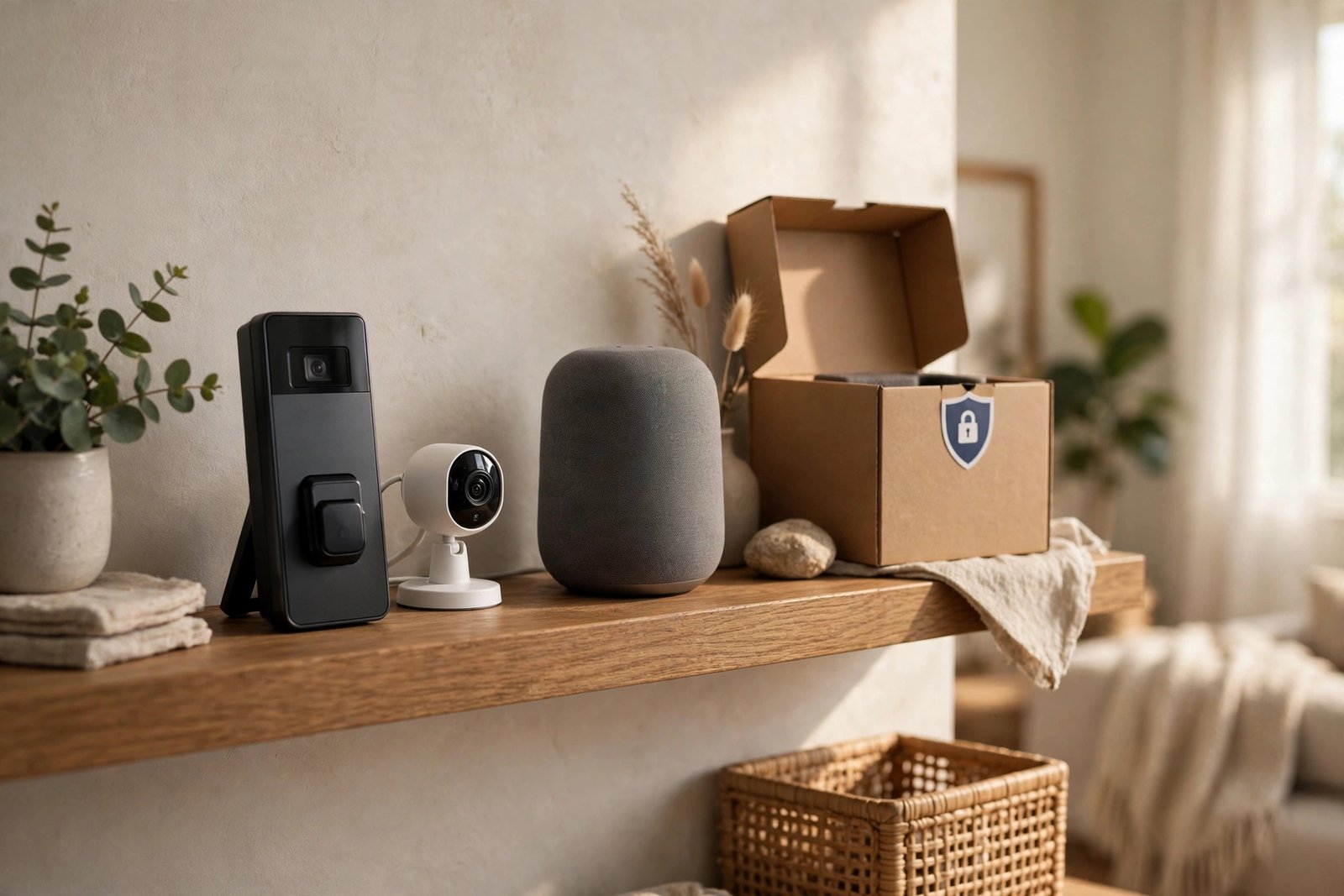
US Cyber Trust Mark: Smart Home Devices Could Carry a Security Label Within a Year
Buying a smart camera or a baby monitor is easy. Judging how safe it is from hackers is much harder. A price tag tells you what a device costs, and a box tells you what it can do, but neither tells you how long it will get security updates or what data it collects. That gap is exactly what a new US labeling program is trying to close, and this week it moved a step closer to reaching store shelves.
According to reports, Federal Communications Commission Commissioner Olivia Trusty said on Wednesday that she hopes consumers will begin seeing products bearing the US Cyber Trust Mark within the next year. She spoke at a Consumer Technology Association event in Washington, where she gave the first public update on the program in several months. The FCC, she said, expects to seek public comment on technical requirements and testing procedures in the coming months.
What the Cyber Trust Mark is supposed to do
The US Cyber Trust Mark is a voluntary cybersecurity label for connected household products. Think of it as a cousin of the Energy Star label, except instead of telling you how much energy a product uses, it tells you how seriously its maker takes security. Cameras, appliances, baby monitors, doorbells, and other smart home devices would be in scope.
The idea is simple. Shoppers can already compare picture quality, price, and features in a few seconds. Security is invisible by comparison. A label on the box would signal that a product passed independent testing against criteria drawn from US National Institute of Standards and Technology standards, with a QR code linking to more detail.
Trusty put the problem in plain terms at the event. A parent, she said, should not have to become a cybersecurity expert before selecting a baby monitor. The label is meant to do some of that homework in advance.
What shoppers would actually see
Based on the FCC proceeding opened this week, the label would work a bit like a nutrition label for security. Reports describing the 47-page document say it would show information such as the type of data a device collects, how often it provides security updates, and whether those updates install automatically. That last point matters more than it sounds. A device that updates itself quietly is far less likely to sit unpatched for months than one that waits for its owner to remember.
Manufacturers would reportedly need to renew certification every three years. The program would also keep the right to request extra inspections of devices after they reach the market, which is meant to stop a product from passing a test once and then drifting away from the standard later. In practice, a manufacturer would engage an independent testing lab, sometimes called a CyberLab, for testing, then submit an application to the label administrators, who would certify use of the FCC IoT label.
None of this would force a company to take part. The program is voluntary. Companies that meet the bar could display the shield logo, while others would simply go without it. Representatives from Amazon and Best Buy voiced support for the labels at the industry event, according to reports.
Why the rollout has taken so long
The Cyber Trust Mark was first envisioned during the Biden administration, and at one point officials expected labeled products on shelves in 2025. That timeline slipped, and the program has changed shape along the way.
In January, the organization originally chosen as lead administrator, UL Solutions, withdrew following a committee investigation into its business ties to China. In April, the committee selected the nonprofit ioXt Alliance as its replacement. FCC Chairman Brendan Carr later assigned Commissioner Trusty to oversee implementation of the program, and the agency opened a separate proceeding this week covering label design, certification renewal, and checks on products after they enter the market.
The update this week is the first in several months to address the status of the program. The sequence from here, according to reports, is a public comment round on technical requirements and testing procedures, followed by rules and accreditation processes for the lead administrator and the testing labs. Only after those steps would manufacturers be able to put labeled products through certification at scale.
What it means for your next smart home purchase
For now, shoppers cannot buy a Cyber Trust Mark product, because the program is still being finalized. But the direction of travel is useful even before the first label appears. When you shop for a connected device today, you can already ask the questions the label will answer for you.
First, check how long the maker promises security updates, and whether updates install automatically. Second, look at what data the device collects and whether you can limit it in settings. Third, check whether the maker has a clear way to report a security problem.
Smart devices are heavily targeted by attackers, according to security researchers, because many ship with weak defaults and rarely get patched. A label will not fix every weak product, but it gives careful buyers a shortcut, and it gives makers a reason to compete on security.
If the FCC timeline holds, the first labeled products could appear within about a year. Plenty of unlabeled devices would still be on shelves, so shoppers would still need to check update policies for older models. The label is a starting point, not a guarantee.





Post Comment