Amazon’s Bee Frontier and Eclipse Wearables Listen All Day So You Do Not Have To
Amazon just made its biggest bet yet that you will let an AI listen to your entire day. On October 15, the company unveiled two new devices under the Bee brand, the AI wearable startup Amazon acquired last year: the Bee Frontier, a wristband or clip-on that costs $74.99, and the Bee Eclipse, a credit-card-sized device that snaps magnetically onto the back of a phone, starting at $99.99.
Amazon devices chief Panos Panay introduced them at the TechCrunch Disrupt conference in San Francisco with a line that will either excite or unsettle you: "They listen to your whole day." The promise is that Bee turns everything it hears into a searchable memory: conversation summaries, to-do lists, reminders, calendar invites, and daily patterns the AI spots on its own.
What the two devices actually are
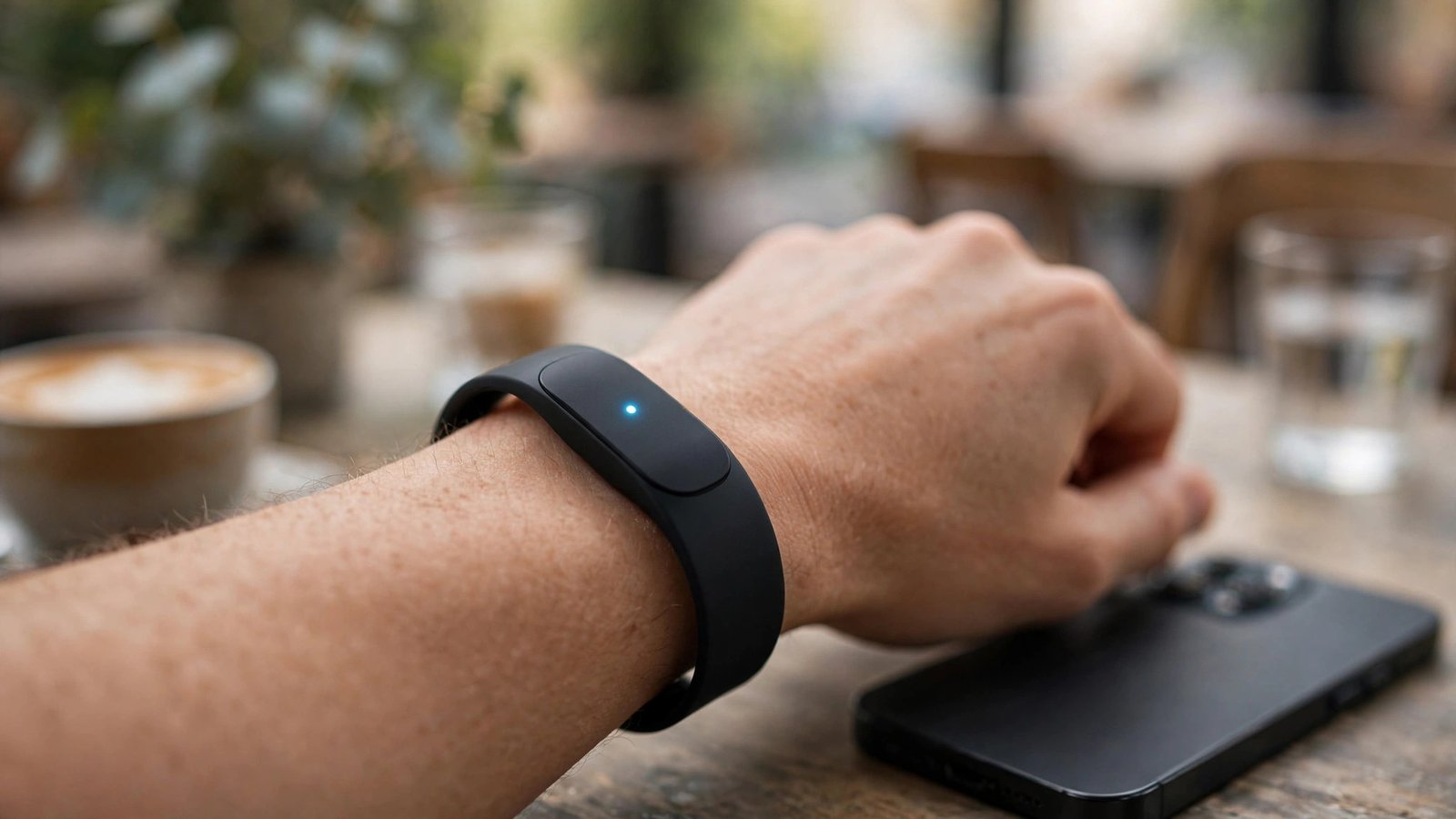
The Frontier is the next generation of the original Bee wearable, which cost $50 and has now been discontinued. It slots into a bracelet or clip, carries two microphones with noise filtering, an onboard button, and a visible LED indicator. It comes in Onyx, Lavender, and Sage, carries an IP67 rating for dust and water resistance, and is rated for up to seven days of battery life. It is on sale now in the US.
The Eclipse takes a different approach. It is a slim magnetic puck that attaches to the back of a smartphone, aimed at people who do not want to wear anything on their wrist or clothing. Its standout spec is battery life: more than 21 days per charge, roughly three times the Frontier's. It comes in Silver, Midnight, Honey, and Blush, and is listed as coming soon, with no confirmed date.
Both devices capture conversations and send them to the Bee app, which generates recaps, to-dos, and "daily memories." Bee can also pull context from connected apps, including Gmail, Google Calendar, Microsoft Outlook, and Apple HealthKit, according to early reporting.
The price war in AI note-taking
Bee's pricing is aggressive. The Frontier at $74.99 undercuts the Plaud Note ($159) and the Pocket AI device ($129) by a wide margin. That is clearly deliberate. Amazon wants always-on ambient recording to become a mass-market habit, not a niche gadget curiosity.
The catch is the subscription. The free tier includes conversation summaries, recaps, and 14 days of memory. Bee Pro costs $11.99 a month and adds unlimited summaries, integrations with Amazon.com and Alexa+, suggested to-dos, daily memories, a personal chat assistant, and a desktop app for Mac and Windows. New buyers get 30 days of Bee Pro free. So the real comparison is not just hardware price, it is the cost of the habit over a year or two.
The privacy pitch and the fine print
Amazon knows the obvious objection and is getting ahead of it. The company says Bee never stores raw audio: conversations are processed in real time, transcripts are encrypted with keys created and controlled by the user's own device, and no one, including Amazon employees, can access them unless the user shares them. Users can delete transcripts and summaries at any time, and there is a physical on-off control with a visible indicator while the device operates.
The more interesting design decision is consent. Amazon says users are prompted to obtain permission from other people when recording begins. That is easy to promise and hard to enforce in a coffee shop, a bar, or a meeting room. It also runs into the law: several US states require all parties to consent to being recorded, and recording someone without their knowledge can create real legal exposure. The fresh memory of a man in Pittsburgh being asked to remove his Meta Glasses at a local bar shows how these interactions play out in practice.
It is also worth remembering the context. Reuters noted that Amazon faced criticism in 2019 after reports that people were listening to conversations customers had with Alexa, and the company is facing a class action lawsuit over the practice. Amazon has denied wrongdoing. The Bee pitch is a pivot for Amazon: historically the company emphasized that its listening devices would not start listening until cued. Bee listens around the clock by design.
Where Bee fits in the crowded field
Bee is not entering empty territory. Apple recently shipped Apple Watch features like Siri Recap that take ambient notes, and the Apple Watch Series 12 can transcribe short conversation snippets. Meta's smart glasses are normalizing cameras on faces. And the Bee launch follows the collapse of the first wave of dedicated AI gadgets: the Rabbit R1, the Humane AI Pin, and the Limitless pendant, all discontinued, all lessons in what happens when novelty outruns need.
The Bee team's bet is that note-taking is the killer use case the first wave missed. A pendant that writes your meeting notes is less glamorous than a pin that projects a laser interface, but it might be the thing people actually use twice a day. Whether an always-on recorder becomes as normal as a smartwatch, or stalls at the boundary of social acceptability, is the experiment these two devices are running.
Frequently Asked Questions
How much do the Amazon Bee Frontier and Eclipse cost?
The Bee Frontier costs $74.99 and is available now in the US. The Bee Eclipse starts at $99.99 and is coming soon with no confirmed release date. The optional Bee Pro subscription costs $11.99 per month.
Does the Bee store my audio recordings?
According to Amazon, no. The company says audio is processed in real time and deleted afterward, with transcripts encrypted using keys controlled by the user's device. Users can delete transcripts and summaries at any time, and a physical button plus LED indicator show when the device is operating.
What is the difference between the Frontier and Eclipse?
The Frontier is a wristband or clip-on wearable with seven-day battery life and IP67 water resistance. The Eclipse is a magnetic card-sized attachment for the back of a phone with more than 21 days of battery life, aimed at people who do not want to wear a separate device.

Post Comment