Best Robot Lawn Mowers 2026: Hands-Free Yard Care
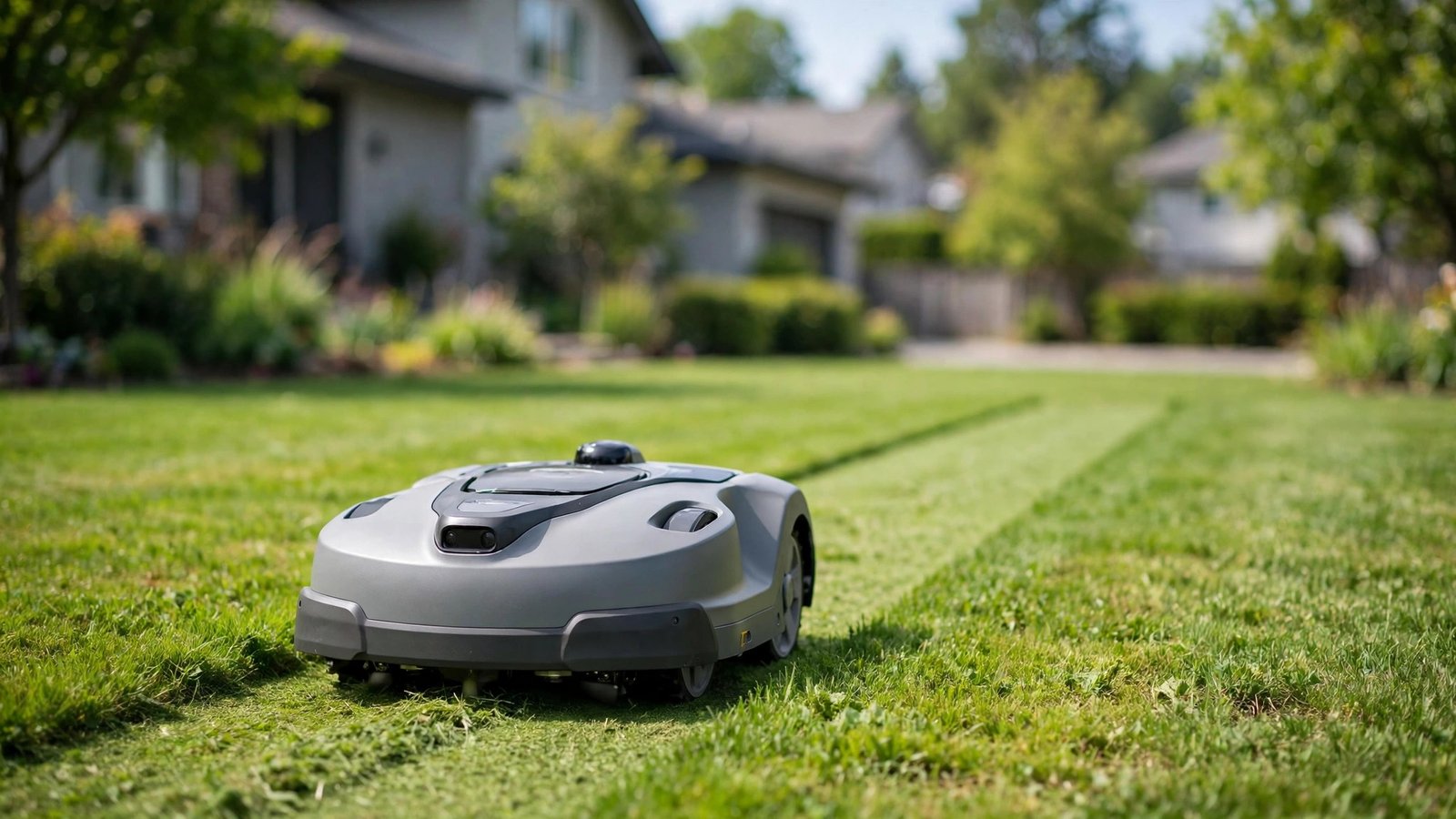
Mowing the lawn is one of those chores that eats a Saturday and gives nothing back. The best robot lawn mower 2026 models finally deliver on the old promise: a machine that quietly keeps your grass trimmed while you do literally anything else. Navigation has leapt forward with GPS and AI vision replacing the old random-bounce pattern, so these machines now mow in neat rows instead of wandering like confused Roombas. Here is how to choose one for your yard, from small city lawns to full acres.
How modern robot mowers actually work
Forget the early models that bounced around inside a buried wire and hoped for the best. Current machines navigate with RTK GPS, the same centimeter-accurate positioning used in surveying, often combined with cameras and AI that recognize grass boundaries, obstacles, and even specific objects like garden hoses or pet toys. You define the mowing area in an app, sometimes by walking the perimeter with your phone, and the mower handles the rest in efficient parallel lines.
They mow differently than you do. Instead of a weekly hack-down, robot mowers trim a little grass very frequently, sometimes daily. The clippings are so fine they fall into the lawn as natural fertilizer, which means no bagging and a healthier yard over time. It is the "little and often" philosophy, and agronomists generally approve.
Charging is automatic. When the battery runs low or rain is detected, the mower returns to its dock, tops up, and resumes where it left off. Most run quietly enough to mow at night without bothering anyone, which is genuinely useful if your days are busy.
Matching a mower to your yard size
Yard size is the first filter, and manufacturers rate mowers by maximum area. Small-yard models handle a quarter acre or less and are the most affordable. They suit typical suburban lots and are the easiest to set up. Do not oversize dramatically: a mower rated for two acres will work on a small lawn, but you will have paid for capacity you never use.
Mid-range models cover roughly a quarter to half an acre and suit most suburban properties with front and back lawns. This is the sweet spot of the market, with the best balance of navigation tech and price, and it is where most best robot lawn mower 2026 buyers should look first. If your lot is a typical subdivision parcel, start here.
Large-property machines handle half an acre to several acres, and this is where the technology earns its keep. Mowing multiple acres by hand is a genuine time sink, so the payback math is compelling. These models need stronger batteries, better hill climbing, and robust GPS, so expect premium pricing. Properties with complex layouts, multiple zones separated by driveways, should check that the mower supports multi-zone management in its app.
Slopes deserve a special mention. Every mower lists a maximum slope grade it can handle, and exceeding it leads to stuck machines and patchy cuts. Walk your yard's steepest section honestly before buying.
Best robot lawn mower 2026: brands and approaches worth knowing
Husqvarna invented this category with its Automower line and remains the benchmark, especially for larger and complex lawns. Its machines are proven over many seasons, the dealer network handles installation and service, and the navigation is mature. You pay for that pedigree, but for big properties it is often worth it.
Worx Landroid built its name on affordable wire-based models and has been moving upmarket with smarter navigation. It remains a strong value choice for small to mid-size yards, particularly if you are comfortable with a bit of DIY setup.
The newer wave, brands like Mammotion and Eufy, skipped boundary wires entirely and went straight to GPS and vision navigation. Wire-free setup is dramatically easier: no burying cable around the perimeter, just map the lawn in the app. For most buyers in 2026, wire-free is the way to go unless your yard has heavy tree cover that blocks GPS signals.
What to check before you buy
Boundary strategy comes first. Wire-free GPS models are easier to install but need decent sky visibility. Yards under dense tree canopy or in urban canyons between tall buildings can confuse satellite positioning, so heavy shade favors vision-assisted or wire-based models. Be realistic about your tree cover.
Obstacle avoidance is the feature that separates good from frustrating. Basic models bump into things. Better ones use cameras and AI to steer around toys, furniture, and garden beds. If your yard is an obstacle course of kid stuff and landscaping, pay for the smarter navigation.
Theft protection matters because these are expensive machines sitting in yards. Look for PIN locks, GPS tracking, and alarms. Most thefts are crimes of opportunity, and a mower that screams and refuses to work without its PIN is a poor target.
Also consider noise, cutting height range, and rain behavior. Quieter models can run at night. Adjustable cutting height lets you adapt to seasons. And good rain sensors send the mower home instead of tearing up wet turf.
The honest bottom line: for anyone with a straightforward lawn who dislikes mowing, the best robot lawn mower 2026 lineup makes "set and forget" close to true, and it is one of the most satisfying purchases in home tech. The machines finally navigate well enough that "set and forget" is close to true. Match the mower to your yard size, favor wire-free unless trees say otherwise, and buy enough smarts to handle your obstacles.
Do robot lawn mowers work on hills?
Many handle moderate slopes, with each model listing a maximum grade. Gentle suburban slopes are fine for most machines. Steep banks beyond the rated grade will cause problems, so measure your steepest section and buy accordingly. All-wheel-drive models climb better than standard ones.
Are they safe around kids and pets?
Modern mowers include lift and tilt sensors that stop the blades immediately if the machine is picked up or tipped. They are designed to be safe, but supervision is still wise: teach kids not to ride or interfere with it, and most owners schedule mowing when pets are indoors.
How much maintenance do they need?
Less than a gas mower, more than zero. Blades need replacing a few times per season since they are small and do frequent light cuts. Keep the underside clear of caked grass, wipe the sensors occasionally, and store the mower indoors over winter in cold climates. Total annual upkeep is modest.